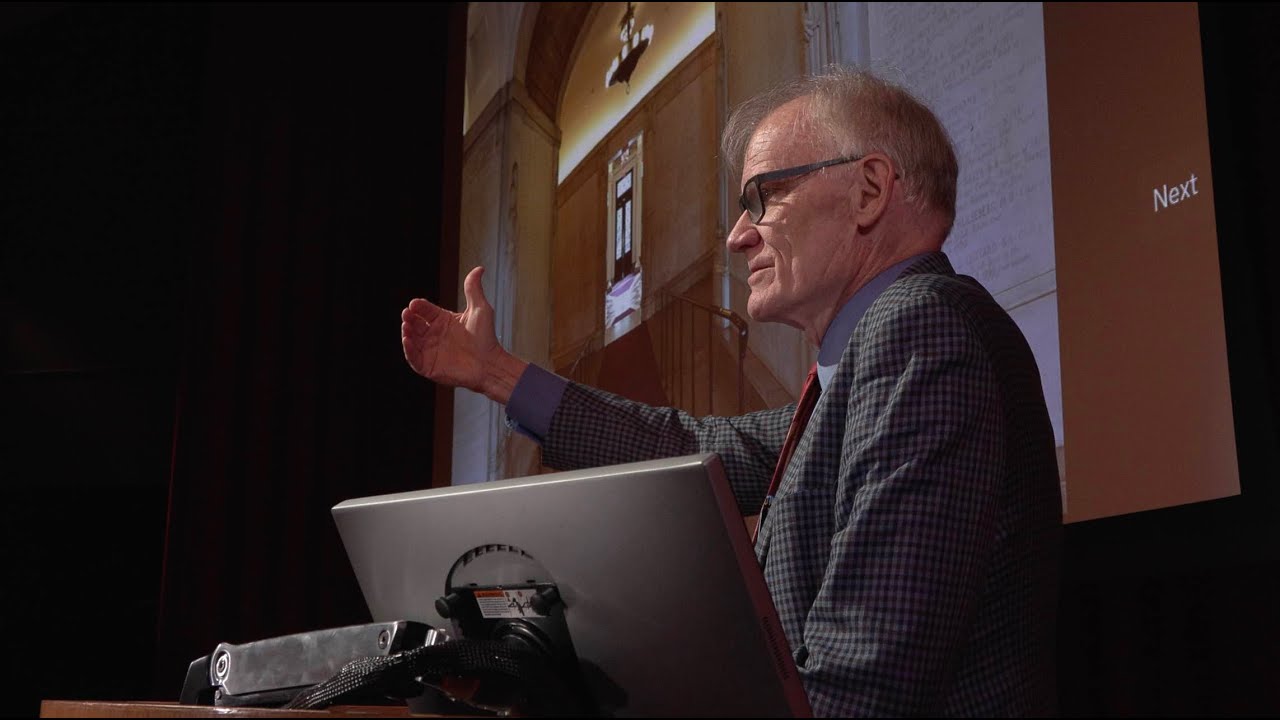
Class 1, Why Does the Civil War and Reconstruction Have a Hold on American Historical Imagination?
Keywords
Summary
160 words
Critical Evaluation
Professor Blight delivers a compelling and intellectually rich lecture that effectively establishes the significance of the Civil War and Reconstruction in American historical consciousness. His argument is well-structured, moving from personal and institutional context to broader historiographical and contemporary relevance. The lecture is grounded in his extensive research, particularly the Yale and Slavery Project, lending it high credibility. Blight’s use of primary sources, such as quotes from James Baldwin, Alexander Hamilton, and Mark Bloch, adds depth and authenticity. He skillfully connects historical events to present-day issues, such as political polarization and racial reckoning, without oversimplifying complex parallels. The discussion of why the Civil War holds a grip on American imagination is particularly insightful, offering multiple nuanced reasons that go beyond common tropes. Blight’s academic authority and engaging delivery enhance the lecture’s value. The content is accessible to a general audience while still providing scholarly depth. The only minor critique is that the lecture covers a lot of ground, which might leave some topics underexplored, but this is appropriate for an introductory session. Overall, this is an excellent example of public history education, combining rigorous scholarship with engaging storytelling.
188 words
Title / Content Match
The title accurately reflects the lecture's focus on the enduring significance of the Civil War and Reconstruction in American historical imagination.
Quality & Reliability
9/10
Lecture by a prominent historian (David Blight) at Yale, based on extensive research (Yale and Slavery Project). Provides nuanced historical analysis with references to primary sources and scholarly works. High credibility due to academic setting and expertise.
Key Moments
Markers derived by PSI from the transcript: the creator did not define chapters.
- Introduction to the DeVane Lecture Series and the course's origins in the Yale and Slavery Project.
- Discussion of the growing trend of universities investigating their historical ties to slavery.
- Explanation of the course structure, including the focus on the Civil War and Reconstruction.
- Introduction of the central question 'Can it happen here?' and its relevance to contemporary America.
- Reflection on the importance of history, quoting James Baldwin and Mark Bloch.
- Discussion of the founders' obsession with virtue and the Constitution, referencing Federalist Papers.
- Presentation of seven reasons why the Civil War era holds a grip on American imagination.
- Conclusion with introductions of teaching assistants and logistical announcements.
Cited Sources
- Playlist: Can It Happen Here Again? Yale, Slavery, and Legacies: 2024 DeVane Lecture Series — Official playlist for the course lectures.
Concurring Sources
- Yale and Slavery Research Project — Official project website providing detailed research on Yale's historical connections to slavery.
Contribution & Novelties
This lecture provides a unique perspective on the Civil War’s enduring relevance by connecting it to contemporary issues and institutional memory, particularly through the Yale and Slavery Project. It offers a comprehensive framework for understanding why this historical period continues to captivate Americans.
Pour aller plus loin :
- Yale and Slavery Research Project — Official project website with research findings and resources.
- The Gilder Lehrman Center for the Study of Slavery, Resistance, and Abolition — Center directed by Blight, offering further research and publications.
- Sinclair Lewis’s ‘It Can’t Happen Here’ — Novel referenced in the lecture, relevant to the course’s central question.
- Mark Bloch’s ‘The Historian’s Craft’ — Book mentioned as a key methodological reference.
- Federalist Papers — Primary source for understanding the founders’ intentions.
125 words
Radar Profile
The radar profile shows high scores across all dimensions, indicating a lecture that is both information-dense and highly reliable. The balance between quantitative and qualitative aspects suggests a well-rounded presentation suitable for academic and general audiences.