Low-Cost, High-Nutrition Eating for Graduate Students: Healthy Recipes
Keywords
Summary
120 words
Critical Evaluation
The video is a valuable resource for its target audience, offering a wealth of practical advice on finding and adapting healthy, budget-friendly recipes. Dr. Wood’s credentials as a culinary medicine expert lend credibility, and he references reputable organizations and resources. The advice aligns with established nutritional guidelines, emphasizing plant-based eating and whole foods. However, the video is more of a curated list of resources than a deep dive into nutritional science. It lacks specific scientific citations or data to support some claims, though the information is generally consistent with current dietary recommendations. The presentation is clear and engaging, with a focus on actionable tips. The title accurately reflects the content, and the video successfully addresses the challenges of eating well on a student budget. The inclusion of a statistic about food insecurity among Yale students adds context and underscores the importance of the topic. Overall, the video is informative and trustworthy, though it could benefit from more detailed scientific backing.
160 words
Title / Content Match
The title accurately reflects the content, which focuses on affordable, nutritious recipes and resources for graduate students.
Quality & Reliability
8/10
The video is presented by Dr. Nate Wood, an Assistant Professor and Director of Culinary Medicine at Yale School of Medicine, lending high credibility. It cites reputable sources like Health Meets Food, Oldways, and Good and Cheap, and provides practical, evidence-based advice. However, it lacks detailed scientific citations and is primarily a tutorial, not a peer-reviewed presentation.
Key Moments
Markers derived by PSI from the transcript: the creator did not define chapters.
- Introduction to the video series and goals.
- Discussion of where to find healthy recipes, starting with websites.
- Recommendation of Health Meets Food and Budget Bytes.
- Introduction to Oldways and traditional heritage diets.
- Mention of social media accounts for recipes, including Kat Can Cook and Mob.
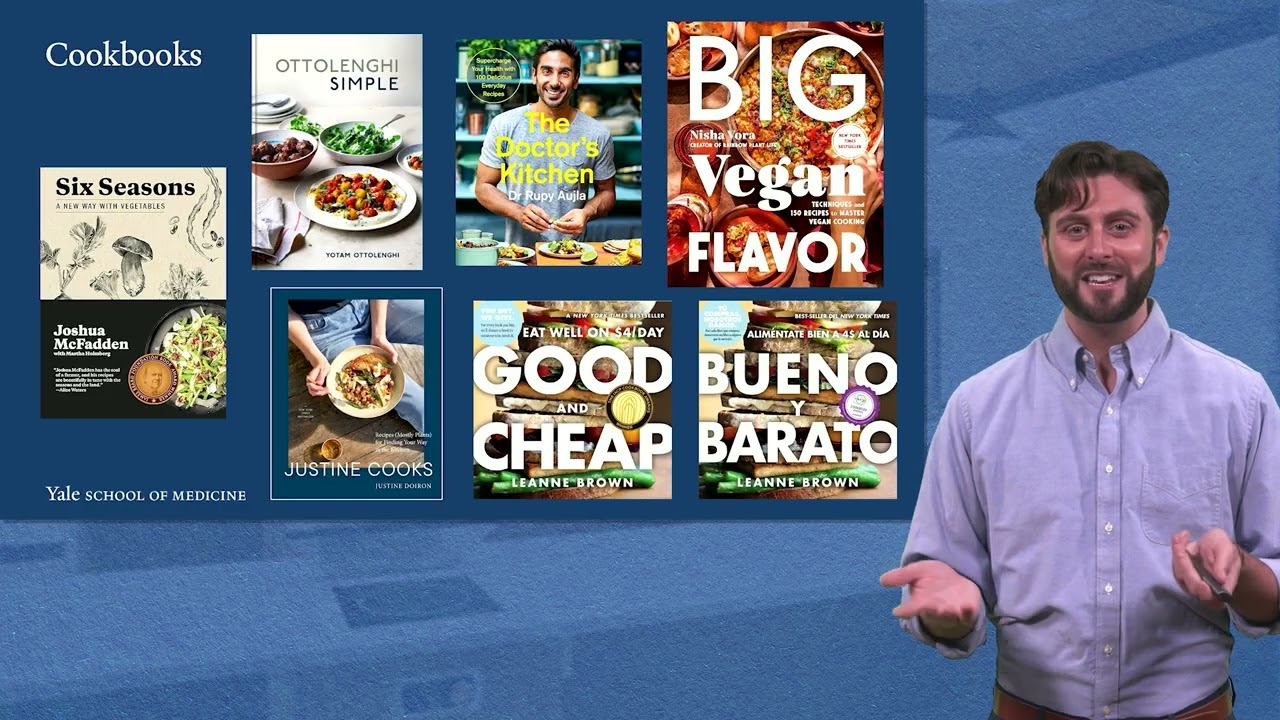
- Discussion of cookbooks, including Good and Cheap by Leanne Brown.
- Tips for making recipes healthier, such as adding more plants and swapping grains.
- Explanation of protein flips and swapping saturated fats for unsaturated fats.
- Additional sources of recipes: family, restaurants, farmers markets, and community centers.
- Use of apps and AI like ChatGPT for meal planning and recipe ideas.
Cited Sources
- Yale Graduate and Professional Student Senate Contact — Mentioned as a resource for support and feedback.
Concurring Sources
- Health Meets Food — Recommended as a source of healthy recipes.
- Oldways — Recommended for traditional heritage diets.
- Good and Cheap — Cookbook for eating well on $4 a day.
Contribution & Novelties
The video provides a curated list of reputable recipe sources and practical tips for making meals healthier on a budget, specifically tailored to graduate students. It addresses food insecurity with actionable advice.
Pour aller plus loin :
- Mediterranean diet — Relevant as a reference for healthy eating patterns.
- NOVA classification — Relevant to the discussion of whole vs. processed foods.
- Food insecurity — Relevant to the issue highlighted in the video.
71 words
Radar Profile
The radar profile shows high scores in quantity and quality of information, with moderate technical level, indicating a well-rounded, accessible tutorial. The reliability is strong due to the expert presenter and reputable sources.
💬 No comments were provided for analysis.