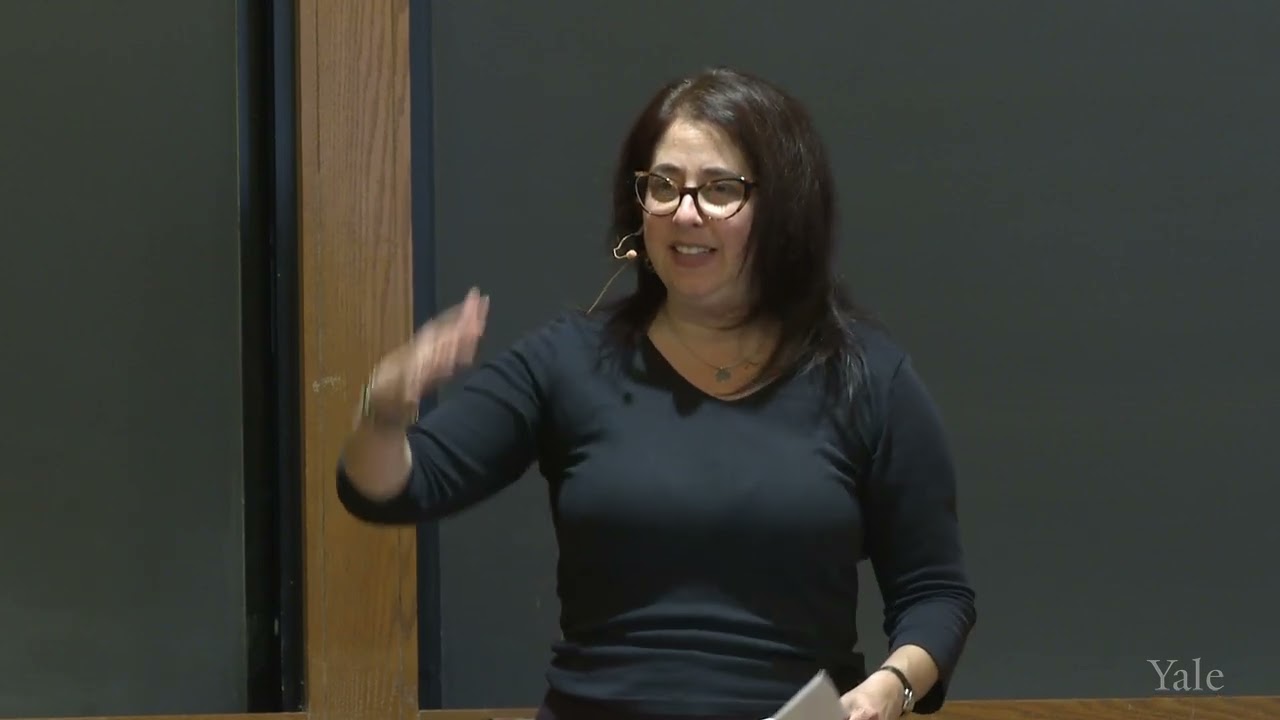
European Intellectual History since Nietzsche: Class 18, Revisionist Marxism and Existentialism
Keywords
Summary
139 words
Critical Evaluation
This lecture offers a nuanced and well-informed overview of the intellectual exchanges between existentialism and Marxism in the post-war period. Marci Shore demonstrates deep familiarity with the primary sources and historical context, weaving together philosophical concepts with concrete historical events. The strength of the lecture lies in its ability to connect abstract ideas to lived experiences, such as the use of Sartre’s concept of the gaze in Aseyev’s account of torture. Shore’s argumentation is solid, though it is inherently interpretive, reflecting her own scholarly perspective. The sources cited are appropriate, including primary texts by Sartre, Lukacs, and Aseyev, as well as historical references. The lecture is well-structured, moving from historical background to philosophical analysis, and it effectively conveys the complexity of the period. However, it assumes a certain level of familiarity with the thinkers discussed, which may limit accessibility. The adéquation between title and content is strong, as the lecture directly addresses the themes of revisionist Marxism and existentialism. Overall, this is a high-quality lecture that provides valuable insights into a pivotal moment in intellectual history.
176 words
Title / Content Match
The title accurately reflects the content, which focuses on revisionist Marxism and existentialism in the context of European intellectual history.
Quality & Reliability
8/10
Lecture by a Yale professor, based on established scholarship, with references to primary texts and historical events. The content is well-structured and academically sound, though it reflects the lecturer's interpretive perspective.
Key Moments
Markers derived by PSI from the transcript: the creator did not define chapters.
- Introduction to revisionist Marxism and its historical context
- Discussion of Stalinist terror and show trials
- Reading from Stanislav Aseyev's book and its connection to Sartre
- Sartre's political evolution and his relationship with Marxism
- The dialogue between Sartre and Eastern European philosophers
- Lukacs's critique of phenomenology and existentialism
- The scale of the Soviet experiment and its implications
- The impact of Stalin's death and the emergence of revisionist Marxism
- The synthesis of existentialism and Marxism in the 1960s
- Concluding reflections on the legacy of these ideas
Cited Sources
- Course materials and syllabus — Provided in the video description for further study.
- Full course playlist — Link to the entire course on YouTube.
Concurring Sources
- Existentialism is a Humanism — Sartre's 1946 lecture, referenced in the video as a key text.
- Critique of Dialectical Reason — Sartre's 1960 work, mentioned as embracing Marxism.
- History and Class Consciousness — Lukacs's classic work, referenced in the lecture.
Dissenting Sources
- Lukacs's critique of phenomenology — Lukacs's rejection of the phenomenological approach contrasts with the existentialist synthesis presented in the lecture.
Contribution & Novelties
This lecture provides a clear and insightful synthesis of revisionist Marxism and existentialism, highlighting the intellectual exchanges between Western and Eastern European thinkers. It offers a unique perspective on how existentialist ideas were adopted by Eastern European philosophers as a response to Stalinism, and how Sartre’s Marxism was influenced by these dialogues. The use of contemporary examples, such as Aseyev’s book, adds a fresh dimension to the discussion.
Pour aller plus loin :
- Existentialism — Provides an overview of existentialist philosophy, relevant to the core themes.
- Revisionism (Marxism) — Explains the concept of revisionism in Marxist theory, directly related to the lecture’s topic.
- Jean-Paul Sartre — Offers biographical and philosophical context for Sartre’s ideas discussed in the lecture.
118 words
Radar Profile
The radar profile shows high scores in information quantity, quality, and reliability, with a slightly lower technical level, indicating that the lecture is accessible yet academically rigorous.
💬 No comments were provided for analysis.