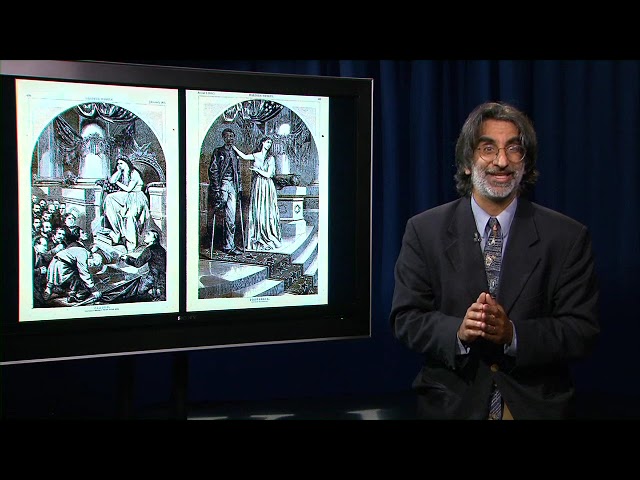
A New Birth of Freedom, Part 1 | America's Written Constitution with Akhil Reed Amar
Keywords
Summary
171 words
Critical Evaluation
This lecture is a masterful synthesis of constitutional history, demonstrating Amar’s deep expertise and pedagogical skill. The argument that national security was the primary driver of the Constitution’s structure is compelling and well-supported, as Amar systematically connects each major feature—bicameralism, separation of powers, popular ratification—to the need for a more effective central government. He also effectively highlights the contingency of historical outcomes, emphasizing that the North’s dominance in western territories was not inevitable but resulted from a series of fortunate events. This nuanced perspective avoids deterministic narratives and underscores the fragility of the anti-slavery trajectory. The discussion of Lincoln’s platform is particularly insightful, correcting common misconceptions by showing that Lincoln’s 1860 position was gradualist and moderate, not abolitionist. Amar’s treatment of the three-fifths clause and the 12th Amendment’s pro-slavery implications is rigorous and adds depth to the analysis. The lecture is well-structured, with clear transitions and a logical flow from the founding era to the Civil War. The sources cited, primarily the course materials, are authoritative. The only minor limitation is the lecture’s brevity, which prevents deeper exploration of certain topics, but this is appropriate for an introductory course. Overall, this is an excellent, thought-provoking lecture that provides a solid foundation for understanding the constitutional context of the Civil War.
210 words
Title / Content Match
The title accurately reflects the content: the lecture focuses on the constitutional era leading to the Civil War and Lincoln's vision of a 'new birth of freedom'.
Quality & Reliability
9/10
The lecture is delivered by a renowned constitutional scholar (Akhil Reed Amar) as part of a Yale University course, ensuring high academic rigor. The content is well-structured, historically grounded, and consistent with established scholarship. The speaker clearly distinguishes between historical facts and interpretive arguments, and the presentation is balanced and nuanced.
Chapters
- Closing the founding era
- National security as the starting premise
- Going over the heads of the state governments
- The Sedition Act and the election of 1800
- Why the founders' system eventually failed
- Luck, and the race for western land
- Jackson, Taney, and Dred Scott
- Lincoln's platform: no new slavery
- How gradual emancipation had worked in the North
Cited Sources
- America's Written Constitution (Yale Online) — Course page for the full lecture series.
- America's Written Constitution (Coursera) — Online course version of the same lectures.
- YouTube Playlist — Playlist containing all lectures in the series.
Concurring Sources
- The Federalist Papers — Contemporary arguments supporting the Constitution's structure, aligning with Amar's national security thesis.
Dissenting Sources
- Amar's thesis on national security as the primary driver — Some historians argue that economic interests were equally or more important than national security in shaping the Constitution, though Amar acknowledges multiple factors.
Contribution & Novelties
This lecture provides a clear and accessible synthesis of the constitutional era, emphasizing the role of national security in shaping the Constitution and the contingent nature of the anti-slavery trajectory. It offers a nuanced view of Lincoln’s platform, correcting common misconceptions.
Pour aller plus loin :
- Three-Fifths Compromise — Directly relevant to the discussion of the electoral college’s pro-slavery tilt.
- Dred Scott v. Sandford — Key Supreme Court case mentioned in the lecture.
- Haitian Revolution — Context for the impact on slave importation fears.
84 words
Radar Profile
The radar profile shows high scores in information quantity, quality, and reliability, with a slightly lower technical level, reflecting the lecture's accessibility to a general audience while maintaining scholarly depth.