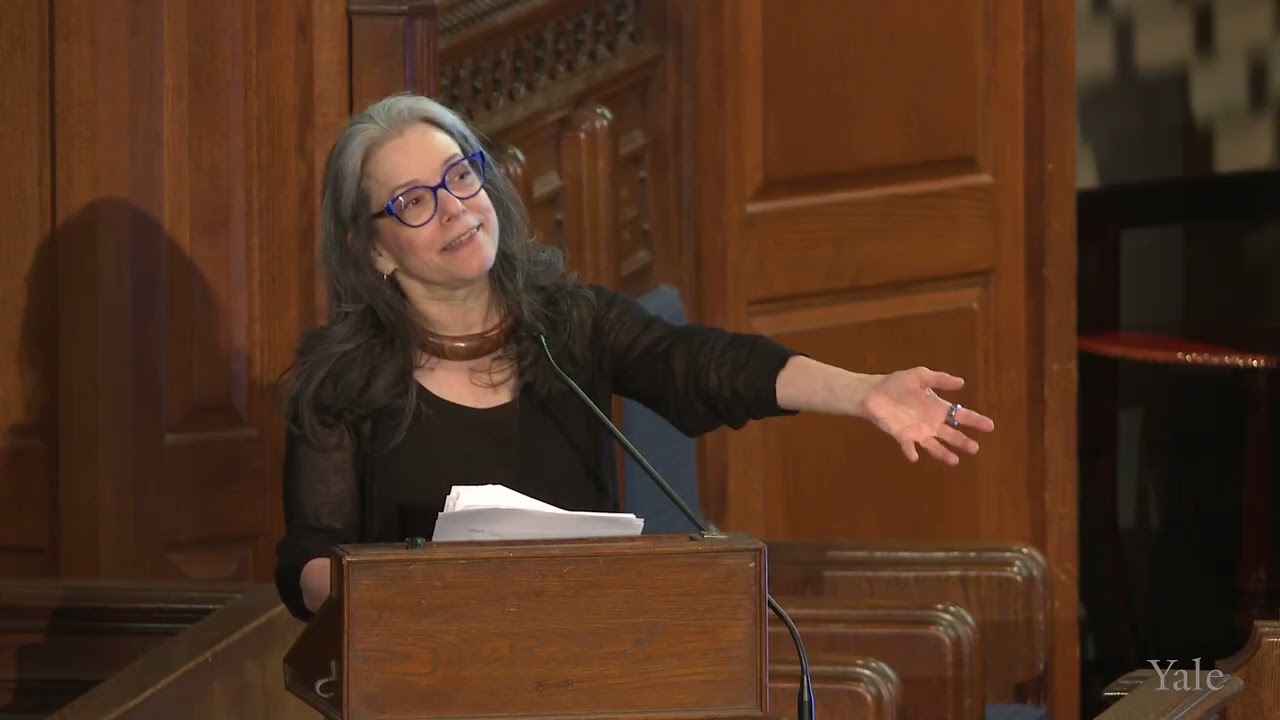
America at 250: A History, DeVane Lecture, Class 4 - What Kind of Union?
Keywords
Summary
120 words
Critical Evaluation
The lecture provides a thorough and nuanced examination of the political structures created after independence. Freeman’s argument is well-supported by primary sources, such as quotes from Thomas Jefferson, John Adams, and Edward Rutledge, which she analyzes to reveal contemporary concerns. She effectively explains the rationale behind the Articles of Confederation, countering the common dismissal of them as merely weak. The lecture’s strength lies in its contextualization: it shows how the Articles were a logical response to the Revolution’s grievances. However, it could benefit from more discussion of the practical failures of the Articles, which are only briefly mentioned. The lecture is aimed at a general audience but maintains academic rigor. The inclusion of Rutledge’s letter adds depth, illustrating sectional tensions. Overall, the lecture is highly informative and well-structured, offering a compelling interpretation of early American governance.
136 words
Title / Content Match
The title accurately reflects the lecture's focus on the nature of the union formed after independence.
Quality & Reliability
9/10
Lecture by a Yale professor, based on established historical scholarship, with direct quotes from primary sources and clear contextualization. High reliability for academic content.
Key Moments
Markers derived by PSI from the transcript: the creator did not define chapters.
- Introduction: The question of what kind of country would emerge from independence.
- Jefferson quote: 'A new government is the whole object of the present controversy.'
- State constitutions: common features, fear of executive power.
- Drafting of the Articles of Confederation; 'firm league of friendship'.
- Structure of the Confederation Congress: one vote per state, no enforcement power.
- Rationale for weak central government: avoiding British abuses.
- Restrictions on states under the Articles.
- Distrust of centralized power; Edward Rutledge's letter.
- Analysis of Rutledge's fears of New England dominance.
- Conclusion: The Articles as a product of revolutionary experience.
Cited Sources
- America at 250: A History - DeVane Lectures — Official course page providing context for the lecture series.
- America at 250: A History - Playlist — Playlist containing all lectures in the series.
Concurring Sources
- The Articles of Confederation — Wikipedia article corroborating the structure and weaknesses of the Articles.
Dissenting Sources
- The Federalist Papers — Some Federalist Papers argue for a stronger central government, contrasting with the Articles' emphasis on state sovereignty.
Contribution & Novelties
This lecture offers a fresh perspective on the Articles of Confederation by emphasizing their experimental nature and logical basis in revolutionary ideology. It challenges the common narrative of the Articles as a failure, instead presenting them as a deliberate attempt to avoid centralized tyranny. The lecture also highlights the sectional tensions and distrust among states, as exemplified by Rutledge’s letter.
Pour aller plus loin :
- Articles of Confederation — Provides a comprehensive overview of the document and its historical context.
- Confederation Period — Discusses the era of the Articles of Confederation and its challenges.
- United States Constitution — Explains the later replacement of the Articles with a stronger federal government.
110 words
Radar Profile
The radar profile shows high scores in information quantity, quality, and reliability, with a moderate technical level. This indicates a lecture that is rich in content, well-sourced, and accessible to a general audience while maintaining academic depth.