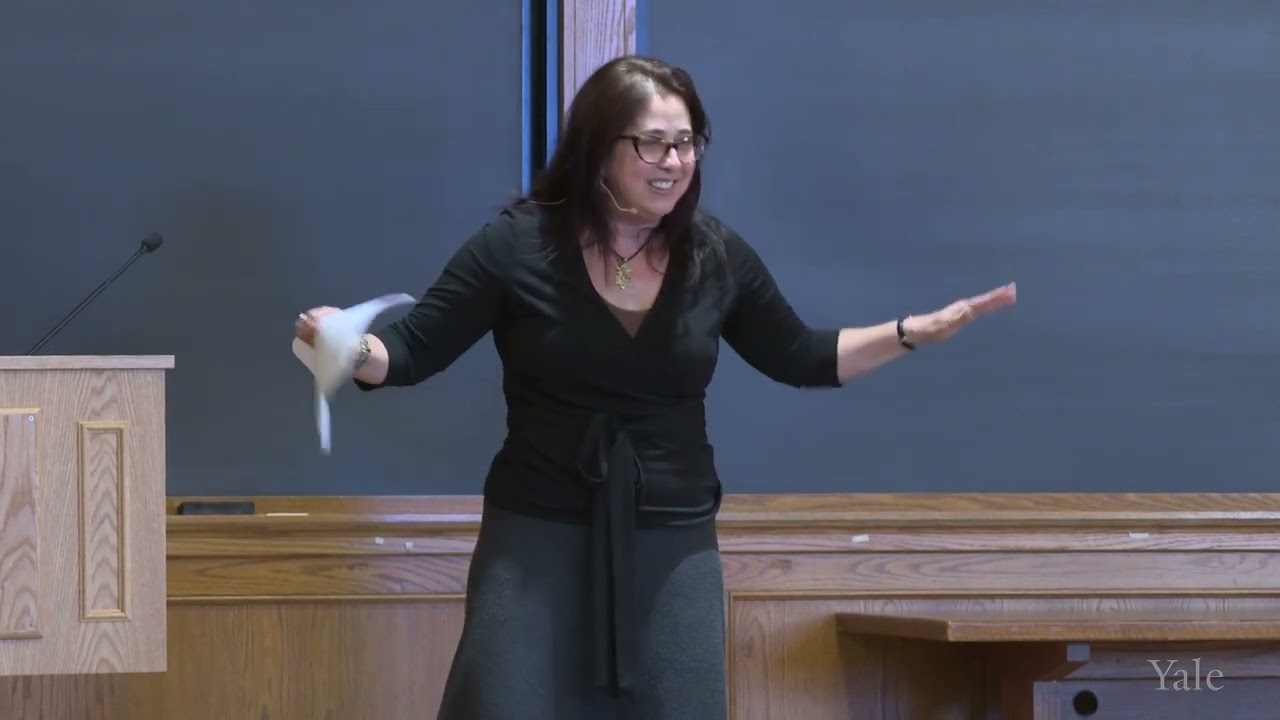
European Intellectual History since Nietzsche: Class 14, The Frankfurt School
Keywords
Summary
168 words
Critical Evaluation
The lecture is a masterful synthesis of complex philosophical ideas, delivered with clarity and engaging anecdotes. Professor Shore demonstrates deep expertise, weaving together existentialism, phenomenology, and critical theory to show how the Frankfurt School emerged as a response to the crises of modernity. The historical context is meticulously presented, from the devastation of WWI to the political turmoil of the Weimar Republic, grounding the philosophical developments in concrete events. The discussion of the Treaty of Versailles and its psychological impact on Germany is particularly insightful, as it explains the existential and moral crises that shaped the Frankfurt School’s critique. Shore’s use of primary sources, such as Adorno and Horkheimer’s ‘Dialectic of Enlightenment,’ adds scholarly rigor. She also connects the material to contemporary issues, like decision fatigue and populism, making the content relevant. The lecture’s structure is logical, moving from existentialist foundations to the specific contributions of the Frankfurt School. However, as a single lecture, it cannot delve deeply into each thinker’s work, and some concepts are introduced but not fully explored. The reliance on a single lecturer’s perspective, while authoritative, means that alternative interpretations are not presented. Additionally, the lecture assumes prior knowledge of the course’s earlier material, which might limit accessibility for newcomers. Despite these minor limitations, the lecture is intellectually stimulating and provides a solid foundation for understanding critical theory.
222 words
Title / Content Match
The title accurately reflects the content: a lecture on the Frankfurt School within a broader course on European intellectual history.
Quality & Reliability
8/10
Lecture by a Yale professor, part of an accredited course, with references to primary texts and historical events. The content is scholarly and well-structured, though it is a single lecture and not peer-reviewed.
Key Moments
Markers derived by PSI from the transcript: the creator did not define chapters.
- Introduction to the lecture and recap of existentialist themes.
- Discussion of Sartre's existentialism and the anguish of choice.
- Explanation of the 'fellow traveler' concept and political commitment.
- Anecdote about decision fatigue and indoor cycling as a break from choices.
- Historical context: World War I devastation and the Treaty of Versailles.
- The Weimar Republic: cultural brilliance and political instability.
- Introduction to the Frankfurt School and its founding in 1923.
- Key figures: Adorno and Horkheimer, and the critique of Enlightenment.
- Synthesis of phenomenology, existentialism, and psychoanalysis in critical theory.
- Conclusion and summary of the Frankfurt School's significance.
Cited Sources
- Course syllabus and handouts — Provided in the video description for further course materials.
- Full course playlist — Link to the entire course playlist on YouTube.
Concurring Sources
- Stanford Encyclopedia of Philosophy: Critical Theory — Provides scholarly overview of critical theory, aligning with the lecture's content.
Contribution & Novelties
This lecture provides a comprehensive and accessible introduction to the Frankfurt School, synthesizing various philosophical currents and situating them in historical context. It offers a nuanced understanding of critical theory’s origins and its relevance to contemporary issues.
Pour aller plus loin :
- Frankfurt School — Overview of the school’s history and key figures.
- Dialectic of Enlightenment — Summary of Adorno and Horkheimer’s seminal work.
- Critical Theory — Stanford Encyclopedia of Philosophy entry on critical theory.
75 words
Radar Profile
The radar profile shows high scores in information quantity, quality, and reliability, with a slightly lower technical level, indicating a lecture that is rich in content and well-supported but not overly technical.