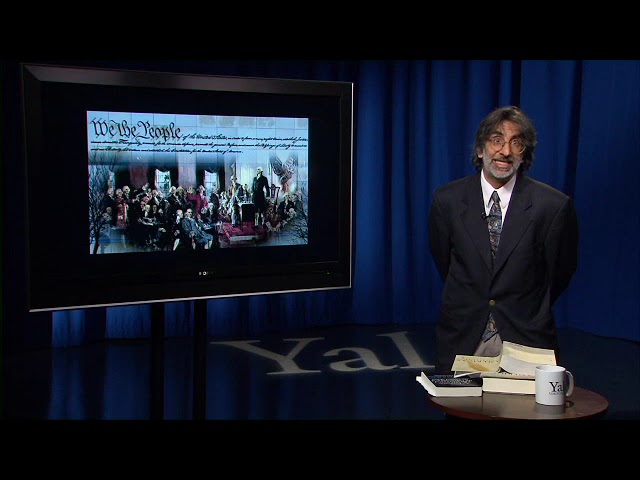
Course Introduction | America's Written Constitution with Akhil Reed Amar
Keywords
Summary
169 words
Critical Evaluation
This lecture serves as an effective introduction to a comprehensive course on the U.S. Constitution. Akhil Reed Amar, a distinguished legal scholar, provides a clear roadmap for the course, emphasizing a textual and historical approach. The content is intellectually solid, drawing on his extensive research and publications. The lecture’s strength lies in its organization and the articulation of three overarching themes—democracy, slavery, and national security—which provide a framework for understanding the Constitution’s complexities. Amar’s argument that the Constitution was both democratic and pro-slavery is a nuanced and historically accurate observation, though he does not delve into the details in this introductory session. The discussion of the ‘unwritten constitution’ is also valuable, as it highlights the importance of interpretive methods beyond the text. However, the lecture is primarily descriptive and does not engage with counterarguments or alternative interpretations. The sources cited are limited to his own books and the course materials, which, while authoritative, may not represent a broad range of scholarly perspectives. The production quality is high, typical of YaleCourses, with clear audio and visuals. The lecture is accessible to a general audience, avoiding excessive jargon, but it assumes a basic familiarity with American government. Overall, this is a reliable and informative introduction, though it is just the starting point for a deeper exploration of constitutional law.
217 words
Title / Content Match
The title accurately reflects the content: it is an introduction to a course on America's written Constitution, presented by Akhil Reed Amar.
Quality & Reliability
8/10
The lecture is delivered by a renowned constitutional law scholar, Akhil Reed Amar, from Yale University. The content is well-structured, historically grounded, and aligns with his published works. The course is part of Yale's online education initiative, adding credibility. However, as an introductory lecture, it does not provide in-depth citations or empirical data, and the arguments are presented as the instructor's interpretations.
Chapters
- What this course is and who it is for
- Working through the text in order
- From Reconstruction to the modern amendments
- Eight thousand words, and what they leave out
- The unwritten Constitution, previewed
- The companion books
- Democracy, slavery, and national security
- The course image and the Preamble
- Your assignment
Cited Sources
- America's Written Constitution | Yale Online — Course page on Yale Online, providing information about the course and enrollment.
- America's Written Constitution | Coursera — Coursera course page for assessments and certificate.
- America's Written Constitution - YouTube Playlist — Full playlist of the course lectures on YouTube.
Concurring Sources
- America's Constitution: A Biography — The companion book by Akhil Reed Amar, which the course tracks in the first half.
- America's Unwritten Constitution: The Precedents and Principles We Live By — The companion book for the second half of the course.
Contribution & Novelties
This lecture provides a structured introduction to the U.S. Constitution, emphasizing a textual and historical approach. It introduces three key themes—democracy, slavery, and national security—that will guide the course. The lecture also distinguishes between the written Constitution and the unwritten principles that supplement it, offering a framework for understanding constitutional interpretation.
Pour aller plus loin :
- U.S. Constitution - National Archives — The full text of the Constitution, useful for following along with the course.
- Constitutional Interpretation - The Heritage Foundation — An overview of different methods of constitutional interpretation, relevant to the course’s second half.
- Akhil Reed Amar - Yale Law School — Faculty page with information about the instructor and his publications.
114 words
Radar Profile
The radar profile shows high scores in quality and reliability, reflecting the authoritative source and well-structured content. The quantity of information is moderate, as this is an introductory lecture, and the technical level is accessible to a broad audience.