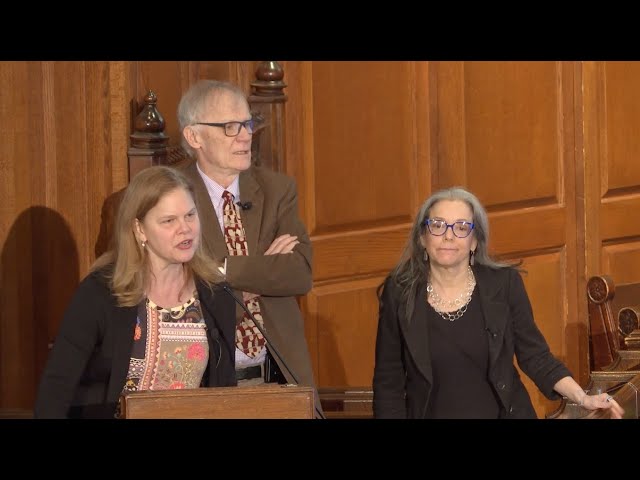
America at 250: A History, DeVane Lecture, Class 26 - Meanings on the Eve of 2026
Keywords
Summary
174 words
Critical Evaluation
This lecture is a masterful synthesis of American history, delivered by three of the most respected historians in the field. The content is rich and nuanced, offering both depth and breadth in a concise format. Gage’s framing of commemorations as moments of reflection is insightful, and her use of Barbara Jordan’s 1976 speech effectively connects past and present. Blight’s discussion of Lincoln and free speech is particularly compelling, as it addresses a timely issue with historical depth. He skillfully navigates the complexities of Lincoln’s actions, presenting both the constitutional arguments and the practical necessities of wartime. Freeman’s segment, though brief, adds a crucial perspective on the contested nature of American identity, drawing on the Declaration of Independence and its promises of equality. The lecture is well-structured, with each segment building on the previous, and the transitions are seamless. The use of primary sources, such as the First Amendment and Lincoln’s suspension of habeas corpus, grounds the discussion in evidence. The historians also demonstrate intellectual honesty, acknowledging the imperfections and contradictions in American history. The only minor weakness is the brevity of Freeman’s segment, which could have been expanded to fully explore the themes she raises. Overall, this is an exemplary lecture that provides valuable insights for both students and general audiences. The quality of the information is high, and the argumentation is rigorous and persuasive.
225 words
Title / Content Match
The title accurately reflects the content: a concluding lecture of a course on American history at the 250th anniversary, focusing on the meanings of the nation's past and present.
Quality & Reliability
9/10
The lecture is delivered by three distinguished Yale historians (Freeman, Blight, Gage), each a recognized expert in their period. The content is well-structured, historically accurate, and draws on primary sources (e.g., Lincoln's suspension of habeas corpus, Barbara Jordan's 1976 speech). The institutional context (Yale DeVane Lecture) adds credibility. Minor limitations: it is a lecture, not peer-reviewed research, and some interpretations are necessarily selective.
Key Moments
Markers derived by PSI from the transcript: the creator did not define chapters.
- Introduction by Beverly Gage, setting the stage for the final lecture.
- Gage discusses Barbara Jordan's 1976 Bicentennial speech and the purpose of commemorations.
- Gage reflects on the 1876 Centennial Exposition and the unfinished Statue of Liberty.
- Gage concludes her segment, emphasizing the long view of history.
- David Blight begins his segment on free speech during the Civil War.
- Blight discusses Lincoln's suspension of habeas corpus and the Merryman case.
- Blight continues, exploring the tensions between security and liberty.
- Blight concludes his segment, linking historical struggles to contemporary issues.
- Joanne Freeman begins her segment on the contested nature of American identity.
- Freeman discusses the Declaration of Independence and its promises of equality.
- Freeman concludes, emphasizing the ongoing relevance of history.
- Closing remarks and thanks to the audience.
Cited Sources
- America at 250: A History - DeVane Lectures — Official course page providing context and information about the lecture series.
- America at 250: A History - YouTube Playlist — Playlist containing all lectures from the course, including this final lecture.
Concurring Sources
- Ex parte Merryman — Supports Blight's discussion of Lincoln's suspension of habeas corpus and the constitutional debate.
- Abraham Lincoln and civil liberties — Provides additional context on Lincoln's actions during the Civil War.
Contribution & Novelties
This lecture provides a unique synthesis of American history from three leading historians, offering a nuanced perspective on the nation’s past and its relevance to the present. The discussion of Lincoln’s free speech struggles during the Civil War is particularly insightful, highlighting the enduring tension between security and liberty. The lecture also emphasizes the importance of commemorations as moments for reflection and learning.
Pour aller plus loin :
- Ex parte Merryman — A key Supreme Court case discussed in the lecture, illustrating the conflict between presidential power and judicial review.
- Habeas corpus in the United States — Provides background on the suspension of habeas corpus during the Civil War.
- Barbara Jordan — The politician whose 1976 speech is referenced, offering context on her role in American politics.
127 words
Radar Profile
The radar profile shows high scores in quality of information and reliability, reflecting the expertise of the lecturers and the depth of content. The quantity of information is also strong, though the technical level is moderate, making it accessible to a broad audience. The overall balance indicates a highly credible and informative lecture.
💬 Sur les 0 commentaires analysés, aucune tendance n'a pu être dégagée.