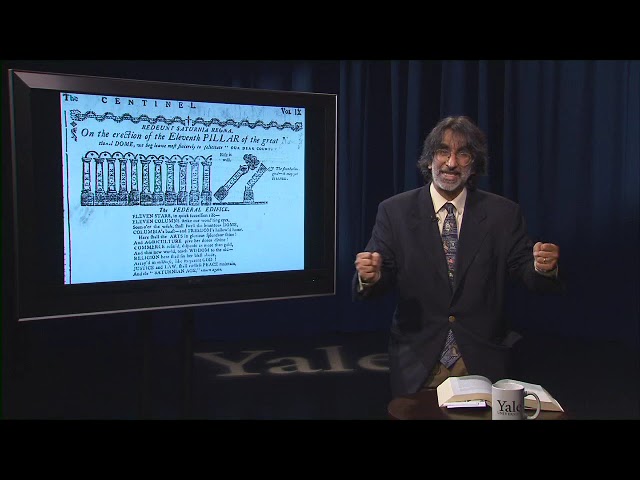
The Law of the Land, Part 1 | America's Written Constitution with Akhil Reed Amar
Keywords
Summary
167 words
Critical Evaluation
The lecture is a masterful exposition of Article V, delivered by a leading constitutional scholar. Amar’s argument is well-structured, moving from the mechanics of the amendment process to a comparative historical analysis, and finally to a critical assessment of the amendment’s effectiveness. His use of historical examples, such as the unamendability of the Articles of Confederation and the amendment practices of state constitutions, grounds his analysis in concrete evidence. The lecture is not merely descriptive; Amar offers a normative evaluation, arguing that Article V’s high bar has been beneficial in filtering out bad amendments. This is a nuanced position that acknowledges the potential drawbacks while emphasizing the overall success of the amendment mechanism. The discussion of the Senate apportionment proviso is particularly insightful, as Amar challenges the conventional wisdom that it absolutely blocks reform, suggesting a workaround. This demonstrates his deep understanding of constitutional law and his ability to think creatively about legal interpretation. The lecture is part of a Yale course, which lends it academic credibility. However, it is an opinion lecture, not a peer-reviewed study, so it should be viewed as an expert’s interpretation rather than an objective analysis. The content is accessible to a general audience but assumes some familiarity with the U.S. Constitution. Overall, the lecture is intellectually rigorous, well-argued, and provides valuable insights into a fundamental aspect of American constitutional law.
226 words
Title / Content Match
The title accurately reflects the content, which focuses on Article V of the U.S. Constitution and its implications for constitutional supremacy and amendment.
Quality & Reliability
9/10
Akhil Reed Amar is a distinguished constitutional law scholar, and the lecture is part of a Yale University course. The content is well-structured, historically grounded, and presents nuanced arguments with reference to historical documents and precedents. The lecture is based on Amar's expertise and published work, though it is an opinion piece rather than a peer-reviewed study.
Chapters
- Where the tour has reached
- Articles V, VI, and VII: constitutional supremacy
- The four amendment pathways
- Why the amendment rules matter most
- The flaw that doomed the Articles of Confederation
- How state constitutions handled amendment
- Is the bar set too high
- The two provisos in Article V
- A workaround, and why small states stay protected
Cited Sources
- America's Written Constitution - Yale Online — Course page for the lecture series.
- America's Written Constitution - Coursera — Online course version of the lecture series.
- YaleCourses YouTube Playlist — Playlist containing the full lecture series.
Concurring Sources
- The Federalist Papers: No. 43 — James Madison's Federalist Paper discussing the amendment process, aligning with Amar's arguments.
Dissenting Sources
- Sanford Levinson, 'The Political Implications of Amending the Constitution' — Some scholars argue that Article V's high bar is too restrictive and hinders necessary reforms, contrasting with Amar's more positive assessment.
Contribution & Novelties
This lecture provides a clear and insightful analysis of Article V, emphasizing its comparative strengths and the practical implications of its amendment thresholds. Amar’s discussion of the Senate apportionment proviso and its potential workaround offers a fresh perspective on a debated constitutional issue.
Pour aller plus loin :
- Article Five of the United States Constitution — Provides a comprehensive overview of Article V, including its history and interpretation.
- The Federalist Papers: No. 43 — James Madison’s defense of the amendment process, relevant to the lecture’s discussion.
- Akhil Reed Amar’s Faculty Page — Background on the lecturer’s expertise and publications.
99 words
Radar Profile
The radar profile shows high scores in quality and reliability, with slightly lower but still strong scores in quantity and technical level. This indicates a lecture that is both informative and credible, though it may require some background knowledge to fully appreciate.