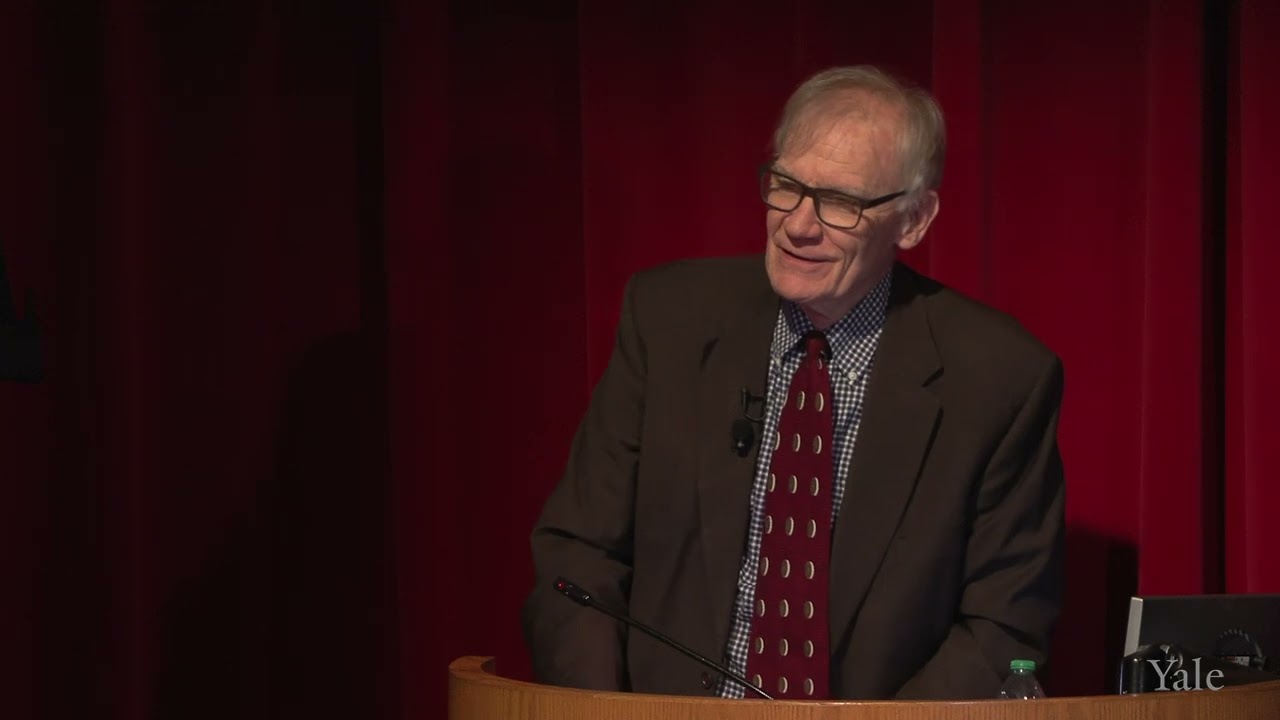
Class 5, Yale, Slavery, and the American Revolutionary Era
Keywords
Summary
131 words
Critical Evaluation
The lecture is a scholarly and well-researched presentation by David Blight, a leading historian of the Civil War era. Blight provides a nuanced account of Yale’s historical ties to slavery, drawing on archival research and quantitative data from the transatlantic slave trade. He effectively uses primary sources, such as the list of enslaved individuals and the portrait of Elihu Yale, to illustrate the pervasiveness of slavery in colonial America. The argument is well-structured, moving from specific examples to broader historical context. Blight’s credibility is high, given his academic position and previous publications. The lecture is part of a university course, which adds to its educational value. However, as a single lecture, it does not delve deeply into every aspect of the topic, and some viewers might desire more analysis of the Revolutionary era’s ideological contradictions. The sources cited are reliable, including the Slave Voyages database and the book ‘Atlas of the Transatlantic Slave Trade.’ The lecture does not explicitly address counterarguments, but it is consistent with mainstream historical scholarship. Overall, the lecture is a valuable resource for understanding the intersection of slavery and higher education in early America.
188 words
Title / Content Match
The title accurately reflects the content, which focuses on Yale's connections to slavery during the Revolutionary era.
Quality & Reliability
8/10
Lecture by a prominent historian, based on extensive archival research and published scholarship, with references to primary sources and academic works.
Key Moments
Markers derived by PSI from the transcript: the creator did not define chapters.
- Introduction and presentation of the list of enslaved individuals connected to Yale.
- Discussion of the transatlantic slave trade and its scale.
- Statistics on the number of Africans transported to the Americas.
- Yale's founding and connection to Elihu Yale.
- Analysis of the portrait of Elihu Yale with an enslaved boy.
- Early Yale presidents and their ownership of slaves.
- The Revolutionary era and changing attitudes towards slavery.
- Legacies of slavery at Yale and in American society.
Cited Sources
- Can It Happen Here Again? Yale, Slavery, and Legacies: 2024 DeVane Lecture Series — Playlist of the lecture series, providing context and additional lectures.
Concurring Sources
- Slave Voyages — Database providing detailed records of transatlantic slave trade voyages, supporting the statistics cited.
Contribution & Novelties
This lecture contributes to the ongoing discourse on universities’ historical ties to slavery, specifically focusing on Yale. It presents new research findings, such as the expanded list of enslaved individuals, and offers a scholarly perspective on the transatlantic slave trade’s scale. The lecture also highlights the importance of visual sources like portraits in understanding historical attitudes.
Pour aller plus loin :
- Slave Voyages — The digital database referenced in the lecture for transatlantic slave trade statistics.
- David Brion Davis — Historian who wrote the introduction to the Atlas, providing further context.
- Yale and Slavery Research Project — Official Yale project documenting the university’s historical connections to slavery.
107 words
Radar Profile
The radar profile shows high scores in information quantity, quality, and reliability, with a moderate technical level. This indicates a well-researched and informative lecture that is accessible to a general audience.
💬 Sur les 0 commentaires analysés, aucune tendance n'est disponible.