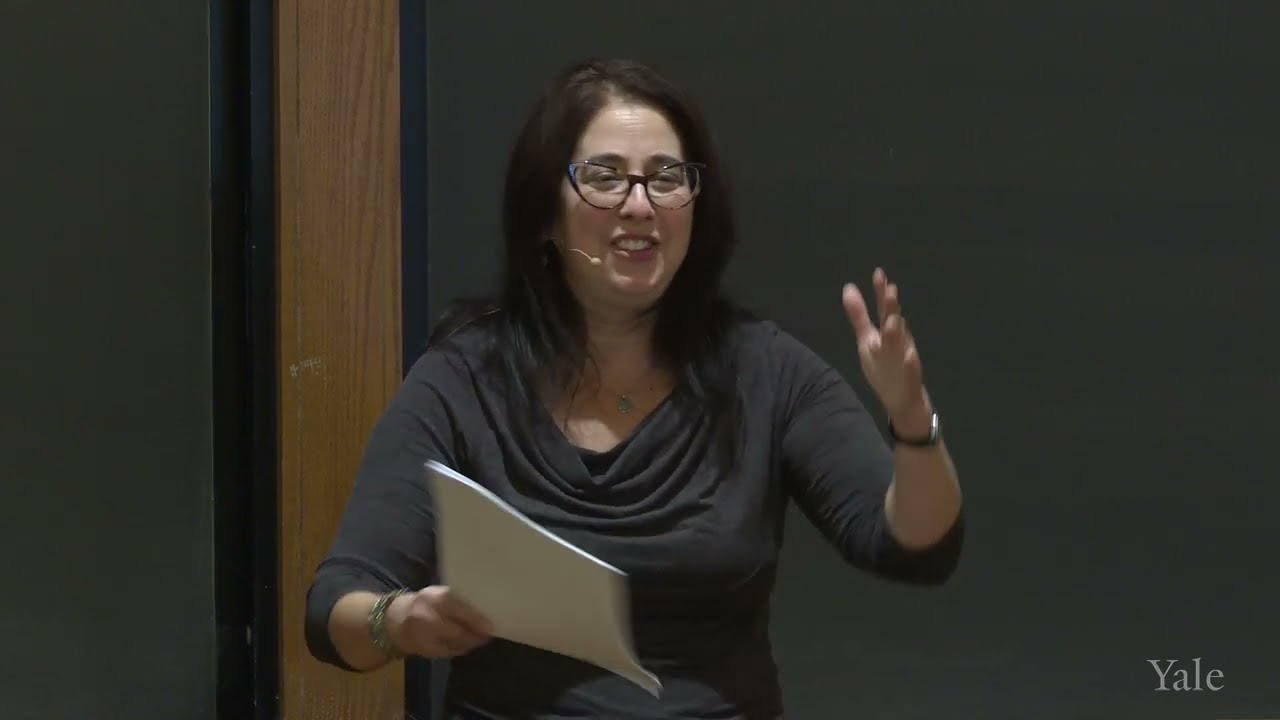
European Intellectual History since Nietzsche: Class 19, Structuralism and Anthropology
Keywords
Summary
137 words
Critical Evaluation
The lecture provides a comprehensive and accessible introduction to structuralism and its anthropological applications. Shore effectively contextualizes structuralism within the broader intellectual history, linking it to responses to the death of God and the search for grounding. She clearly explains Saussure’s key concepts, such as the arbitrary nature of the sign and the distinction between langue and parole, and demonstrates how these ideas influenced Levi-Strauss. The discussion of Levi-Strauss’s work on myths and kinship is insightful, showing how structural analysis reveals underlying patterns in human culture. Shore’s emphasis on the anti-humanist nature of structuralism is nuanced, clarifying that it is not anti-humanitarian but rather decenters the individual subject. The lecture is well-structured, with clear transitions and relevant examples. However, it is a single lecture and does not provide a comprehensive critique of structuralism, nor does it engage with post-structuralist critiques. The sources cited are primarily the course materials and primary texts, which are appropriate for an academic lecture. The adéquation between title and content is strong, as the lecture directly addresses structuralism and anthropology. Overall, the lecture is a valuable resource for students and enthusiasts of intellectual history, offering a solid foundation for further study.
195 words
Title / Content Match
The title accurately reflects the content, which focuses on structuralism and anthropology within the broader course on European intellectual history.
Quality & Reliability
8/10
Lecture by a Yale professor, part of an accredited course, with references to primary sources and scholarly context. The content is well-structured and historically grounded, though it is a single lecture with inherent subjectivity.
Key Moments
Markers derived by PSI from the transcript: the creator did not define chapters.
- Introduction and personal anecdote about a conference in Ukraine
- Discussion of revisionist Marxism and the model of embeddedness
- Transition to structuralism as a response to the death of God
- Introduction to Saussure's linguistics and the concept of language as form
- Explanation of the arbitrary nature of the sign and the relational system
- The encounter between Jakobson and Levi-Strauss in New York
- Levi-Strauss's structural analysis of myths and kinship
- Discussion of the anti-humanist nature of structuralism
- Comparison of structuralism with other intellectual movements
- Conclusion and summary of key points
Cited Sources
- Course materials and syllabus — Link to course syllabus and handouts provided in the video description.
- Full course playlist — Link to the complete course playlist on YouTube.
Concurring Sources
- Course syllabus — The syllabus likely includes readings on structuralism and anthropology, supporting the lecture's content.
Contribution & Novelties
This lecture provides a clear and engaging introduction to structuralism and structural anthropology, emphasizing the historical context and intellectual influences. It highlights the pivotal encounter between Roman Jakobson and Claude Levi-Strauss, which is often underemphasized in standard accounts. The lecture also clarifies the anti-humanist stance of structuralism, distinguishing it from humanism and humanitarianism.
Pour aller plus loin :
- Ferdinand de Saussure — Overview of Saussure’s life and linguistic theories.
- Claude Levi-Strauss — Biography and contributions to structural anthropology.
- Structuralism — General overview of structuralism in various disciplines.
87 words
Radar Profile
The radar profile shows high scores in information quality and reliability, with slightly lower scores in technical level and quantity, indicating a well-balanced lecture that is accessible yet academically rigorous.