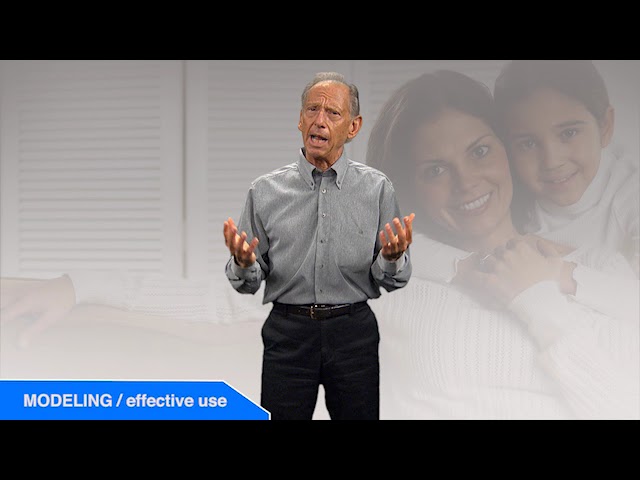
07 | Use Modeling to Develop Positive Behaviors – with Dr. Alan Kazdin
Keywords
Summary
114 words
Critical Evaluation
The video provides a clear and practical introduction to using modeling as a deliberate parenting technique. Dr. Kazdin’s expertise is evident, and the content is well-structured, with step-by-step instructions and relatable examples. The scientific basis, including reference to mirror neurons, adds credibility, though the explanation is simplified for a general audience. The argumentation is solid, emphasizing that modeling is not a substitute for practice but a complementary tool. The video does not cite specific studies, but the principles align with established psychological research on observational learning (e.g., Bandura’s work). The advice to avoid modeling negative behaviors is particularly valuable. The production quality is high, and the pacing is appropriate. However, the video could benefit from more concrete evidence or citations to support the claims. Overall, it is a trustworthy resource for parents seeking evidence-informed strategies, though it is not a comprehensive academic review.
143 words
Title / Content Match
The title accurately reflects the content, focusing on using modeling to develop positive behaviors in children.
Quality & Reliability
8/10
The content is presented by Dr. Alan Kazdin, a renowned psychologist and professor at Yale, with a strong evidence-based background. The video is part of a Yale course, lending institutional credibility. The explanations are clear, scientifically grounded (e.g., mirror neurons), and practical. However, specific research citations are not provided in the video, limiting the ability to verify all claims directly.
Key Moments
Markers derived by PSI from the transcript: the creator did not define chapters.
- Introduction to modeling as a familiar concept with research-based guidelines.
- Definition of modeling as teaching by example, contrasting with accidental modeling.
- Explanation of observational learning and the role of mirror neurons.
- Examples of modeling in everyday life, such as driving and sports.
- Introduction of the four steps to use modeling effectively.
- Step 1: Select a characteristic to develop in your child.
- Step 2: List specific examples of the characteristic.
- Step 3: Model the specific behaviors and point them out.
- Step 4: Praise any instance of the child showing the behavior.
- Warning against modeling negative behaviors, with examples.
Cited Sources
- Everyday Parenting: The ABCs of Child Rearing (Yale Online) — Course page for the Everyday Parenting course, which this video is part of.
- Everyday Parenting (Coursera) — Coursera version of the course, providing additional resources and materials.
- Everyday Parenting Playlist (YouTube) — Playlist containing all videos from the Everyday Parenting course.
Concurring Sources
- Observational learning (Wikipedia) — General concept of observational learning, which aligns with the video's explanation.
- Mirror neuron (Wikipedia) — Neural basis of observational learning, as mentioned in the video.
Contribution & Novelties
The video provides a structured, step-by-step approach to using modeling as a deliberate parenting tool, which is more actionable than general advice. It emphasizes the importance of combining modeling with praise and practice, and highlights the risk of inadvertently modeling negative behaviors. The content is accessible and practical for parents.
Pour aller plus loin :
- Observational learning — Overview of the concept and its mechanisms.
- Mirror neurons — Explanation of the neural basis of observational learning.
- Albert Bandura’s social learning theory — Foundational research on modeling and imitation.
88 words
Radar Profile
The radar profile shows high scores in quality of information and reliability, reflecting the expert presentation and evidence-based approach. The quantity of information is moderate, and the technical level is accessible, making it suitable for a broad audience. Overall, the video is a reliable and practical resource for parents.