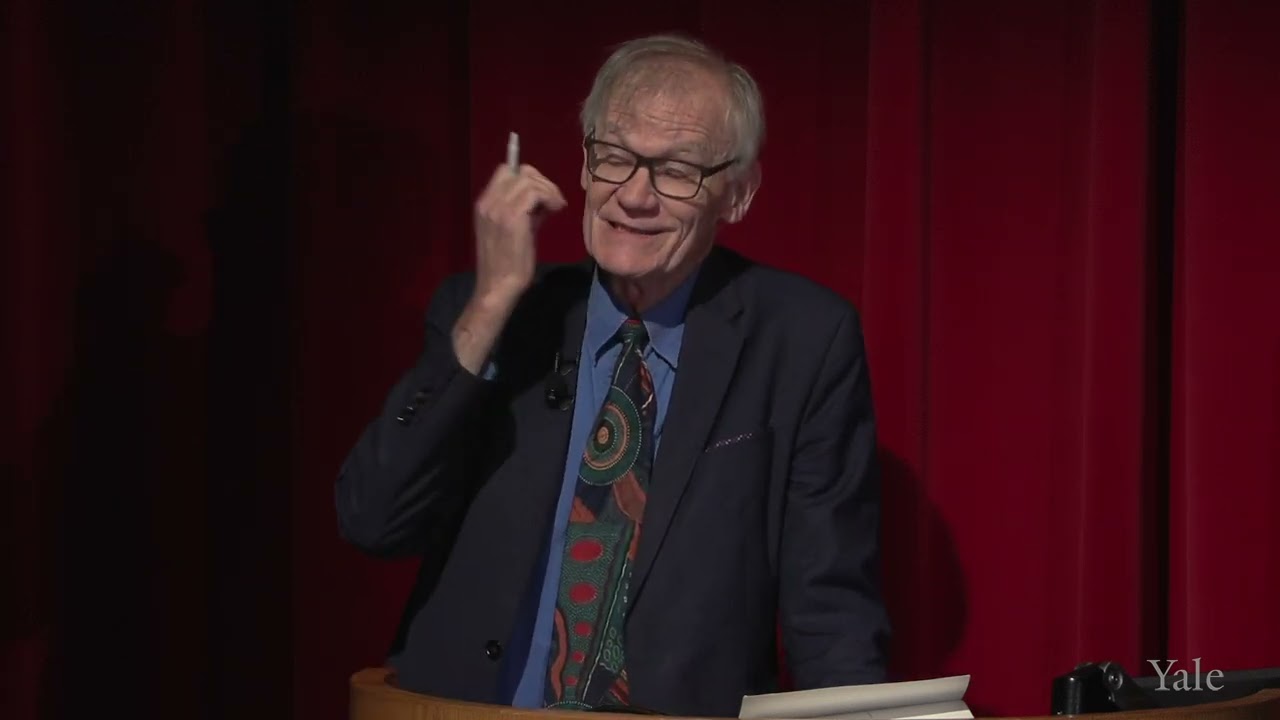
Class 4 The 18th Century Founding of Yale and its Many Contexts
Keywords
Summary
141 words
Critical Evaluation
The lecture offers a nuanced and scholarly exploration of the historical context surrounding Yale’s founding. Professor Blight demonstrates deep expertise in American history, weaving together Native American history, colonial Puritanism, and the concept of legacy. His argument that legacies are contested and about power is compelling and well-supported with examples. The use of literary references, such as Moby Dick, adds depth and engages the audience. However, the lecture is primarily a narrative and interpretive piece rather than presenting new research or data. The sources are not explicitly cited within the lecture, though the description provides a playlist for the series. The discussion of the ‘vanishing Indian’ trope is critical and aligns with modern scholarship, but the lecture could benefit from more direct engagement with specific historical documents or archaeological evidence. The adéquation between title and content is strong, as the lecture indeed covers the founding of Yale and its many contexts. The overall quality is high, suitable for an academic audience, though it may be less accessible to those without prior knowledge of American colonial history.
176 words
Title / Content Match
The title accurately reflects the content, which focuses on the founding of Yale in the 18th century within broader contexts of Native American dispossession and Puritan vision.
Quality & Reliability
8/10
Lecture by a Yale professor, part of an academic series, with nuanced historical analysis and references to primary sources, though not peer-reviewed.
Key Moments
Markers derived by PSI from the transcript: the creator did not define chapters.
- Introduction and opening quote from Tecumseh
- Discussion of the 'vanishing Indian' trope and Native survival
- Analysis of Moby Dick and the Pequod as metaphor
- Definition of legacy and its various forms
- Legacies in law, health, and institutions
- Reference to Primo Levi on memory suppression
- Native peoples of the Northeast before Yale's founding
Cited Sources
- Can It Happen Here Again? Yale, Slavery, and Legacies: 2024 DeVane Lecture Series — Playlist of the lecture series, providing context and additional lectures.
Concurring Sources
- Yale and Slavery Research Project — Official Yale project examining the university's historical ties to slavery, aligning with the lecture's themes.
Contribution & Novelties
The lecture provides a nuanced perspective on the founding of Yale, emphasizing the often-overlooked Native American context and the concept of legacy as a contested and powerful force. It challenges the ‘vanishing Indian’ trope and highlights the survival of Native peoples.
Pour aller plus loin :
- Pequot War — Overview of the conflict that shaped early Connecticut history.
- King Philip’s War — Details on the 1675-76 war and its impact on New England.
- Primo Levi — Author quoted on memory and suppression, relevant to the discussion of legacy.
88 words
Radar Profile
The radar profile shows high scores in information quantity, quality, and reliability, with a moderate technical level. This indicates a well-researched, accessible lecture suitable for a broad audience.