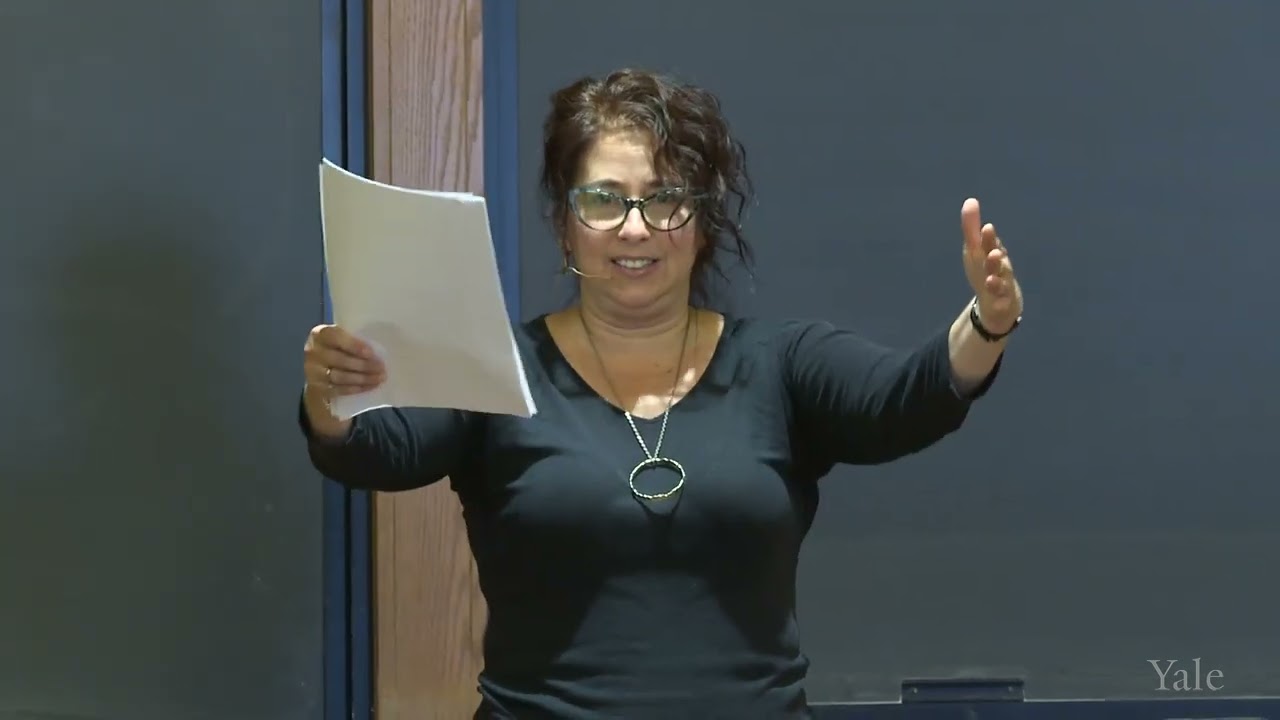
European Intellectual History since Nietzsche: Class 5, Marxism
Keywords
Summary
152 words
Critical Evaluation
This lecture is a masterful example of intellectual history pedagogy. Professor Shore’s approach is to make the past intelligible by asking students to bracket their present knowledge and imagine the appeal of Marxism in its historical context. She draws on the insights of Isaiah Berlin, who famously analyzed the dangers of Hegelianism, and Hannah Arendt, to illuminate the philosophical underpinnings of totalitarian thought. The lecture is well-structured, moving from Hegel’s abstract metaphysics to Marx’s concrete political economy, and it effectively conveys the seductive power of these ideas. Shore’s use of metaphors, such as the ‘Hegelian bite’ and the apple seed, makes complex concepts accessible without oversimplifying them. She is careful to distinguish between explaining the appeal of Marxism and endorsing it, maintaining a critical distance. The sources cited are authoritative, and the lecture is consistent with mainstream scholarship in intellectual history. One minor weakness is that the lecture does not engage with critiques of Marx’s economics or the practical failures of Marxist regimes in detail, but this is appropriate for a survey course. The title accurately reflects the content, and the lecture is of high quality for its intended audience. Overall, this is an excellent educational resource that provides a nuanced understanding of a pivotal moment in European thought.
209 words
Title / Content Match
The title accurately reflects the content: a university lecture on Marxism within the context of European intellectual history.
Quality & Reliability
8/10
Lecture by a Yale professor, based on established scholarship (Isaiah Berlin, Hannah Arendt), with clear explanations of complex ideas. No original research, but high pedagogical quality.
Key Moments
Markers derived by PSI from the transcript: the creator did not define chapters.
- Introduction: The challenge of understanding the appeal of Marxism.
- Isaiah Berlin's thesis on the import of Hegelianism to Russia.
- The Hegelian bite and the seduction of totality.
- Explanation of the master-slave dialectic and relational identity.
- Hegel's concept of telos and the unfolding of history.
- The distinction between subjective and objective in Hegel.
- Marx's transformation of Hegel's ideas into concrete terms.
- Discussion of alienation and reification.
- Hannah Arendt on Hegel's philosophy as a residence or prison.
- Conclusion: The enduring relevance of understanding Marxism's appeal.
Cited Sources
- Course syllabus and handouts — Official course materials for HIST 271/HUMS 339.
- Full course playlist — Access to all lectures in the series.
Concurring Sources
- Stanford Encyclopedia of Philosophy: Hegel — Provides scholarly overview of Hegel's philosophy, consistent with the lecture's presentation.
- Stanford Encyclopedia of Philosophy: Marx — Offers detailed analysis of Marx's thought, aligning with the lecture's focus.
Contribution & Novelties
This lecture provides a clear and engaging synthesis of Hegelian and Marxist thought, emphasizing the intellectual appeal of these ideas in their historical context. It offers valuable pedagogical insights for teaching intellectual history.
Pour aller plus loin :
- Hegel’s Phenomenology of Spirit — Stanford Encyclopedia of Philosophy entry on Hegel.
- Marx’s Capital — Stanford Encyclopedia of Philosophy entry on Marx.
- Isaiah Berlin on Hegel — Stanford Encyclopedia of Philosophy entry on Isaiah Berlin.
73 words
Radar Profile
The radar profile shows high scores in information quantity and quality, with a slightly lower score in technical level, reflecting the lecture's accessibility for a general audience. The overall reliability is high, consistent with the academic context.