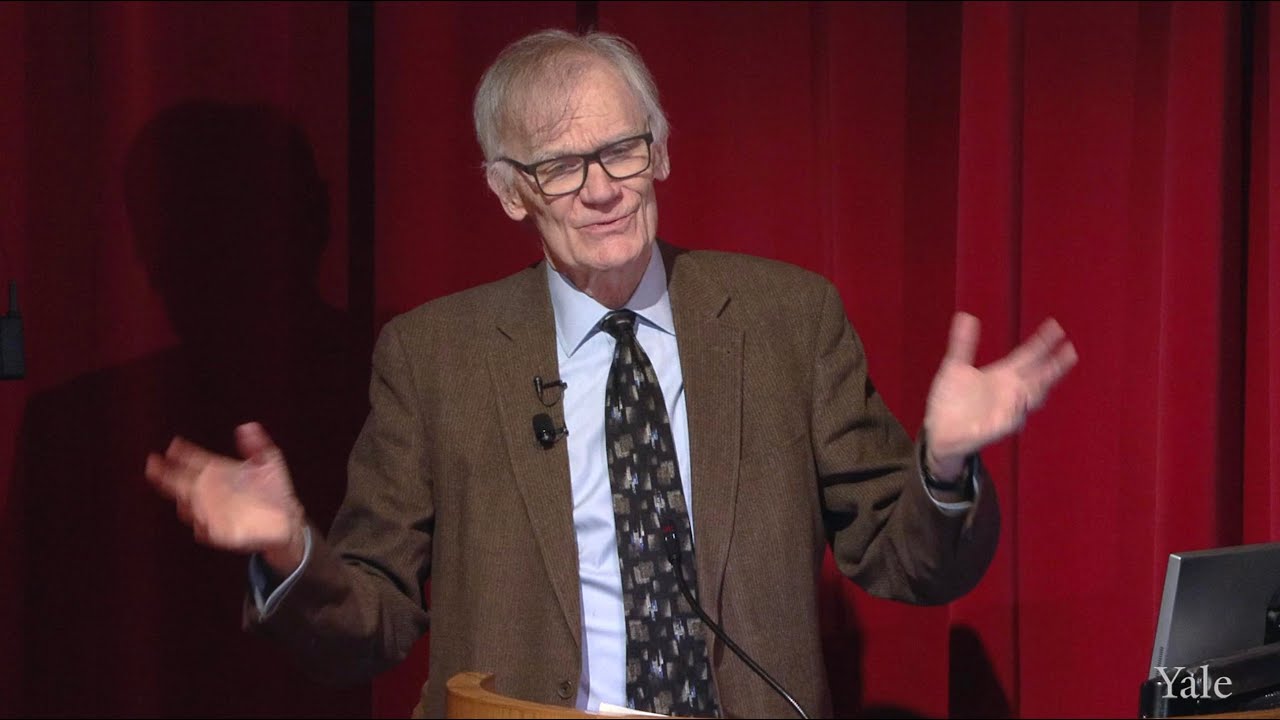
Class 16, Homefronts and Battlefronts: The Social Impact of Total War
Keywords
Summary
145 words
Critical Evaluation
Professor Blight delivers a compelling and nuanced lecture that masterfully weaves together personal stories, historical analysis, and historiographical debates. The strength of the lecture lies in its balanced treatment of Lincoln, acknowledging his flaws while recognizing his pivotal role in emancipation. Blight effectively uses primary sources, such as the WPA narratives and the Manning family story, to humanize the historical experience. The argument that emancipation was a collaborative process between Lincoln and the enslaved is well-supported and avoids simplistic narratives. The lecture also engages with the historiography, referencing works by Eric Foner and others, demonstrating a deep command of the field. The discussion of Lincoln’s various portrayals by Mencken, Sandburg, Tarbell, and Du Bois provides a rich analysis of how historical memory shapes our understanding. The lecture is intellectually rigorous, yet accessible, making it suitable for both academic and general audiences. The only minor critique is that the lecture could have delved deeper into the military aspects of total war, but the focus on social impact is a deliberate and effective choice. Overall, this is an exemplary lecture that offers profound insights into a pivotal moment in American history.
189 words
Title / Content Match
The title accurately reflects the content, focusing on the social impact of total war on homefronts and battlefronts.
Quality & Reliability
9/10
Lecture by a Yale professor, part of an academic series, based on historical research and primary sources. High reliability, though it is an interpretive lecture.
Key Moments
Markers derived by PSI from the transcript: the creator did not define chapters.
- Introduction: The significance of emancipation and the story of Cornelius Garner.
- The Manning family story and the escape of John Wesley Manning to Yale.
- Discussion on who freed the slaves: Lincoln vs. self-emancipation.
- Lincoln's evolving views and the Lincoln-Douglas debates.
- The Emancipation Proclamation as a legal document and its limitations.
- Historical interpretations of Lincoln: Mencken, Sandburg, Tarbell, Du Bois.
- The role of the blockade and total war in emancipation.
- The social impact of war on homefronts and the experiences of enslaved people.
- The legacy of emancipation and its meaning for American democracy.
Cited Sources
- Can It Happen Here Again? Yale, Slavery, and Legacies: 2024 DeVane Lecture Series — The playlist for the entire lecture series, providing context for this lecture.
Concurring Sources
- The Fiery Trial: Abraham Lincoln and American Slavery — Eric Foner's Pulitzer Prize-winning book, which aligns with Blight's interpretation of Lincoln's evolution.
Dissenting Sources
- The Real Lincoln: A New Look at Abraham Lincoln, His Agenda, and an Unnecessary War — A revisionist work by Thomas DiLorenzo that argues Lincoln's primary motive was not emancipation, offering a contrasting view.
Contribution & Novelties
This lecture provides a nuanced synthesis of emancipation historiography, emphasizing the interplay between Lincoln’s policies and the agency of enslaved people. It offers a compelling narrative that humanizes the historical experience through personal stories. The lecture also contributes to the ongoing discussion on the legacy of slavery in American institutions.
Pour aller plus loin :
- Emancipation Proclamation — The original document and its historical context.
- W. E. B. Du Bois — Background on the scholar and his views on Lincoln.
- Eric Foner — Historian whose work on Lincoln and slavery is referenced in the lecture.
95 words
Radar Profile
The radar profile shows high scores in information quantity, quality, and reliability, with a slightly lower technical level, reflecting the lecture's academic yet accessible nature. The overall balance indicates a highly informative and trustworthy source.