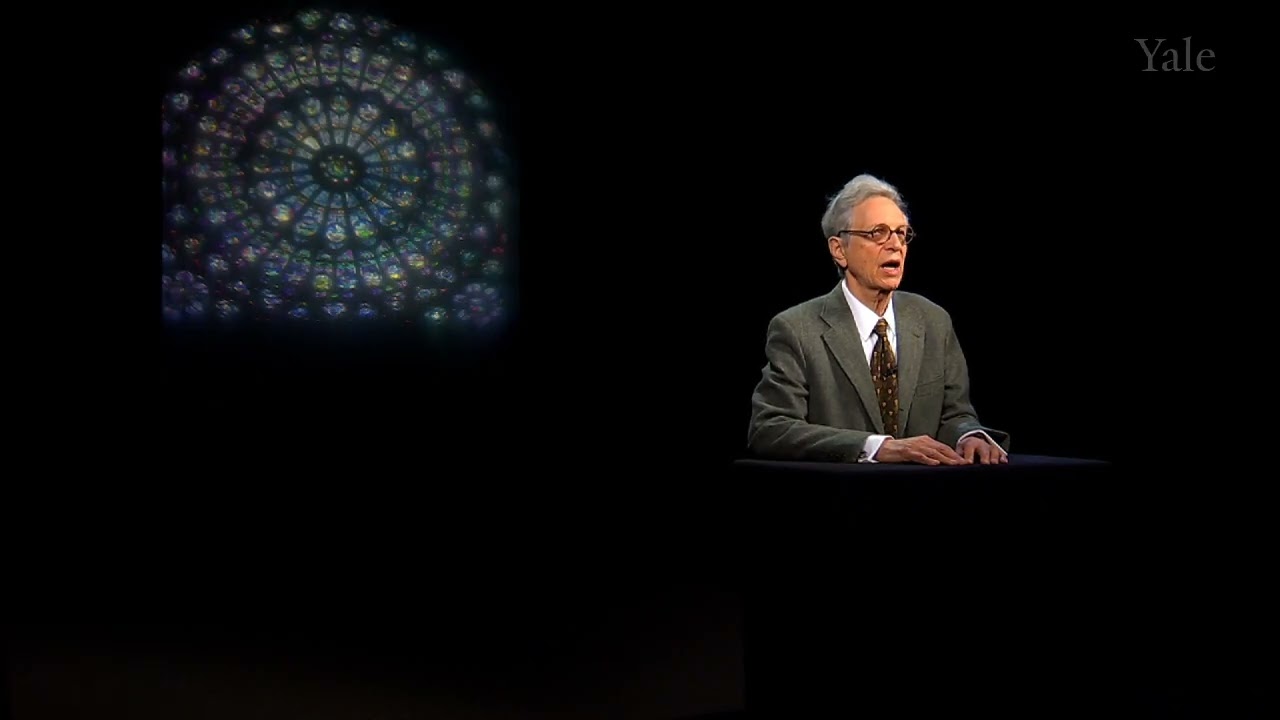
A Radiating Chapel: The Sainte-Chapelle | The Age of Cathedrals with R. Howard Bloch
Keywords
Summary
174 words
Critical Evaluation
The lecture provides a rich and nuanced analysis of the Sainte-Chapelle, combining architectural history with theological and political symbolism. Professor Bloch’s expertise is evident in his detailed descriptions of the relics and the chapel’s design, and he effectively explains the concept of nested forms as a fundamental principle of Gothic architecture. The argument is well-structured, moving from the historical context of Louis IX’s relic collection to the architectural features and finally to the symbolic interpretation. However, the lecture is primarily an expert opinion rather than a presentation of new research, and it does not engage with alternative interpretations or scholarly debates. The lack of explicit citations within the video is a minor weakness, though the information aligns with established scholarship. The visual aids, such as manuscript illuminations and drawings, enhance the presentation, but the video is relatively short and could benefit from more in-depth exploration of certain topics, such as the construction techniques or the political implications of the relic collection. Overall, the lecture is informative and thought-provoking, suitable for an audience interested in medieval history and architecture, and it successfully conveys the significance of the Sainte-Chapelle as a masterpiece of Gothic art.
193 words
Title / Content Match
The title accurately reflects the content, focusing on the Sainte-Chapelle as a radiating chapel and its role in the Age of Cathedrals.
Quality & Reliability
8/10
The video is an expert lecture by a Yale professor, providing detailed historical and architectural analysis. It is based on established scholarship, though it does not cite specific sources within the video. The information is accurate and well-contextualized, but the lack of direct citations and the subjective interpretation of symbolic meanings slightly reduce the score.
Chapters
Cited Sources
- Age of Cathedrals course page — Course information and resources.
- Age of Cathedrals on Coursera — Online course platform.
- YouTube playlist for the course — Playlist of course videos.
Concurring Sources
- Sainte-Chapelle on Wikipedia — Confirms the chapel's function as a reliquary and its architectural details.
- Louis IX of France on Wikipedia — Provides background on Louis IX and his relic collection.
Contribution & Novelties
The lecture offers a compelling interpretation of the Sainte-Chapelle as a giant reliquary, emphasizing the principle of nested forms and the transformation of time into space. It provides a detailed inventory of relics and explains how Louis IX’s own remains became relics, consolidating saintliness and monarchy. The discussion of the microcosmic model in Gothic architecture is particularly insightful.
Pour aller plus loin :
- Sainte-Chapelle on Wikipedia — Provides comprehensive information about the chapel’s history and architecture.
- Reliquary on Wikipedia — Explains the concept and types of reliquaries.
- Gothic architecture on Wikipedia — Overview of the architectural style and its principles.
100 words
Radar Profile
The radar profile shows high scores across all dimensions, indicating a well-rounded and reliable lecture. The strongest aspects are the quantity and quality of information, while the technical level is slightly lower, reflecting the accessible nature of the presentation.