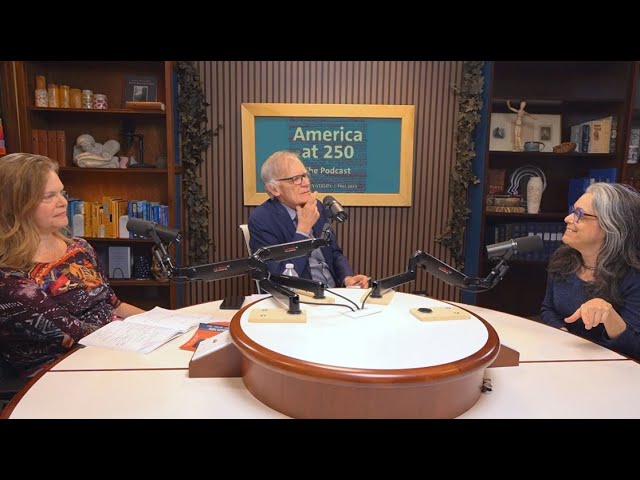
America at 250 Podcast Episode 2 - The Federalists, Early Republic, and the Real Hamilton
Keywords
Summary
152 words
Critical Evaluation
The podcast offers a rich, expert-level discussion of the early American republic, with three distinguished historians providing deep insights into the political and social context of the founding era. The value of the information is high, as the speakers draw on their extensive knowledge and primary source familiarity to illuminate the complexities of the period. The argumentation is solid, with each professor contributing unique perspectives: Freeman emphasizes the experimental nature of the republic and the centrality of public opinion, Gage highlights the tangible experiences of war and suffering, and Blight connects these themes to broader historical questions. The rigor is evident in their careful attention to historical detail, such as correcting the common misnomer ‘Federalist Papers’ to ‘The Federalist,’ and their nuanced discussion of the Articles of Confederation’s role. The sources cited are primarily the course materials and the professors’ own expertise, which are credible, though the informal format means they do not provide explicit citations. The adequacy of the title is excellent, as it accurately reflects the content. The discussion is particularly strong in its analysis of the Federalist essays as both theoretical works and urgent political propaganda, and in its exploration of the founders’ fears of tyranny and anarchy. The podcast also effectively challenges popular misconceptions about Alexander Hamilton, setting the stage for future episodes. Overall, this is a high-quality, intellectually stimulating discussion that would benefit both students and enthusiasts of American history.
235 words
Title / Content Match
The title accurately reflects the content, which focuses on the Federalist period and Alexander Hamilton's historical context.
Quality & Reliability
9/10
High reliability due to the academic credentials of the speakers (Yale professors) and the institutional backing of Yale University. The discussion is grounded in historical scholarship and primary sources, though it is an informal podcast format.
Key Moments
Markers derived by PSI from the transcript: the creator did not define chapters.
- Introduction and discussion of the podcast's purpose and the somber date of September 11.
- Joanne Freeman explains the experimental nature of the new republic and the centrality of public opinion.
- Discussion of the Federalist essays and the fears of tyranny and anarchy.
- Analysis of the Articles of Confederation and their role as a 'League of Friendship'.
- Exploration of why the Revolutionary War was won despite the weak central government, including the role of France.
- Discussion of the shared suffering of war and its impact on the founders' views on government.
- Examination of the practical failures of the Articles of Confederation and the need for a stronger government.
- Discussion of the Constitutional Convention and the role of George Washington.
- Analysis of the Federalist essays as propaganda and the urgency behind their writing.
- Conclusion and preview of the next episode on the 1790s and the real Alexander Hamilton.
Cited Sources
- America at 250: The Podcast on Spotify — Podcast platform where the series is available.
- America at 250: The Podcast on Apple Podcasts — Podcast platform where the series is available.
- DeVane Lectures: America at 250 — Course page with syllabus and required readings.
Concurring Sources
- The Federalist Papers - Library of Congress — Primary source collection and analysis of the Federalist essays.
- Constitution of the United States - National Archives — Official text and historical context of the U.S. Constitution.
Dissenting Sources
- The Anti-Federalist Papers — While not directly cited, the Anti-Federalist writings provide a contrasting perspective on the Constitution, which is not discussed in the podcast.
Contribution & Novelties
This podcast provides a unique, conversational insight into the early American republic, emphasizing the experimental nature of the government and the personal experiences of the founders. It corrects common misconceptions, such as the proper name of the Federalist essays, and highlights the importance of the Articles of Confederation as a foundation for the Constitution. The discussion also underscores the role of fear and urgency in the creation of the Constitution, offering a more human perspective on the founders.
Pour aller plus loin :
- The Federalist Papers - Wikipedia — Provides an overview and context for the Federalist essays.
- Articles of Confederation - Wikipedia — Detailed information on the Articles and their weaknesses.
- Alexander Hamilton - Wikipedia — Biographical information on Hamilton and his role in the founding era.
128 words
Radar Profile
The radar profile shows high scores in quality and reliability, reflecting the expertise of the speakers and the academic backing. The quantity of information is also strong, though the technical level is moderate, as the discussion is accessible to a general audience. Overall, the podcast is a well-rounded, reliable source of historical insight.
💬 No comments were provided for analysis.