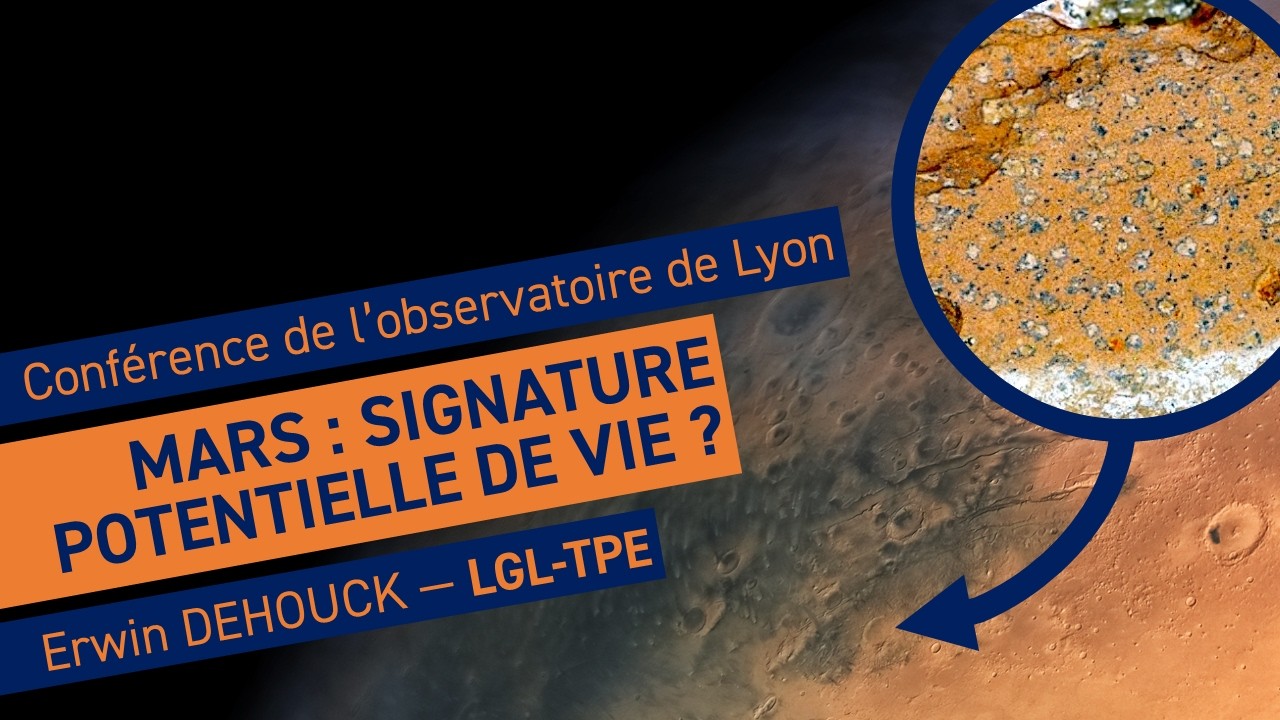
Biosignature potentielle sur Mars | Conférence de l'observatoire de Lyon
Keywords
Summary
136 words
Critical Evaluation
The conference provides an excellent, in-depth analysis of the potential biosignature discovery on Mars. Erwin Dehouck, as a co-author of the original Nature paper, offers a first-hand account that is both scientifically rigorous and accessible. He clearly explains the context of the discovery, the instruments used, and the reasoning behind the interpretation of the data. The talk is well-structured, starting with the mission background, then detailing the specific findings at Cheyava Falls, and finally discussing the implications and future steps. Dehouck is careful to distinguish between what is known and what is speculative, emphasizing that the observed features could have a non-biological origin. He also addresses the media hype and clarifies the actual scientific significance. The inclusion of a Q&A session adds value, as it allows for clarification of common misconceptions. The only minor weakness is that the technical level may be slightly high for a general audience, but the speaker does a good job of explaining jargon. Overall, this is a high-quality, reliable source of information on a topic that is often sensationalized.
174 words
Title / Content Match
The title accurately reflects the content, which focuses on a potential biosignature on Mars and its scientific context.
Quality & Reliability
9/10
The conference is given by a co-author of the original Nature paper, providing first-hand expertise. The content is based on peer-reviewed research and clearly distinguishes facts from interpretations. The speaker is transparent about uncertainties and the need for further analysis.
Chapters
Cited Sources
- Observatoire de Lyon — Official website of the observatory where the conference was held, providing additional information about the institution and its activities.
Concurring Sources
- NASA Press Release — NASA's official announcement of the discovery, which aligns with the conference's content.
Dissenting Sources
- Media headlines — Some media outlets reported the discovery as definitive evidence of life, which the conference corrects by emphasizing the potential nature of the biosignature.
Contribution & Novelties
This conference provides a unique, first-hand account of the potential biosignature discovery, offering insights from a co-author of the original study. It clarifies the scientific process and the distinction between potential and confirmed biosignatures, addressing common misconceptions. The talk also highlights the importance of the Mars Sample Return mission for definitive answers.
Pour aller plus loin :
- NASA’s Perseverance Rover — Official mission page with detailed information about the rover and its discoveries.
- Nature paper: Redox-driven mineral and organic associations in Jezero crater — The original peer-reviewed article detailing the findings.
- Mars Sample Return Mission — NASA’s page on the future mission to return samples from Mars.
107 words
Radar Profile
The radar profile shows high scores in information quantity, quality, and reliability, with a slightly lower technical level. This indicates a well-balanced presentation that is both informative and accessible, with a strong scientific foundation.
💬 No comments provided.