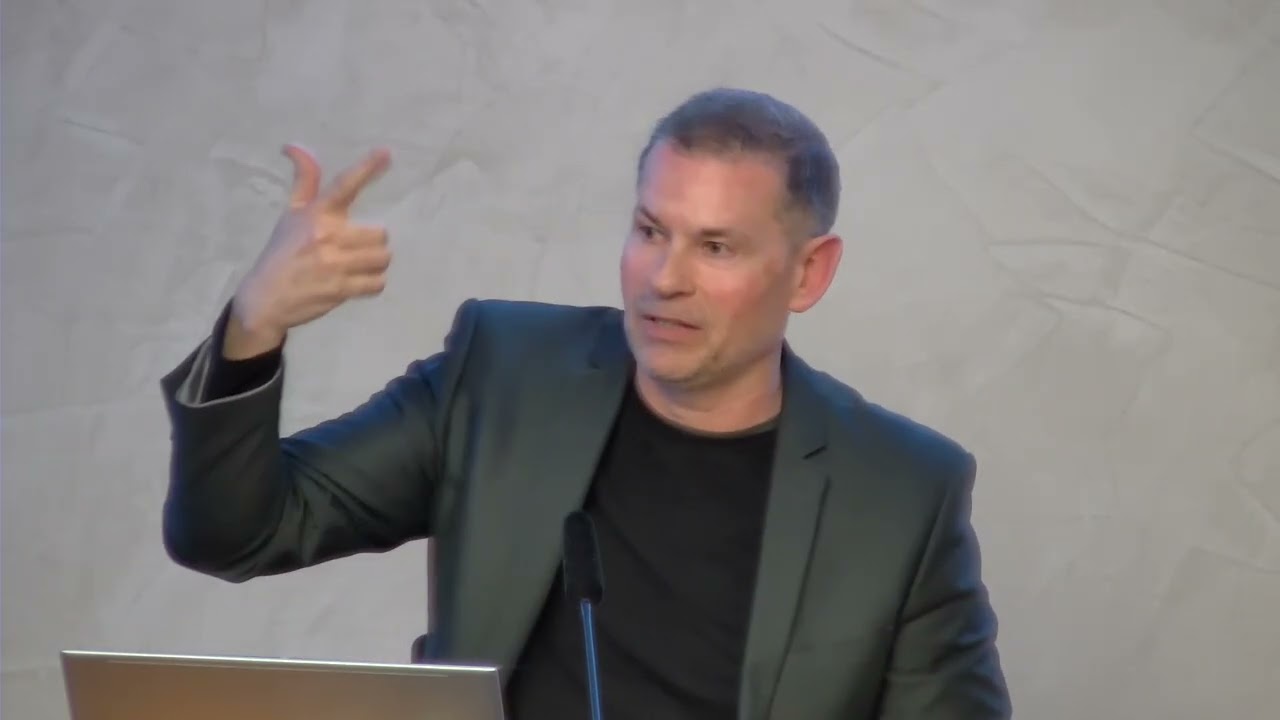
Clôture de la journée – Intervention du grand témoin, Frédéric Darbellay
Keywords
Summary
141 words
Critical Evaluation
Value of the Information & Strength of the Argument
The value of this talk lies in its synthesis of a complex topic and its proposal of a structured framework (the ‘who, what, where, when, how, how much, why’ questions) that can guide reflection on interdisciplinarity. Darbellay’s argumentation is coherent and grounded in his extensive experience in the field. He presents multiple perspectives and scenarios, which enriches the discussion. However, the talk is largely opinion-based and lacks empirical data or detailed case studies. The argumentation is persuasive but not rigorously scientific, as it relies on anecdotal evidence and general observations.
Scientific Rigor, Source Quality, Title Accuracy
The talk demonstrates a good understanding of the literature on interdisciplinarity, but it does not explicitly cite specific sources. The speaker references networks and associations (e.g., Science of Team Science, Association for Interdisciplinary Studies, Global Alliance for Inter- and Transdisciplinarity) and mentions colleagues, but no formal citations are provided. The title accurately reflects the content, as it is indeed the closing intervention by the designated ‘grand témoin’. The talk is well-structured and the speaker’s expertise is evident, but the lack of explicit references reduces its scientific rigor.
192 words
Title / Content Match
The title accurately describes the content: it is the closing intervention by the designated 'grand témoin' (witness) of the day.
Quality & Reliability
7/10
The speaker is a recognized expert in inter- and transdisciplinarity, and the talk is based on his experience and knowledge of the field. However, it is an opinion piece without formal citations or data, and the video is a recording of a conference closing session.
Key Moments
Markers derived by PSI from the transcript: the creator did not define chapters.
- Introduction: Darbellay acknowledges the difficulty of synthesizing the day and identifies key themes.
- Emphasizes that Lyon is connected to an international community working on interdisciplinarity.
- Introduces the framework of questions (who, what, where, when, how, how much, why) to structure the reflection.
- Discusses the 'why' of interdisciplinarity: epistemic drive, societal needs, and complexity.
- Talks about the 'who': profiles of interdisciplinary researchers, including 'hybrid' and 'migrant' types.
- Presents scenarios for the future: retreat, status quo, symbiotic coexistence, incremental university, post-disciplinary university, and conflict.
- Discusses the possibility of a post-disciplinary university and the role of disciplines.
- Q&A: Participants discuss the timing of interdisciplinary training and the importance of early exposure.
- Discussion on the need for spaces and communities to foster interdisciplinary work.
- Concluding remarks: encourages Lyon to continue engaging with international networks and to avoid becoming isolated.
Cited Sources
- Journée Inter-Transdisciplinarité (ITD) - LabEx ASLAN — Official page of the event where this talk was given.
Concurring Sources
- Interdisciplinarity — General reference on the concept, consistent with the talk's themes.
- Transdisciplinarity — General reference on the concept, consistent with the talk's themes.
Contribution & Novelties
The talk provides a structured synthesis of the day’s discussions and offers a framework of questions to guide future reflection on interdisciplinarity. It also presents a set of scenarios for the evolution of academic structures, which can serve as a basis for strategic planning. The discussion on researcher profiles and the importance of creating spaces for collaboration adds practical insights.
Pour aller plus loin :
- Interdisciplinarity — Overview of the concept and its history.
- Transdisciplinarity — Definition and key principles.
- Science of Team Science — Field focused on understanding and enhancing team science.
- Association for Interdisciplinary Studies — Professional organization for interdisciplinary studies.
- Global Alliance for Inter- and Transdisciplinarity — International network promoting ITD.
114 words
Radar Profile
The radar profile shows moderate scores across all dimensions, with slightly higher scores in quality and reliability. This indicates a balanced but not exceptional contribution, typical of an expert opinion piece that is informative but not groundbreaking.