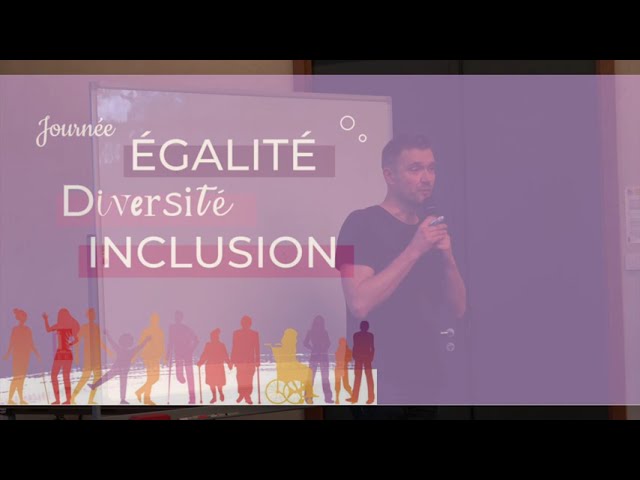
Thibault Chambriard : Situation de handicap
Keywords
Summary
175 words
Critical Evaluation
Value of the Information & Strength of the Argument
The talk offers valuable insights into a non-essentialist, systemic view of disability, challenging common misconceptions. The argumentation is solid, based on practical experience and theoretical references like Vygotsky’s zone of proximal development. The speaker effectively uses concrete examples, such as the wheelchair icon and the student with cards, to illustrate his points. However, the argumentation could be strengthened by citing specific studies or data to support claims like the percentage of wheelchair users.
Scientific Rigor, Source Quality, Title Accuracy
The speaker demonstrates scientific rigor by referencing theoretical frameworks (Vygotsky) and professional practices. However, no formal sources are cited in the talk, and the only link in the description is to the event page. The title accurately reflects the content, focusing on the distinction between individual and systemic aspects of disability. The talk is well-structured and coherent, with a clear progression from individual to systemic perspectives.
154 words
Title / Content Match
The title accurately reflects the content, which focuses on distinguishing individual and systemic aspects of disability situations.
Quality & Reliability
8/10
The speaker is a professional equality mission officer, providing an expert opinion grounded in practical experience and theoretical references (Vygotsky). The content is coherent and well-structured, though it lacks formal citations or empirical data.
Key Moments
Markers derived by PSI from the transcript: the creator did not define chapters.
- Introduction and greeting, emphasizing the importance of initial interactions.
- Explanation of the diagram with the heart and circles, distinguishing core activities from low-level tasks.
- Discussion of low-level tasks such as walking, reading, and energy management.
- Example of the student in a wheelchair and the critique of the wheelchair icon.
- Emphasis on systemic barriers and the role of inclusive pedagogy.
- Discussion of intersectionality and the importance of considering multiple factors.
- Conclusion with an example of how financial support can increase female enrollment.
Cited Sources
- Journée EDI, de la réflexion à la pratique — Event page for the EDI day where this talk was given.
Concurring Sources
- Journée EDI, de la réflexion à la pratique — The event page confirms the context of the talk within an EDI day.
Contribution & Novelties
The talk provides a practical framework for understanding disability as a systemic issue, offering a method for initial interactions that avoids essentializing the person. It emphasizes the importance of distinguishing between individual and systemic barriers and advocates for inclusive pedagogy.
Pour aller plus loin :
- Zone of proximal development — Relevant to the theoretical basis of the speaker’s approach.
- Universal Design for Learning — Directly related to inclusive pedagogy mentioned in the talk.
- Intersectionality — Key concept discussed in the talk.
81 words
Radar Profile
The radar profile shows high scores in quality of information and fiabilité, with moderate scores in quantity and technical level, indicating a focused and reliable expert talk.