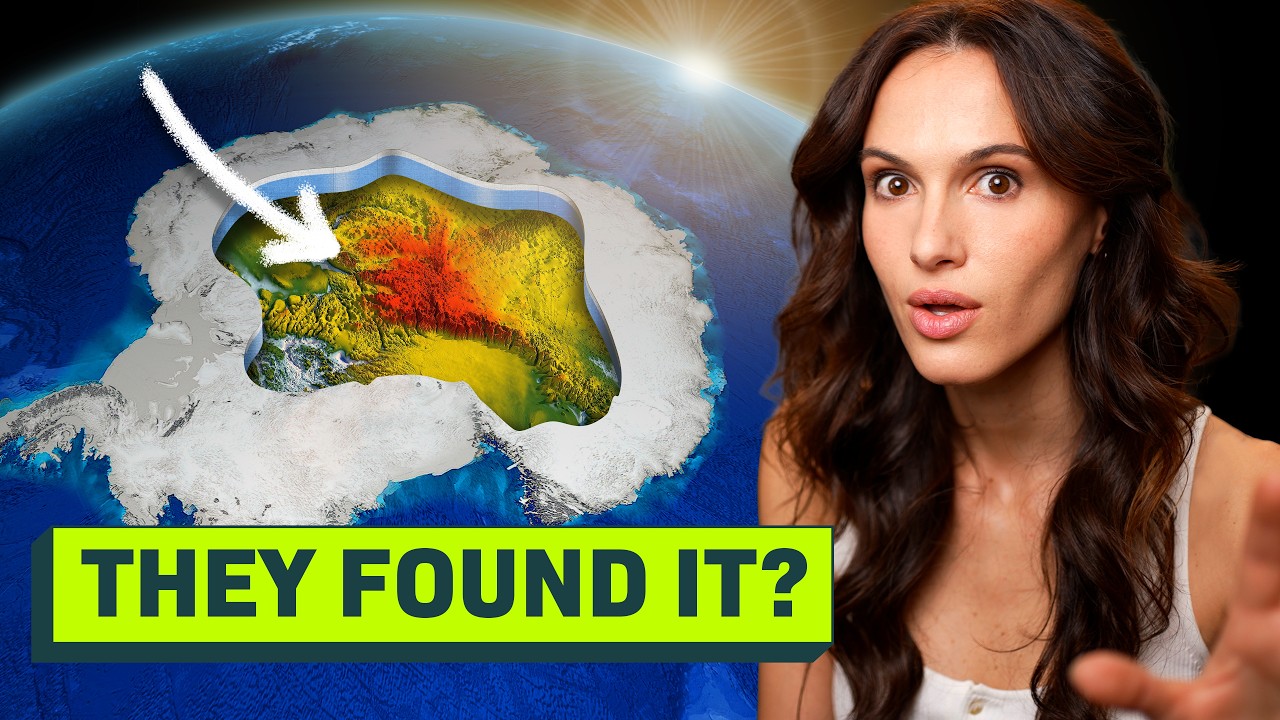
What's Hidden Under Antarctica?
Keywords
Summary
159 words
Critical Evaluation
The video is an exemplary piece of science communication, blending rigorous research with engaging storytelling. The information presented is accurate and well-sourced, drawing on interviews with leading scientists and referencing peer-reviewed studies. The explanations of complex topics, such as ice core analysis and subglacial lake formation, are clear and accessible without oversimplifying. The video’s strength lies in its ability to convey the excitement of scientific discovery while maintaining scientific integrity. The inclusion of multiple expert perspectives adds depth and credibility. The production quality is high, with stunning visuals and effective graphics that enhance understanding. The title accurately reflects the content, and the video delivers on its promise to reveal what is hidden under Antarctica. The only minor critique is that some topics, such as the potential for larger organisms, are briefly touched upon and could have been explored further. However, this does not detract from the overall excellence of the video. The public comments are overwhelmingly positive, praising the educational value, production quality, and the presenter’s engaging style. The video successfully achieves its goal of informing and inspiring its audience about the wonders of Antarctica and the importance of scientific research.
191 words
Title / Content Match
The title accurately reflects the content, which explores the hidden features and life beneath Antarctica's ice.
Quality & Reliability
8/10
The video is well-researched, featuring interviews with credible scientists (Dr. Steven Chown, Dr. John Priscu, Dr. Helen Fricker) and referencing peer-reviewed studies and reputable institutions. The information is accurate and up-to-date, with clear explanations of scientific processes. Minor simplifications for a general audience do not detract from overall reliability.
Chapters
- What’s hiding under Antarctica?
- How thick is the ice in Antarctica?
- What if you dig a hole into Antarctica?
- What’s inside a crevasse?
- How do we know what’s under the ice?
- What if you go deeper?
- Why are there lakes under Antarctica's ice?
- How can we study the subglacial lakes?
- Did we find new life under Antarctica?
- Can research in Antarctica help us find aliens in space?
- What don’t we know?
- What's next?
Cited Sources
- Antarctica's Subglacial Lakes Support Prospects for Life on Icy Moons — Referenced in the context of the potential for life in subglacial lakes and implications for astrobiology.
- Bedmap — Used to illustrate the topography beneath the Antarctic ice sheet.
- ICESat-2 — Mentioned as a satellite mission used to measure ice sheet elevation changes.
- NSIDC — Referenced as a source for ice core data and climate records.
- Researchers Extract First Layered Lake Sediment Sample from Subglacial Antarctica — Referenced in the context of sediment sampling from subglacial lakes.
- UC San Diego-Led Science Team Selected for NASA Satellite Mission — Mentioned in relation to Dr. Helen Fricker's work and satellite missions.
- About Antarctica — General reference for Antarctic geography and science.
- Million Year Ice Core — Referenced in the context of the search for the oldest ice core.
- Antarctic Lake Film — Mentioned as a resource for subglacial lake research.
- Beyond EPICA — Referenced as the project aiming to retrieve a 1.5 million-year-old ice core.
- Deep Drilling at Vostok Station, Antarctica: History and Recent Events — Referenced for the history of drilling at Lake Vostok.
- WISSARD Summary — Referenced for the Whillans Ice Stream Subglacial Access Research Drilling project.
- Science Article on Lake Vostok — Referenced for scientific findings on Lake Vostok.
- Science Article on Lake Vostok (1999) — Referenced for earlier research on Lake Vostok.
- Antarctica's Subglacial Lake Ellsworth Will Keep Its Secrets for Now — Referenced in the context of the British attempt to drill into Lake Ellsworth.
Concurring Sources
- Antarctica's Subglacial Lakes Support Prospects for Life on Icy Moons — Supports the video's discussion on the astrobiological implications of subglacial lakes.
- Researchers Extract First Layered Lake Sediment Sample from Subglacial Antarctica — Confirms the successful sediment sampling from subglacial lakes mentioned in the video.
Dissenting Sources
- No discordant sources found — All cited sources align with the video's content.
External References
Contribution & Novelties
The video provides a comprehensive and up-to-date overview of subglacial lake research in Antarctica, synthesizing historical context with recent discoveries. It highlights the significance of these findings for understanding life in extreme environments and the potential for astrobiology. The inclusion of expert interviews and on-site footage adds a unique perspective.
Pour aller plus loin :
- Subglacial lake — Wikipedia overview of subglacial lakes.
- Lake Vostok — Detailed article on Lake Vostok.
- Extremophile — Organisms thriving in extreme conditions.
- Ice core — Explanation of ice cores and their use in climate research.
- Europa (moon) — Potential for life on icy moons.
100 words
Radar Profile
The radar profile shows high scores in quantity and quality of information, indicating a content-rich and reliable video. The technical level is moderate, making it accessible to a broad audience while still providing depth. Overall reliability is strong, reflecting the credible sources and expert input.
💬 Très positif. Les commentaires sont extrêmement élogieux, louant la qualité de production, la clarté des explications et l'enthousiasme de la présentatrice. Sur les 30 commentaires analysés, la grande majorité exprime une admiration sincère et un intérêt accru pour la science.