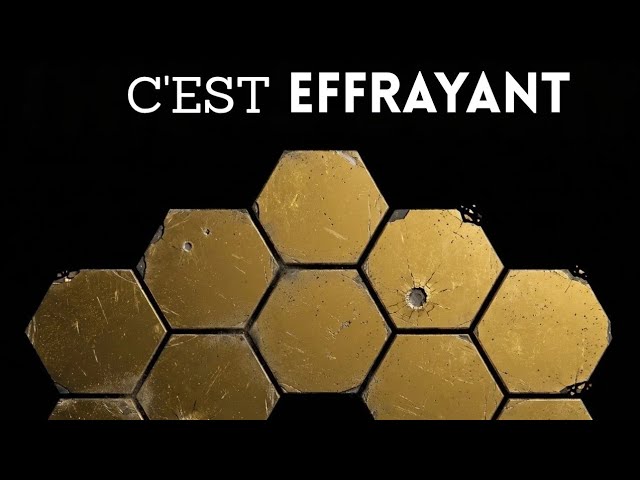
La Découverte la Plus Terrifiante du Télescope James Webb Change Tout
Keywords
Summary
156 words
Critical Evaluation
The video provides a compelling overview of three key anomalies in modern cosmology: the existence of unexpectedly massive early galaxies, the Hubble tension, and potential violations of the cosmological principle. The information is largely accurate and based on real JWST observations and published studies (e.g., Nature 2023, SH0ES project). However, the presentation is heavily dramatized with clickbait language (’terrifying’, ‘déstabilisante’), which undermines its scientific credibility. The video fails to cite specific sources or provide links to the studies mentioned, making it difficult for viewers to verify claims. The argumentation is one-sided, presenting only evidence that challenges ΛCDM without discussing alternative explanations or the robustness of the model. For instance, the ‘impossible galaxies’ may be partially explained by revised star formation models or dust effects, which are not mentioned. The Hubble tension is presented as a definitive crisis, but many cosmologists consider it a tension that may be resolved by improved measurements or new physics. The video also omits the fact that JWST data has confirmed some aspects of ΛCDM, such as the cosmic distance ladder. The structure is clear and engaging for a general audience, but the lack of nuance and absence of counterarguments reduce its educational value. The title is misleadingly alarmist, but the content does address genuine scientific debates. Overall, the video is a useful introduction to current cosmological puzzles but should be supplemented with more balanced and cited sources.
232 words
Title / Content Match
The title is clickbait, exaggerating the 'terrifying' nature of discoveries, but the content does discuss genuine anomalies in cosmology.
Quality & Reliability
The video references real JWST discoveries and scientific publications (e.g., Nature, SH0ES project) but lacks specific citations and uses sensationalist framing. The presenter's credentials are not provided, and the content is presented as a dramatic narrative rather than a rigorous analysis.
Key Moments
- Introduction: JWST discoveries challenge cosmology
- Explanation of looking back in time
- Discovery of massive early galaxies (JADES-GS-z14-0)
- Hubble tension explained and JWST confirmation
- Large-scale structure anomalies (Giant Arc)
- Discussion of three anomalies together
- Implications for standard model of cosmology
Cited Sources
- Nature 2023 study on six massive galaxy candidates — Mentioned as identifying galaxies with masses comparable to Milky Way at 500-700 million years after Big Bang
- SH0ES project results (2023) — JWST observations confirming Hubble tension at 73.4 km/s/Mpc
- Giant Arc discovery (2022) — Structure spanning 3.3 billion light-years potentially violating cosmological principle
Concurring Sources
- JWST Early Release Science results — General agreement on existence of massive early galaxies
- Planck 2018 results (CMB) — Provides the 67.4 km/s/Mpc value for Hubble constant
Dissenting Sources
- Alternative explanations for early galaxies (e.g., dust, star formation bursts) — Some models suggest that early galaxies may appear more massive due to dust or different star formation histories, reducing tension with ΛCDM.
- Studies questioning the Giant Arc's statistical significance — Some analyses argue that the Giant Arc may be a chance alignment rather than a true structure.
Contribution & Novelties
The video synthesizes three major JWST-related anomalies into a single narrative, emphasizing their collective challenge to ΛCDM. It highlights the severity of the Hubble tension (5 sigma) and the unexpected maturity of early galaxies. However, it lacks original analysis or new insights beyond summarizing known results.
Pour aller plus loin :
- Lambda-CDM model — Overview of the standard cosmological model.
- Hubble tension review by Di Valentino et al. (2021) — Comprehensive review of the tension.
- JWST early galaxy results — NASA press release on JWST discoveries.
86 words
Radar Profile
The radar profile shows moderate scores across all dimensions, reflecting a balanced but not exceptional presentation. The quantity of information is good, but quality and reliability are limited by lack of citations and sensationalism. Technical level is appropriate for a general audience.