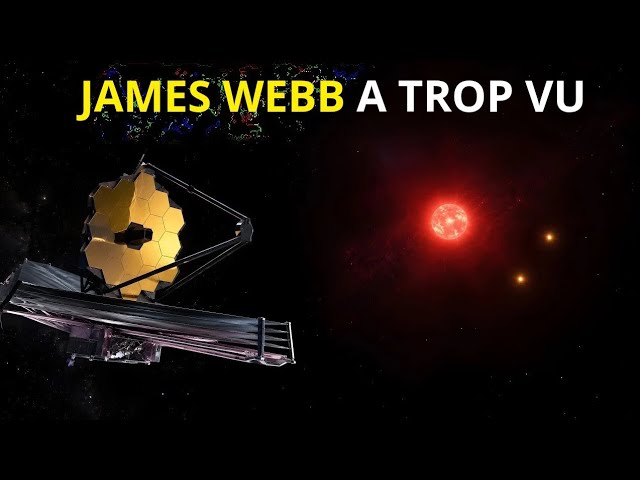
James Webb vient de voir Alpha Centauri pour la première fois — et c'est troublant
Keywords
Summary
163 words
Critical Evaluation
The video presents a narrative that is engaging but scientifically problematic. It claims that James Webb ‘saw’ Alpha Centauri for the first time, which is misleading; Webb has observed many stars, and Alpha Centauri was observed before by other telescopes. The video builds suspense around an alleged ‘disturbing’ discovery, but ultimately reveals that the signals were likely artifacts. This pattern of building up to a non-result is a common clickbait tactic. The video lacks citations to any peer-reviewed papers or official NASA/ESA releases. The description contains no links to sources, making it impossible to verify the claims. The discussion of Proxima Centauri b’s habitability is accurate in general terms, but the video does not mention recent studies that suggest the planet may have lost its atmosphere due to stellar flares. The technical explanation of Webb’s coronagraph and the challenges of observing bright stars is correct, but the video oversimplifies the process. The claim that scientists were ‘confused’ is exaggerated; the scientific community is cautious and expects to find artifacts in such observations. The video does not mention that Webb’s observations of Alpha Centauri are part of a larger program (GTO 1194) led by Kevin Wagner, and that results are preliminary. The video’s strength lies in making complex astronomy accessible, but its weakness is the lack of scientific rigor and reliance on sensationalism. The absence of any sources in the description severely undermines its credibility. The video would benefit from clearly stating that no confirmed exoplanet has been discovered and that the signals are under investigation. Overall, the video is more entertainment than science communication.
264 words
Title / Content Match
The title is clickbait, exaggerating the significance of the observations; the actual content discusses challenges in observing Alpha Centauri and potential signals, but no confirmed discovery.
Quality & Reliability
The video presents speculative interpretations without citing peer-reviewed sources, relies on sensationalism, and lacks verification of claims. No sources are provided in the description.
Key Moments
- Introduction: James Webb observed Alpha Centauri and found something confusing.
- Explanation of Alpha Centauri system: three stars, Proxima Centauri is closest.
- Discovery of Proxima Centauri b in 2016, a potentially habitable exoplanet.
- Problem: Proxima Centauri is a flare star, threatening habitability.
- James Webb launch and capabilities: infrared telescope, coronagraph.
- Challenge: Alpha Centauri A and B are too bright for Webb, saturate detectors.
- Kevin Wagner's team uses coronagraph to block starlight.
- Initial data shows signals in infrared, excitement about possible planet.
- Signals turn out to be artifacts, no confirmed planet.
- Conclusion: observations provide data but no discovery yet.
Contribution & Novelties
The video provides a detailed explanation of the technical challenges of observing bright stars with JWST, specifically the use of coronagraphs. It highlights the ongoing search for exoplanets in the Alpha Centauri system and the preliminary nature of the data. However, it does not present any new scientific findings.
Pour aller plus loin :
- NASA’s JWST page on Alpha Centauri — Official information about JWST observations of Alpha Centauri.
- Exoplanet Exploration: Proxima Centauri b — NASA’s page on Proxima Centauri b.
- Coronagraph technique explained — Wikipedia article on coronagraphs used in astronomy.
92 words
Radar Profile
The radar profile shows low scores in quality and reliability, reflecting the lack of sources and sensationalism. Quantity and technical level are moderate, indicating some informative content but with significant shortcomings.