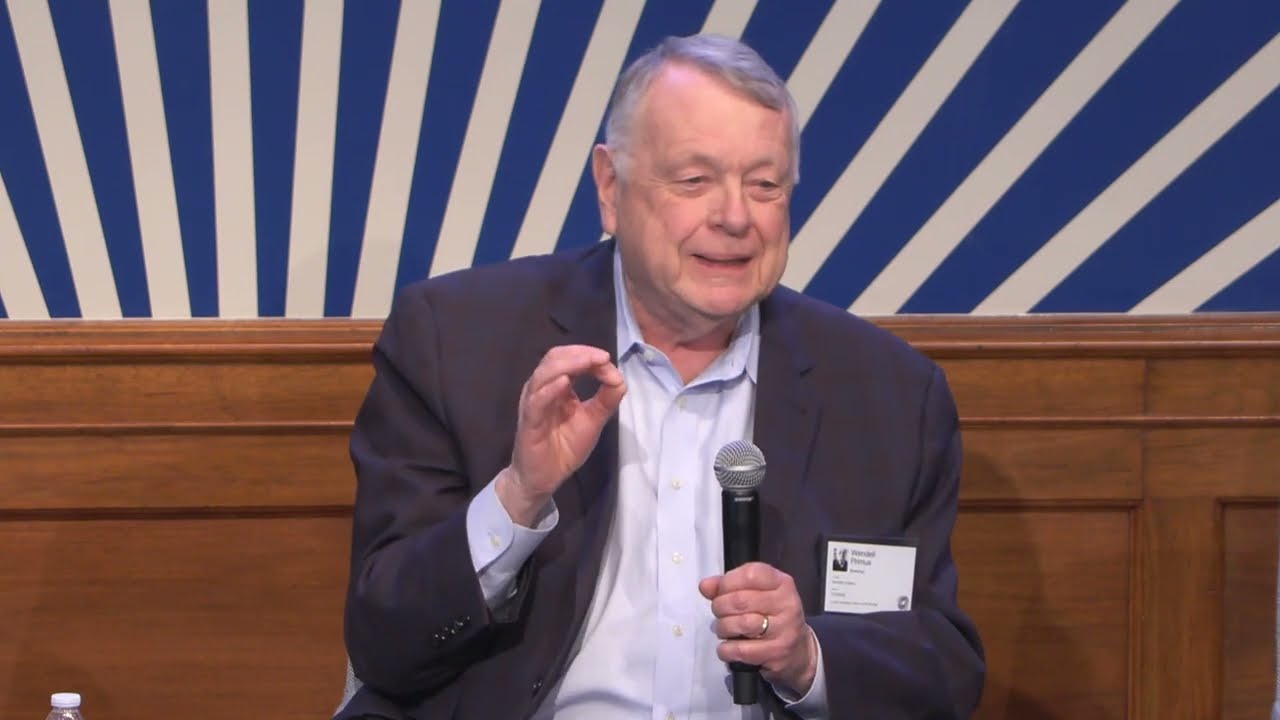
EBRI-Milken Institute Retirement Symposium — Ways Forward for Social Security
Keywords
Summary
214 words
Critical Evaluation
Value of the Information & Strength of the Argument
The video provides valuable insights from experienced policy experts, offering a range of perspectives on Social Security reform. The arguments are well-structured and grounded in policy knowledge, with references to official projections and historical context. The panelists present coherent cases for their preferred approaches, though the discussion is more opinion-driven than evidence-based. The value lies in the depth of expertise and the articulation of trade-offs, which is useful for understanding the policy landscape.
82 words
Title / Content Match
The title accurately reflects the content: a symposium panel discussing policy options for Social Security reform.
Quality & Reliability
8/10
Panel of recognized experts with deep policy experience, including former congressional staff and think tank scholars. They reference official projections (SSA, CBO) and historical reforms, but the discussion is largely opinion and policy advocacy rather than original research. No formal citations or data sources are provided in the video.
Key Moments
Markers derived by PSI from the transcript: the creator did not define chapters.
- Introduction by Emerson Sprick on the state of Social Security trust fund.
- Wendell Primus introduces himself and his background.
- Discussion on the importance of Social Security to private sector.
- Jean Sterling discusses the broader budget context and intergenerational issues.
- Wendell Primus outlines his reform principles: benefit reductions and tax increases.
- Cleta Mitchell discusses the redistributive goals of Social Security.
- Jean Sterling on horizontal equity and spousal benefits.
- Discussion on maximum benefits and potential recalibration.
- Wendell Primus argues against flat benefits, favoring tweaks to current system.
Contribution & Novelties
The video offers a high-level expert discussion on Social Security reform, synthesizing different policy perspectives. It highlights the urgency of the trust fund depletion and the political challenges. The panelists bring unique insights from their careers, such as Wendell Primus’s detailed plan and Jean Sterling’s focus on intergenerational equity.
Pour aller plus loin :
- Social Security Administration - Trust Fund Projections — Official projections of trust fund depletion.
- Congressional Budget Office - Social Security — CBO analyses on Social Security’s finances.
- Bipartisan Policy Center - Social Security — Policy recommendations and analyses.
- Brookings Institution - Social Security Reform — Research and proposals from Brookings scholars.
105 words
Radar Profile
The radar profile shows high scores in quantity and quality of information, reflecting the expert panel and substantive discussion. The technical level is moderate, suitable for a general audience. Reliability is strong due to the credibility of the speakers, though the lack of formal citations slightly lowers it.