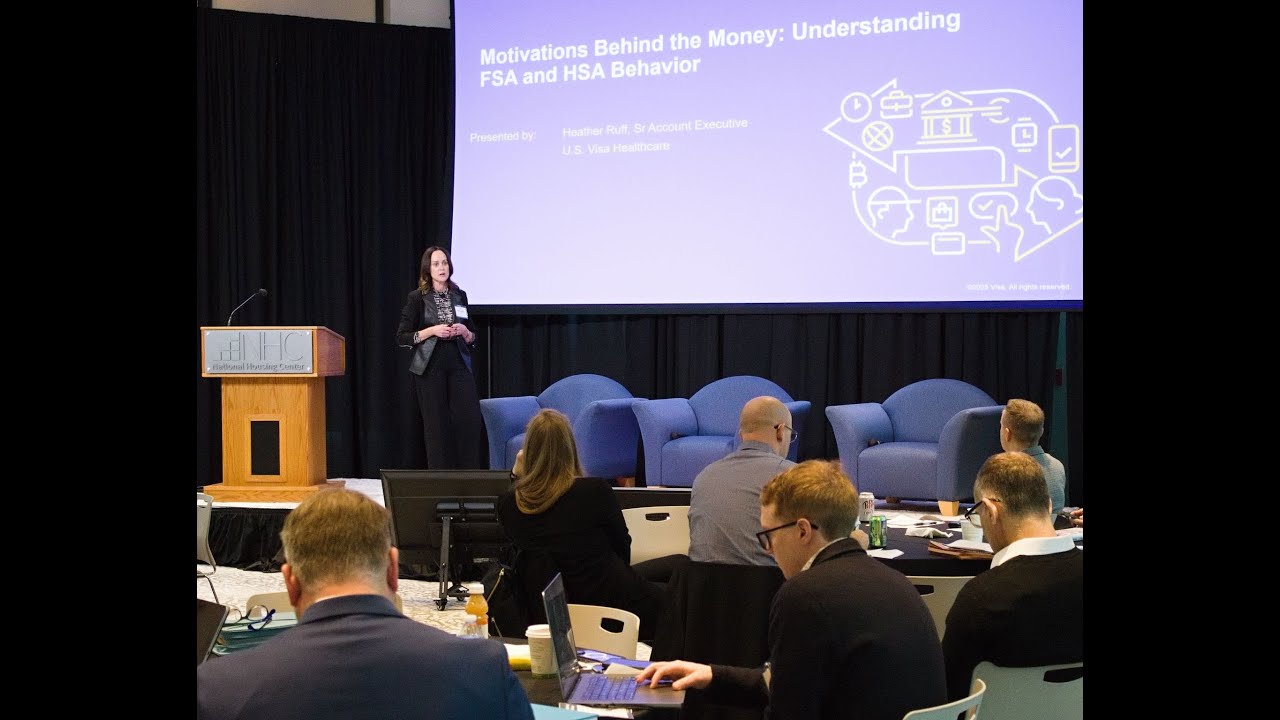
EBRI 2025 Financial Wellbeing Symposium — Motivations Behind the Money
Keywords
Summary
216 words
Critical Evaluation
Value of the Information & Strength of the Argument
The presentation provides valuable insights into consumer behavior regarding FSAs and HSAs, backed by a long-running survey. The data is presented with specific statistics, such as the 66% budgeting confidence among FSA users and the 56% who would cut back on medicines without an FSA. The argumentation is coherent, linking consumer concerns about healthcare costs to the benefits of these accounts. However, the presentation is primarily descriptive, lacking a critical analysis of the data or potential limitations. The speaker’s affiliation with Visa, a payment network, may introduce a bias towards promoting the use of these accounts, as they benefit from transaction fees. The argumentation is persuasive but not impartial, and the lack of methodological details (sample size, demographics, etc.) weakens the scientific rigor.
Scientific Rigor, Source Quality, Title Accuracy
The presentation is based on a proprietary survey conducted by Visa, which is not publicly available for verification. The speaker mentions the survey has been running for 12 years, but no specific methodology is provided. The title accurately reflects the content, focusing on the motivations behind FSA and HSA usage. The presentation does not cite external sources, relying solely on the survey data. The lack of transparency in methodology and the potential conflict of interest (Visa’s financial interest in promoting these accounts) reduce the scientific rigor. The title is appropriate, and the content aligns with it, but the reliance on a single proprietary source limits the overall reliability.
246 words
Title / Content Match
The title accurately reflects the content, focusing on the motivations behind FSA and HSA usage.
Quality & Reliability
7/10
The presentation is based on a biannual survey conducted by Visa over 12 years, providing longitudinal data. However, the methodology is not detailed, and the speaker represents a corporate interest, which may introduce bias. The claims are supported by survey statistics but lack peer-reviewed validation.
Key Moments
Markers derived by PSI from the transcript: the creator did not define chapters.
- Introduction and acknowledgment of sponsors, including Visa.
- Heather Ruff introduces the topic and the biannual survey methodology.
- Key insights: consumers feel better about their health but are concerned about COVID effects and rising costs.
- FSA users' budgeting confidence and the contrast with non-users.
- Information needed to compel FSA adoption: carryover, covered expenses, and products already used.
- Impact of FSAs on medical care: 56% would cut back on medicines without FSA.
- HSA awareness gaps: one in three users and four out of five non-users know little about HSAs.
- Demographic analysis: Gen Z and millennials struggle with HSA awareness even with definitions.
- Non-users' needs: 76% could be persuaded to sign up if they knew more about eligibility and savings.
- FSA behaviors: positive sentiment, but 'use it or lose it' concerns and forfeiture rates increasing.
- Digital wallet usage for healthcare payments: 56% up 20% from prior survey.
- HSA behaviors: users feel safe and confident; 96% want to learn more.
- Investment features: 25% invest, 64% interested in learning more, but other features like rollover outweigh investing.
- Conclusion: importance of emotional resonance and simplifying messaging to drive adoption.
Cited Sources
- Visa Healthcare Benefits Study — The presenter mentions a biannual survey conducted by Visa, but no specific URL is provided.
Concurring Sources
- EBRI: Health Savings Accounts — EBRI research on HSAs, which may align with the survey findings.
Dissenting Sources
- Critique of HSA Tax Advantages — Some economists argue that HSAs primarily benefit high-income individuals, which may contradict the presentation's emphasis on broad benefits.
Contribution & Novelties
The presentation offers recent survey data on FSA and HSA user behavior, highlighting trends in digital wallet adoption and the importance of emotional messaging. It provides actionable insights for employers and benefit leaders to improve engagement. However, the data is proprietary and not publicly available, limiting its verifiability.
Pour aller plus loin :
- Health Savings Accounts (HSAs) — IRS publication explaining HSAs, relevant for understanding the tax advantages.
- Flexible Spending Accounts (FSAs) — IRS publication covering FSAs, including rules on use-it-or-lose-it.
- Consumer Financial Protection Bureau: Health Savings Accounts — CFPB blog post providing an overview of HSAs.
- Digital Wallet Adoption Statistics — Statista page on digital wallet usage, relevant to the trend mentioned in the presentation.
116 words
Radar Profile
The radar profile shows high scores in quantity of information and reliability, but lower in technical level, indicating a presentation accessible to a general audience with substantial data. The overall quality is good, but the proprietary nature of the data and potential bias from Visa limit the scientific rigor.
💬 No comments were provided for analysis.