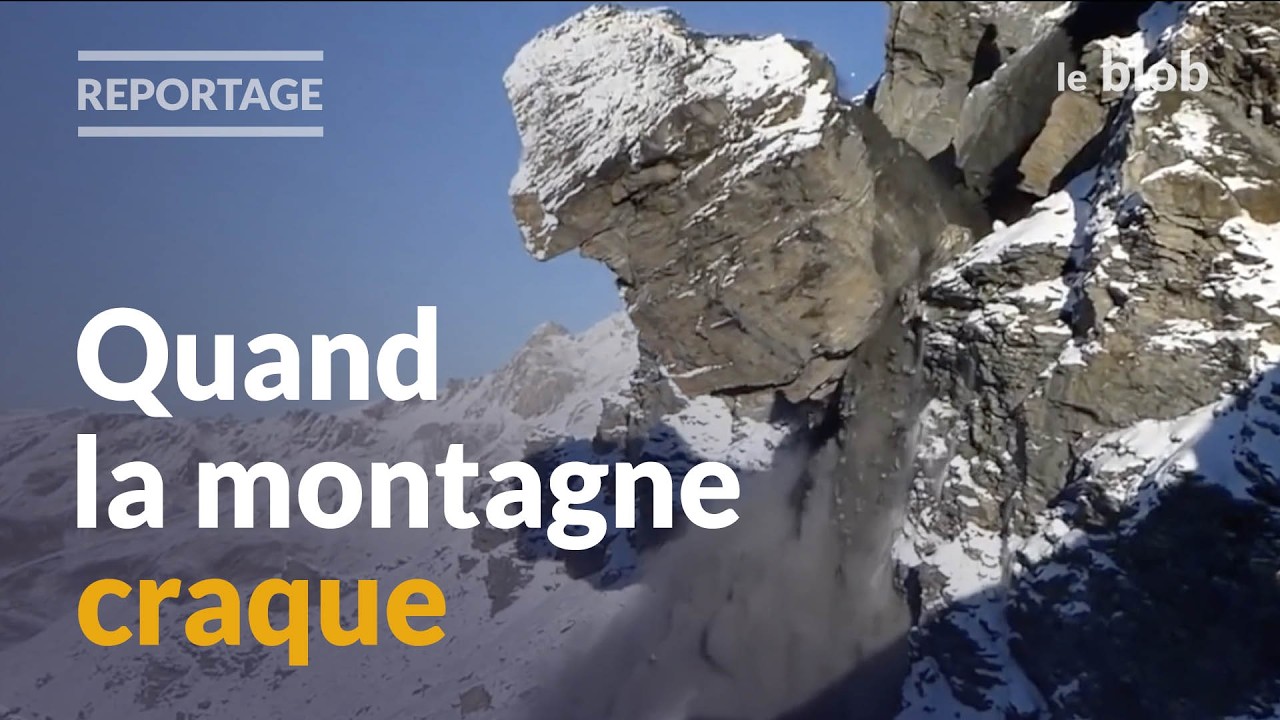
Comment le dégel du permafrost fragilise les montagnes ? Mission dans les Alpes | Reportage
Keywords
Summary
201 words
Critical Evaluation
Value of the Information & Strength of the Argument
The documentary provides valuable insights into permafrost research, combining direct field observations with expert interviews. It effectively explains complex geophysical methods in an accessible manner, using clear analogies and visual demonstrations. The argumentation is solid, grounded in empirical data and expert testimony, and carefully distinguishes between observed facts and interpretations. The film also addresses the broader implications of permafrost degradation, including feedback loops and societal challenges, without overstating certainty.
Scientific Rigor, Source Quality, Title Accuracy
The scientific rigor is high: the researchers are from a recognized laboratory (Edytem), and the methods described are standard in permafrost research. The documentary presents specific measurements and trends, which adds credibility. However, it does not provide direct citations to peer-reviewed studies, relying instead on expert statements. The title accurately reflects the content, focusing on permafrost degradation in the Alps and its consequences. The description provides links to the channel and website, but no specific scientific sources are listed.
163 words
Title / Content Match
The title accurately reflects the content, which focuses on permafrost degradation in the Alps and its impact on mountain stability.
Quality & Reliability
8/10
The documentary features interviews with researchers from a recognized laboratory (Edytem), presents direct field measurements and data, and clearly distinguishes between established facts and interpretations. The information is consistent with current scientific understanding of permafrost degradation, though it does not provide detailed citations or peer-reviewed references.
Key Moments
Markers derived by PSI from the transcript: the creator did not define chapters.
- Introduction to permafrost and its role in mountain stability.
- Explanation of temperature monitoring in boreholes.
- Geophysical methods: electrical resistivity tomography.
- Seismic refraction method for characterizing subsurface layers.
- Discussion of climate change impacts on permafrost and feedback loops.
- Data on temperature increases and active layer thickening.
- Implications for mountain infrastructure and sustainable planning.
Cited Sources
- Le Blob website — Official website of the media outlet, providing additional resources and articles.
- YouTube subscription link — Link to subscribe to the channel for more content.
Concurring Sources
- IPCC Special Report on the Ocean and Cryosphere in a Changing Climate — Provides authoritative assessment of permafrost degradation and its global impacts.
- Permafrost - Wikipedia — General reference on permafrost characteristics and changes.
Contribution & Novelties
The documentary offers a unique behind-the-scenes look at permafrost research in the French Alps, showcasing the combination of direct temperature measurements and geophysical imaging. It provides concrete data on warming rates and active layer changes, making the invisible phenomenon of permafrost degradation tangible. The film also emphasizes the societal implications, urging a reconsideration of mountain development in light of climate change.
Pour aller plus loin :
- Permafrost - Wikipedia — General overview of permafrost, its distribution, and impacts.
- Cryosphere - Wikipedia — Definition and components of the cryosphere, including permafrost.
- Edytem Laboratory — Research center specializing in mountain environments and permafrost studies.
- IPCC Special Report on the Ocean and Cryosphere in a Changing Climate — Comprehensive assessment of cryosphere changes and risks.
122 words
Radar Profile
The radar profile shows high scores across all dimensions, indicating a well-rounded and reliable documentary. The strongest aspects are the quantity and quality of information, with slightly lower but still solid technical depth and reliability, reflecting its accessible yet scientifically grounded approach.