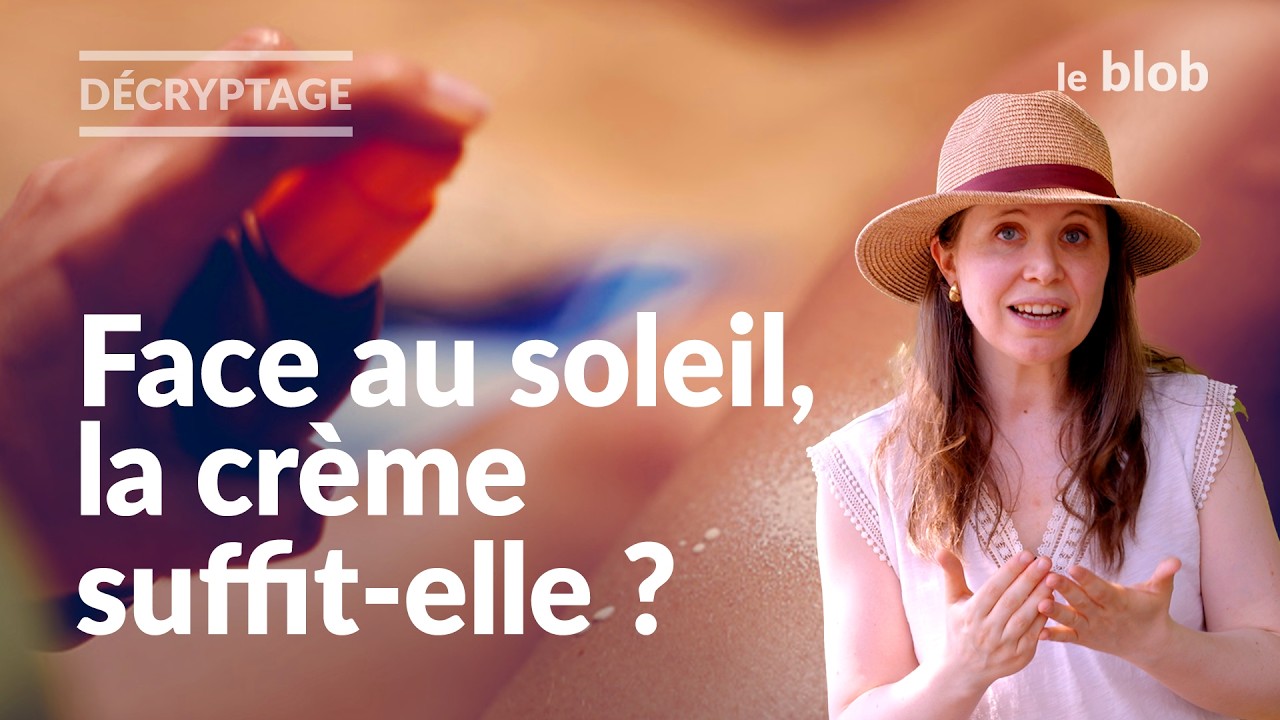
La crème solaire est-elle la meilleure solution pour se protéger du soleil ? | Décryptage
Keywords
Summary
127 words
Critical Evaluation
Value of the Information & Strength of the Argument
The video provides valuable information by debunking common misconceptions about sunscreen, such as the belief that SPF 50 offers complete protection. It uses expert interviews and scientific studies to support its claims, such as the degradation of octocrylene into benzophenone. The argumentation is generally solid, but some statements are presented as facts without sufficient nuance, such as the blanket dismissal of mineral sunscreens, which may be overly simplistic. The comparison of sun exposure to smoking is striking but may be an oversimplification.
Scientific Rigor, Source Quality, Title Accuracy
The video demonstrates scientific rigor by citing studies and regulatory classifications, such as the ECHA classification of zinc oxide as toxic to aquatic life. However, it does not provide direct references for all claims, and the expert’s opinions are sometimes presented as consensus. The title accurately reflects the content, which is a critical evaluation of sunscreen. The video does not include a public advertising segment, so no such mention is needed.
168 words
Title / Content Match
The title accurately reflects the content, which critically evaluates the effectiveness of sunscreen and provides recommendations for sun protection.
Quality & Reliability
8/10
The video is produced by Universcience, a reputable science communication institution, and features interviews with a specialist (Laurence Coiffard) who conducts empirical testing. It cites scientific studies and regulatory classifications, but some claims are presented without direct references in the video, and the expert's opinions are not always balanced with broader scientific consensus.
Key Moments
Markers derived by PSI from the transcript: the creator did not define chapters.
- Introduction to UV radiation types and their effects on skin.
- Explanation of SPF and its limitations, including the recommended amount of sunscreen.
- Comparison of mineral and chemical sunscreens, with claims about their effectiveness.
- Discussion on harmful ingredients like octocrylene and the importance of checking labels.
- Advice on sun protection: avoid peak hours, wear protective clothing, and use sunscreen as a supplement.
- Environmental impact of sunscreen ingredients and their presence in aquatic life.
- Conclusion: sunscreen is not a complete solution; choose wisely and reapply.
Cited Sources
- Le Blob website — Official website of the media outlet, providing additional resources and articles.
- YouTube subscription page — Link to subscribe to the channel for more videos.
Concurring Sources
- WHO UV Index — Supports the recommendation to avoid sun exposure during peak UV hours.
- EWG Sunscreen Guide — Supports concerns about certain chemical filters and the need for careful selection.
Dissenting Sources
- FDA sunscreen regulations — The FDA considers mineral filters like zinc oxide and titanium dioxide as generally safe and effective, contrary to the video's claim that they are ineffective.
Contribution & Novelties
The video offers a critical perspective on sunscreen efficacy, emphasizing that SPF only measures UVB protection and that consumers often underapply. It also highlights the potential toxicity of certain filters and the environmental impact, which is not commonly discussed in mainstream media. The comparison of sun exposure to smoking is a novel way to communicate risk.
Pour aller plus loin :
- Sunscreen and skin cancer prevention — WHO guidelines on UV protection.
- Octocrylene degradation — Study on octocrylene degradation into benzophenone.
- Mineral vs chemical sunscreens — EWG report on sunscreen ingredients.
- UV radiation and skin cancer — NCI fact sheet on UV and cancer.
104 words
Radar Profile
The radar profile shows high scores in information quantity and quality, with a moderate technical level. The reliability is high, but there is room for improvement in providing more balanced perspectives and direct citations.
💬 Sur les 0 commentaires analysés, aucune tendance n'est disponible.