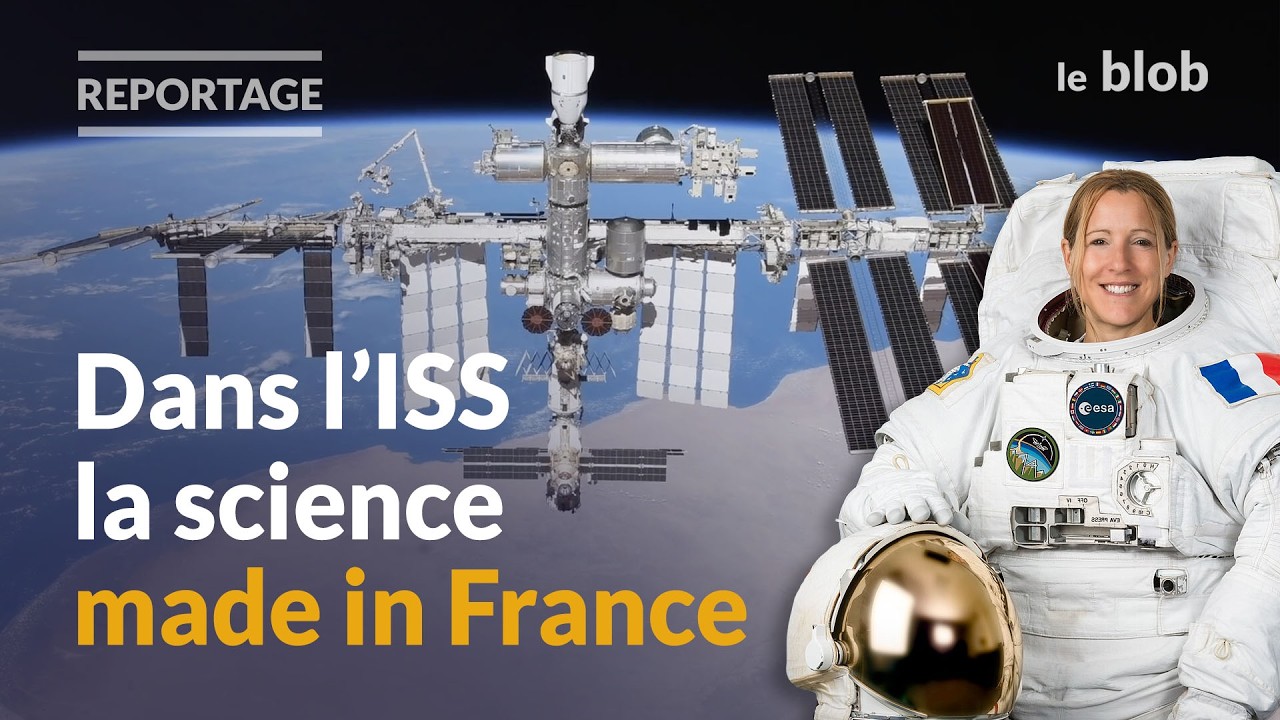
Sophie Adenot : quelles expériences scientifiques va-t-elle mener dans l’ISS ? | Reportage
Keywords
Summary
215 words
Critical Evaluation
Value of the Information & Strength of the Argument
The video provides valuable insights into the scientific experiments conducted on the ISS, particularly those developed by CNES. It explains the purpose and methodology of each experiment clearly, with expert commentary from CADMOS engineers. The argumentation is solid, as it is based on direct interviews and demonstrations. The video effectively communicates the importance of these experiments for advancing human physiology knowledge and developing new technologies for space exploration and terrestrial applications.
Scientific Rigor, Source Quality, Title Accuracy
The video is scientifically rigorous, with information provided by CNES/CADMOS experts. The sources are reliable, as they come from the official space agency and the production is by a reputable science media outlet. The title accurately reflects the content, which is focused on the scientific experiments. The video does not include any advertising or sponsored content.
142 words
Title / Content Match
The title accurately reflects the content, which focuses on the scientific experiments Sophie Adenot will conduct on the ISS.
Quality & Reliability
8/10
The video is produced by Le Blob, a reputable science media outlet from the Cité des Sciences et de l'Industrie. It features interviews with CNES/CADMOS experts and provides detailed explanations of the experiments. The information is accurate and up-to-date, with clear references to the mission and experiments.
Key Moments
Markers derived by PSI from the transcript: the creator did not define chapters.
- Introduction to Sophie Adenot's mission and the CNES experiments.
- Overview of the three physiology experiments: ECHO-BONES, ECHOFINDER, and PHYSIOTOOL.
- Demonstration of ECHOFINDER using augmented reality and AI for ultrasound.
- Tour of the CADMOS control room and explanation of the Columbus module.
- Description of technology experiments: MATISS-4, MULTISS, and EUROSUIT.
- Presentation of the educational experiment CHLORISS and its impact on students.
- Conclusion on Sophie Adenot's historic mission and her aspirations.
Cited Sources
- Le Blob website — Official website of the production company, providing additional resources and articles.
- Live launch of mission εpsilon — Link to the live stream of the launch, mentioned in the video description.
Concurring Sources
- CNES official website — The French space agency's official site provides details on the mission and experiments.
External References
Contribution & Novelties
The video provides an original and detailed look at the specific scientific experiments prepared by CNES for Sophie Adenot’s mission, offering insights into the practical aspects of space research. It highlights innovative technologies like AI-assisted ultrasound and wearable health monitoring, which have potential terrestrial applications. The educational experiment CHLORISS is a unique initiative to engage students in space science.
Pour aller plus loin :
- International Space Station — Overview of the ISS and its research capabilities.
- Microgravity — Explanation of the effects of microgravity on the human body and experiments.
- Augmented reality in medicine — Applications of AR in medical procedures, relevant to ECHOFINDER.
- Bone loss in space — NASA’s research on bone density loss in astronauts, related to ECHO-BONES.
120 words
Radar Profile
The radar profile shows high scores in information quantity, quality, and reliability, with a moderate technical level. This indicates a well-produced documentary that is accessible to a general audience while maintaining scientific accuracy.