Lecture 10 | Mama Miriam Makeba: Songs of Freedom, Songs for Africa | Part 2
Keywords
Summary
157 words
Critical Evaluation
Value of the Information & Strength of the Argument
The value of the information lies in the personal insights and contextual knowledge provided by Nomsa Mwamuka, who has contributed to an academic volume on pan-African figures. She offers a nuanced perspective on Makeba’s life, emphasizing her role as a cultural ambassador and activist. The argumentation is coherent and grounded in historical events, such as the Soweto uprising and the civil rights movement. Mwamuka effectively argues that music and culture are powerful tools for resistance and unity, and she supports her points with examples from Makeba’s career. The conversational format allows for a deeper exploration of themes, though it occasionally lacks the rigor of a formal academic presentation.
Scientific Rigor, Source Quality, Title Accuracy
The scientific rigor is moderate; the speaker is a writer and editor, and the content is based on her research for the book chapter. The sources cited are the book itself and its publishers, which are reputable academic presses. The title accurately reflects the content, focusing on Makeba’s songs and their significance for Africa. The video is a recording of a live event, so there are some technical interruptions, but the overall quality is acceptable. The discussion is well-structured, and the speaker demonstrates a solid understanding of the historical and cultural context.
215 words
Title / Content Match
The title accurately reflects the content, which focuses on Miriam Makeba's role in freedom struggles and her legacy in Africa.
Quality & Reliability
7/10
The content is an expert opinion from a chapter contributor to an academic volume, providing historical and cultural analysis. The speaker demonstrates knowledge of Miriam Makeba's life and the context of apartheid and pan-Africanism. However, the format is a conversational interview with limited direct citations, and the video is a recording of a live event with minor technical issues.
Key Moments
Markers derived by PSI from the transcript: the creator did not define chapters.
- Introduction and thanks to Nomsa Mwamuka for her presentation.
- Start of the conversation; first question about the central appeal of Miriam Makeba.
- Discussion on Makeba's openness to different cultures and languages.
- Question about the importance of indigenous languages and Makeba's refusal to sing in Afrikaans.
- Discussion on the role of music in liberation struggles.
- Question about the importance of culture and arts in pan-Africanism.
- Discussion on Makeba's evolution from South African activist to global citizen.
- Question about how Makeba influenced perceptions of Africa.
- Discussion on Makeba's legacy and her rehabilitation center for girls.
- Final thoughts on how Makeba should be remembered.
Cited Sources
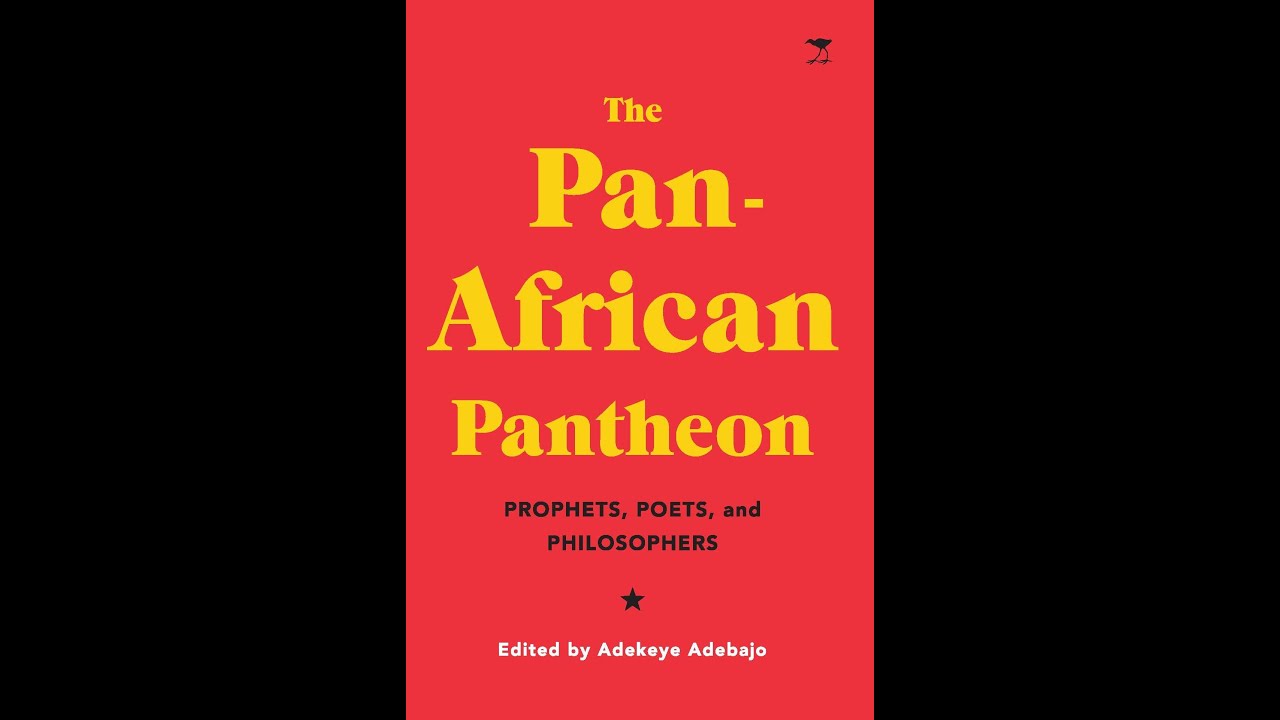
- The Pan-African Pantheon: Prophets, Poets, and Philosophers (South Africa) — The book to which Nomsa Mwamuka contributed a chapter on Miriam Makeba.
- The Pan-African Pantheon: Prophets, Poets, and Philosophers (International) — International purchase link for the same book.
Concurring Sources
- The Pan-African Pantheon: Prophets, Poets, and Philosophers — The book provides scholarly context on pan-African figures, aligning with the video's themes.
Contribution & Novelties
This video provides a personal and nuanced perspective on Miriam Makeba’s life, emphasizing her role as a cultural bridge and activist. It highlights the importance of music and culture in liberation struggles and pan-African unity. The discussion offers insights into Makeba’s use of language as resistance and her legacy beyond music, including her philanthropic work.
Pour aller plus loin :
- Miriam Makeba - Wikipedia — Overview of her life and career.
- Pan-Africanism - Wikipedia — Context on the movement she was part of.
- Soweto uprising - Wikipedia — Historical event mentioned in the discussion.
94 words
Radar Profile
The radar profile shows balanced scores across information quantity, quality, and reliability, with a slightly lower technical level, indicating accessible content suitable for a general audience interested in African history and culture.