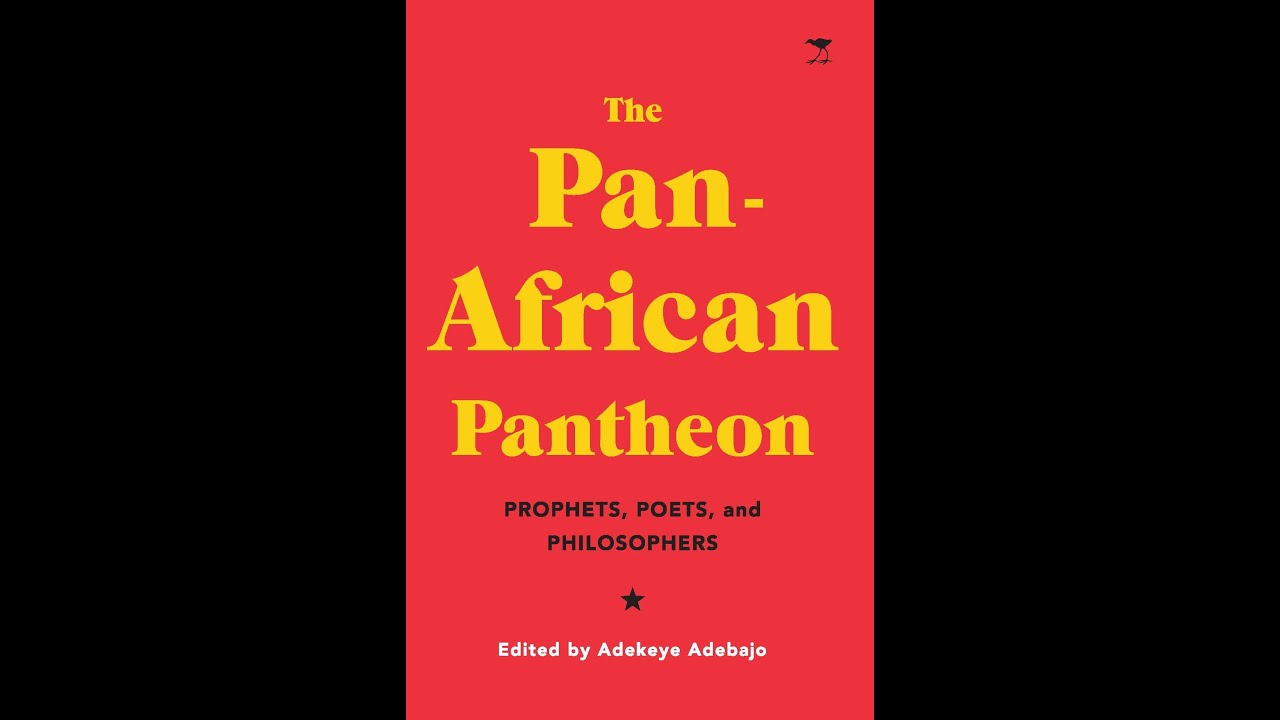
Lecture 9 | Searching for Dereck Walcott: Belonging and Reflections of the Self | Part 3
Keywords
Summary
150 words
Critical Evaluation
Value of the Information & Strength of the Argument
The lecture offers valuable insights into Walcott’s work and its philosophical underpinnings. Lucien’s argument is well-structured, drawing on specific examples and references to support his claims. He effectively contrasts the ‘poetics of truth’ with the ‘poetics of myth’, illustrating how myth allows for a more inclusive and relational understanding of reality. His discussion of recursive time and its connection to African philosophy is particularly illuminating. The argumentation is coherent and persuasive, though at times it becomes dense and academic, which may limit accessibility. Lucien demonstrates a deep familiarity with the subject matter and engages critically with the material, making this a valuable contribution to the discourse on Walcott and Pan-Africanism.
Scientific Rigor, Source Quality, Title Accuracy
The lecture demonstrates a high level of scholarly rigor. Lucien references specific thinkers and works, such as Kamau Brathwaite’s concept of ’tidalectics’, Sun Ra’s quote about truth, and James Cone’s ‘God is black’ theology. He also mentions Walcott’s early play ‘Ti-Jean and His Brothers’ and the concept of ‘cosmic equations’ from Sonia Sanchez. The sources are relevant and appropriately cited within the context of the talk. The title accurately reflects the content, focusing on Walcott’s ideas of belonging and self. The lecture is part of a series on the Pan-African Pantheon, and the speaker is a contributor to the edited volume, lending credibility. The Q&A format allows for clarification and deeper exploration of the topics, enhancing the overall rigor.
244 words
Title / Content Match
The title accurately reflects the content: a lecture on Derek Walcott's ideas of belonging and self, with a focus on myth, truth, and identity.
Quality & Reliability
8/10
The lecture is a scholarly presentation by a writer and critic, grounded in literary and philosophical analysis. It references specific thinkers (e.g., Kamau Brathwaite, Sun Ra, James Cone) and the speaker's own expertise. The discussion is nuanced and critical, though it is an opinion-based lecture rather than a peer-reviewed study.
Key Moments
Markers derived by PSI from the transcript: the creator did not define chapters.
- Introduction and transition to Q&A session.
- First question from Eric about the tension between truth and myth.
- Lucien explains the difference between truth and myth, referencing Sun Ra and Kamau Brathwaite's tidalectics.
- Discussion on recursive time and its relevance to African philosophy.
- Question from Nigel about Walcott's influences and the futility of seeking an African ontology.
- Lucien discusses the expansive nature of African ontologies and their implications for Pan-Africanism.
- Questions from the chat about Walcott's foresight and the influence of colorism and racism.
- Lucien responds on identity as fluid and contextual, and the etymology of 'shabeen'.
- Discussion on Pan-Africanism as a form of philosophical awareness.
Cited Sources
- The Pan-African Pantheon: Prophets, Poets, and Philosophers — The edited volume to which Vladimir Lucien contributed a chapter, providing the context for this lecture.
- The Pan-African Pantheon: Prophets, Poets, and Philosophers — International purchase link for the same volume, indicating its academic relevance.
Concurring Sources
- The Pan-African Pantheon: Prophets, Poets, and Philosophers — The book itself, which likely contains similar themes and arguments.
Contribution & Novelties
This lecture provides a nuanced analysis of Derek Walcott’s engagement with myth and truth, offering a fresh perspective on his work within the context of Pan-African thought. Lucien’s emphasis on recursive time and the expansive nature of African ontologies challenges conventional interpretations and opens up new avenues for understanding identity and belonging. The discussion is particularly valuable for its integration of literary analysis with philosophical and political considerations.
Pour aller plus loin :
- Tidalectics — A concept by Kamau Brathwaite that Lucien uses to explain recursive time.
- Derek Walcott — Overview of the poet’s life and work.
- Pan-Africanism — Historical and ideological context for the lecture.
106 words
Radar Profile
The radar profile shows high scores in quality of information and reliability, reflecting the speaker's expertise and the lecture's scholarly nature. The quantity of information is moderate, as the lecture is relatively short and focused. The technical level is high, indicating a sophisticated audience. Overall, the lecture is a reliable and informative source for those interested in Walcott and Pan-African thought.
💬 Sur les 0 commentaires analysés, aucune tendance n'a pu être dégagée.