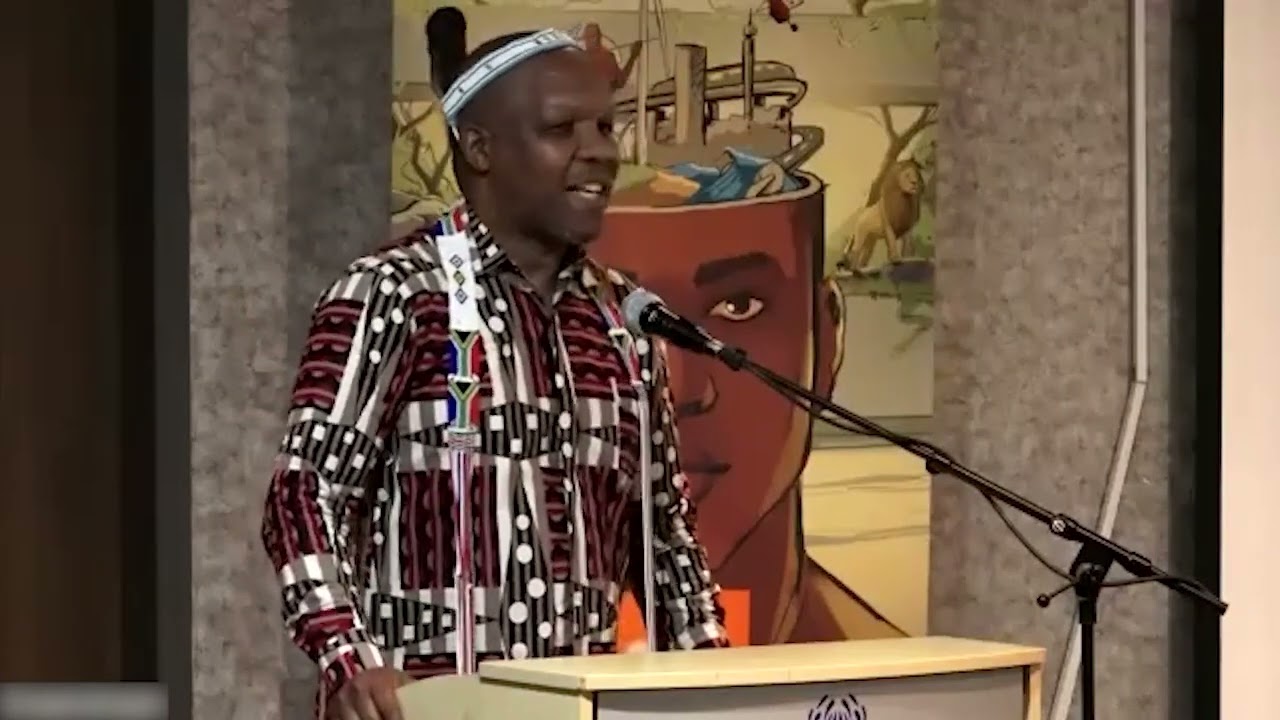
BOOK LAUNCH | African and Afro Diasporic Women in 'Pre Colonial' and Colonial Times
Keywords
Summary
161 words
Critical Evaluation
Value of the Information & Strength of the Argument
The video provides valuable insights into the often-overlooked history of African women in pre-colonial and colonial contexts. Dr. Thompson’s argument is well-structured, using specific historical examples and oral traditions to support her claims. She challenges Eurocentric historiography and offers a nuanced understanding of power dynamics in African societies. The argumentation is persuasive, though it relies heavily on narrative and interpretation rather than extensive documentary evidence.
Scientific Rigor, Source Quality, Title Accuracy
The scientific rigor is moderate. The speaker references some academic works, such as those by Oyèrónkẹ́ Oyěwùmí and Andrew, but does not provide formal citations. The sources are not systematically listed, and the presentation is more of an expert opinion than a peer-reviewed study. The title accurately reflects the content, and the seminar is part of a broader academic project. The lack of formal references and the reliance on oral history may limit the verifiability of the claims.
158 words
Title / Content Match
The title accurately reflects the content, which focuses on the roles of African and Afro-diasporic women in pre-colonial and colonial times.
Quality & Reliability
7/10
The video is a scholarly seminar with expert speakers, but it lacks formal citations and peer-reviewed references. The content is based on historical research and oral traditions, but the presentation is largely narrative and interpretive.
Key Moments
Markers derived by PSI from the transcript: the creator did not define chapters.
- Introduction by Professor Zundi, outlining the institute's activities and upcoming conferences.
- Dr. Norma Thompson begins her presentation on Queen Mother Sutu, emphasizing the importance of August as Women's Month.
- Thompson discusses the multi-centered nature of power in Xhosa society, using Sutu's role as queen mother as an example.
- Thompson describes Sutu's resistance to British colonialism, including her refusal to collaborate with Colonel Smith.
- Thompson details Sutu's involvement in military and diplomatic efforts, including her management of spies and negotiations.
- Thompson discusses Sutu's confrontation with missionaries and her authority over her sons, including Mota.
- Thompson covers the 1850-1853 war and Sutu's role in sustaining resistance.
- Thompson describes Sutu's final years, her blindness, and her death in 1885.
- Q&A session begins, with audience questions and further discussion.
Cited Sources
- African and Afro-Diasporic Women in Pre-Colonial and Colonial Times (book) — The seminar is based on a book with the same title, mentioned in the introduction.
- Oyèrónkẹ́ Oyěwùmí's work on Iya — Referenced by Dr. Thompson to conceptualize the spiritual and political role of motherhood.
- Andrew's concept of 'goddess of balance' — Referenced by Dr. Thompson to explain the dispersed nature of power in Xhosa society.
Concurring Sources
- African and Afro-Diasporic Women in Pre-Colonial and Colonial Times (book) — The seminar is based on this book, which likely contains more detailed research.
Contribution & Novelties
The seminar contributes to the reclamation of African women’s history, challenging Eurocentric narratives and highlighting the agency of figures like Queen Mother Sutu. It offers a nuanced understanding of pre-colonial political systems and the role of women within them. The presentation also underscores the importance of oral history and indigenous knowledge in historical research.
Pour aller plus loin :
- Oyèrónkẹ́ Oyěwùmí - Wikipedia — Relevant for her concept of ‘Iya’ and African gender studies.
- Queen Mother (African) - Wikipedia — Provides context on the role of queen mothers in African societies.
- Xhosa people - Wikipedia — Background on the Xhosa people and their history.
104 words
Radar Profile
The radar profile shows high scores in quantity of information and technical level, reflecting the depth of historical detail and scholarly presentation. However, the lower scores in quality of information and global reliability indicate a reliance on narrative and limited formal citations, which may affect the verifiability of the content.
💬 No comments provided.