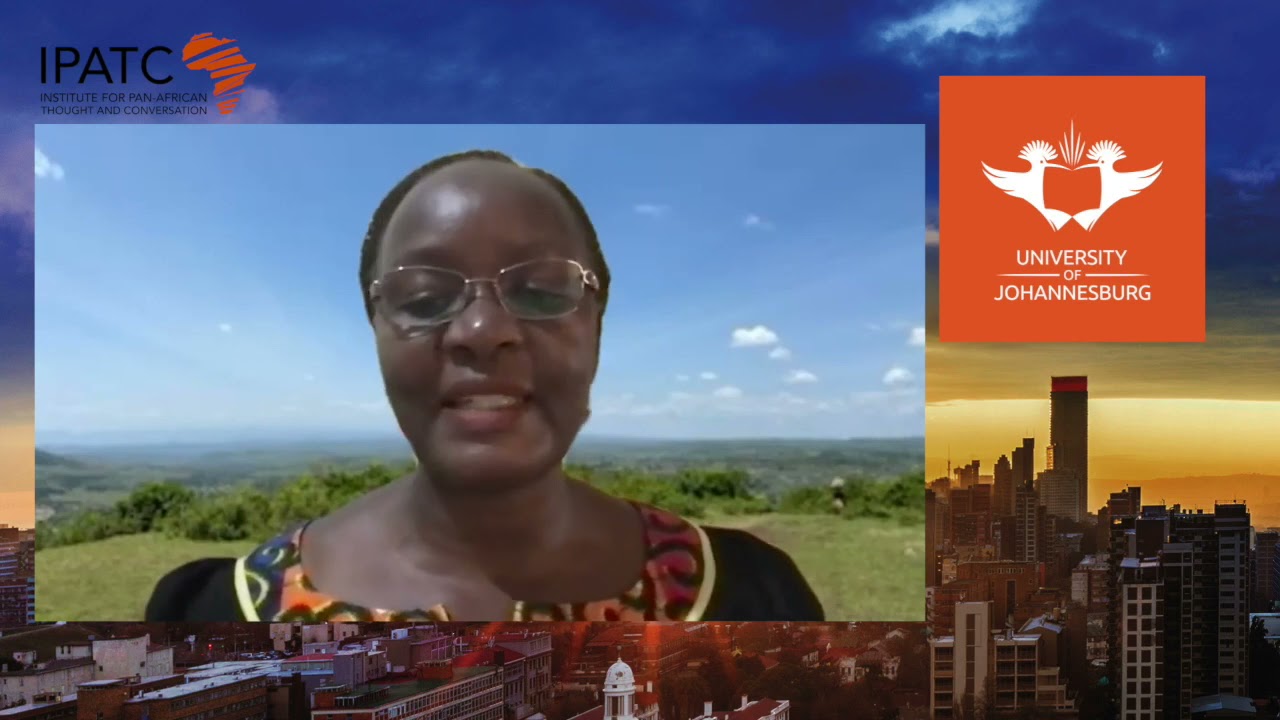
Transforming Humanities Curricula African Schools of Thought
Keywords
Summary
153 words
Critical Evaluation
Value of the Information & Strength of the Argument
The video provides valuable insights into the historical and contemporary efforts to transform humanities curricula in African universities. The arguments are grounded in specific case studies, such as Makerere University and the Dakar School, and draw on the work of prominent scholars like Cheikh Anta Diop. The panelists present a coherent case for the importance of African schools of thought and the need to challenge colonial legacies in education. The discussion is well-structured, with each presenter offering a distinct perspective that collectively strengthens the overall argument for curriculum transformation.
Scientific Rigor, Source Quality, Title Accuracy
The scientific rigor is moderate; the panelists reference specific historical events and intellectual traditions, but the format is a discussion rather than a peer-reviewed presentation. The sources mentioned include the book itself, the General History of Africa by UNESCO, and the works of Cheikh Anta Diop, among others. The title accurately reflects the content, which focuses on transforming humanities curricula through African schools of thought. No comments were provided for analysis.
175 words
Title / Content Match
The title accurately reflects the content, which focuses on transforming humanities curricula through African schools of thought.
Quality & Reliability
7/10
The video is a book launch panel discussion featuring academics with relevant expertise. The content is scholarly, referencing specific historical cases and intellectual traditions, but lacks formal citations and is a single event with limited peer review.
Key Moments
Markers derived by PSI from the transcript: the creator did not define chapters.
- Introduction and welcome by the Institute for Pan-African Thought and Conversation.
- Overview of the book's themes and the context of curriculum transformation.
- Pamela Kanakawa presents on Makerere University's history department transformation.
- Discussion of staff recruitment and Africanization at Makerere.
- Samba Imbue presents on the Dakar School of Thought and Cheikh Anta Diop.
- Explanation of Diop's contributions to Africology and transdisciplinarity.
- Implications of the Dakar School for curriculum reform in South Africa.
- Toyin Falola is introduced but his presentation is not included in the transcript.
Cited Sources
- From Ivory Towers to Ebony Towers: Transforming Humanities Curricula in South Africa, Africa and African American Studies — The book being launched, which is the central subject of the discussion.
- General History of Africa (UNESCO) — Mentioned by Samba Imbue as a resource for curriculum transformation.
- Civilization or Barbarism — A work by Cheikh Anta Diop referenced in the discussion of his intellectual legacy.
Concurring Sources
- Decolonising the University — The video aligns with broader discussions on decolonising higher education, as seen in the #FeesMustFall movement in South Africa.
Contribution & Novelties
The video offers a unique cross-continental perspective on curriculum transformation, bringing together case studies from Uganda, Senegal, and the broader African diaspora. It highlights the role of specific schools of thought, such as the Dakar School, and emphasizes the need to integrate indigenous knowledge systems into higher education. The discussion provides a nuanced view of the challenges and successes of decolonization efforts.
Pour aller plus loin :
- Cheikh Anta Diop — Key intellectual figure discussed, known for his work on African history and civilization.
- Decolonization of knowledge — Relevant concept for understanding the broader movement.
- Makerere University — Case study discussed in the video, illustrating curriculum transformation in Uganda.
109 words
Radar Profile
The radar profile shows high scores in quantity and quality of information, reflecting the rich content and scholarly discussion. The technical level is moderate, indicating accessibility to a general academic audience. Overall reliability is good, but the lack of formal citations and the single-event format slightly lower the score.