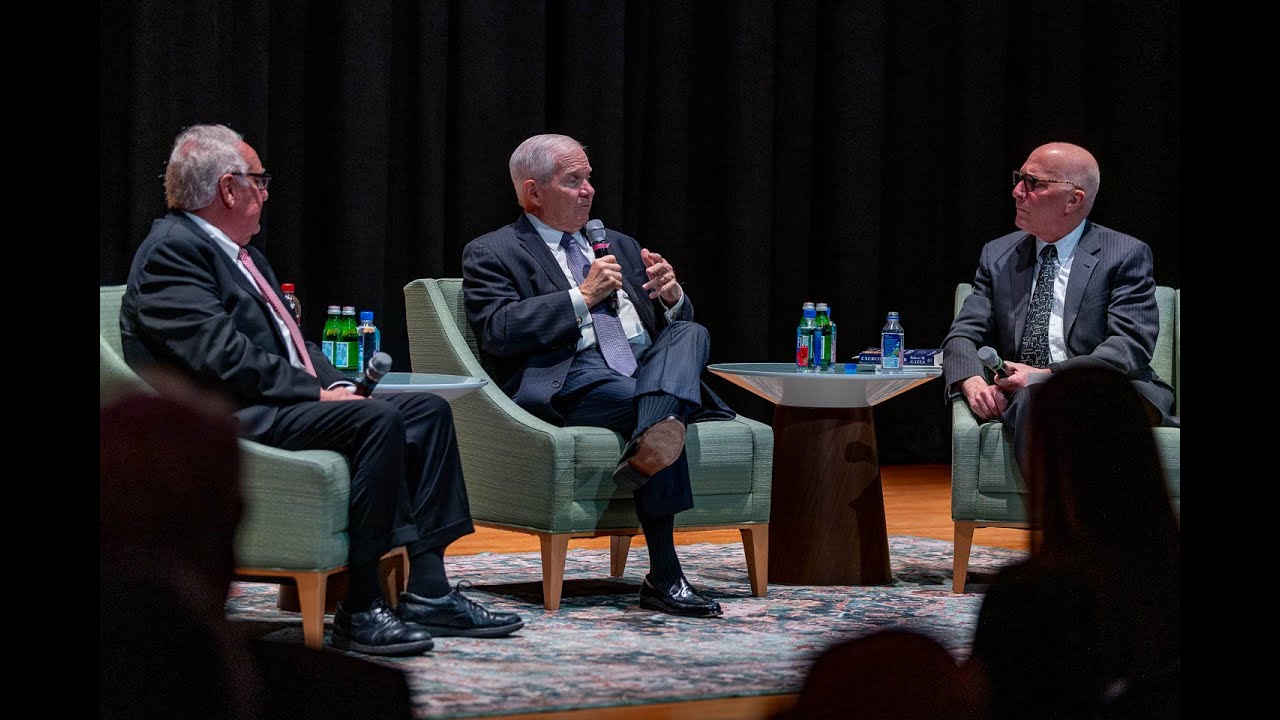
Innovative Approaches to Security Assistance - Gates Forum Keynote
Keywords
Summary
163 words
Critical Evaluation
Value of the Information & Strength of the Argument
The value of the information is high due to the unique perspectives of the speakers, who have direct experience in security policy and on-the-ground operations. Gates provides strategic insights into the deficiencies of US non-military instruments, while Buffett offers concrete examples of effective private sector involvement. The argumentation is solid, grounded in personal experience and specific cases, though it lacks empirical data or systematic analysis. The discussion is persuasive but relies heavily on anecdotal evidence and expert opinion.
Scientific Rigor, Source Quality, Title Accuracy
The scientific rigor is moderate; the speakers are credible experts, but the content is not peer-reviewed and lacks formal citations. The sources mentioned include Gates’ book ‘Exercise of Power’ and references to government agencies, but no specific studies or reports are cited. The title accurately reflects the content, which focuses on innovative approaches to security assistance. The discussion is well-structured and coherent, but the lack of verifiable sources limits its scientific robustness.
165 words
Title / Content Match
The title accurately reflects the content, which focuses on innovative approaches to security assistance, particularly through non-state actors and public-private partnerships.
Quality & Reliability
7/10
The video features high-level experts (former Secretary of Defense, philanthropist, and journalist) discussing security assistance with firsthand experience. However, it is a panel discussion with limited verifiable data and no formal citations. The information is credible but largely anecdotal and opinion-based.
Key Moments
Markers derived by PSI from the transcript: the creator did not define chapters.
- Introduction by Mike Tierney and General Pete Carelli, setting the stage for the Gates Forum.
- Photo presentation by Howard Buffett showing his work in Ukraine.
- President Katherine Row introduces the panelists.
- Gates discusses the need for non-military instruments of power and the lessons from the Cold War.
- Gates elaborates on the lack of strategic planning and the need for whole-of-government coordination.
- Buffett describes his foundation's initial response to the Ukraine invasion and the importance of food security.
- Buffett details the Superhumans program and the role of prosthetics in restoring productivity.
- Discussion on the psychological aspects of war and the need to support civilian morale.
- Audience Q&A session begins.
Cited Sources
- Exercise of Power: American Failures, Successes, and a New Path Forward in the Post-Cold War World — Gates' book referenced as the basis for his arguments on non-military instruments of power.
Concurring Sources
- The Exercise of Power — Gates' book aligns with his arguments in the video about the need for non-military instruments.
Contribution & Novelties
The video provides a unique perspective on security assistance by highlighting the role of private foundations and non-state actors, which is often overlooked in traditional policy discussions. It offers concrete examples from Ukraine, such as the Superhumans facility, and emphasizes the need for risk-taking and innovation in humanitarian efforts. The discussion also underscores the importance of psychological resilience in conflict zones.
Pour aller plus loin :
- Non-state actors in conflict — Overview of non-state actors and their roles in international relations.
- Public-private partnerships — General concept of PPPs, relevant to the discussion on integrating private sector in security assistance.
- Humanitarian demining — Information on demining operations, a key focus of Buffett’s foundation in Ukraine.
114 words
Radar Profile
The radar profile shows high scores in quantity and quality of information, reflecting the depth of expert discussion. The technical level is moderate, as the content is accessible to a general audience. The overall reliability is strong due to the credibility of the speakers, though the lack of formal citations slightly reduces the score.
💬 No comments were provided for analysis.