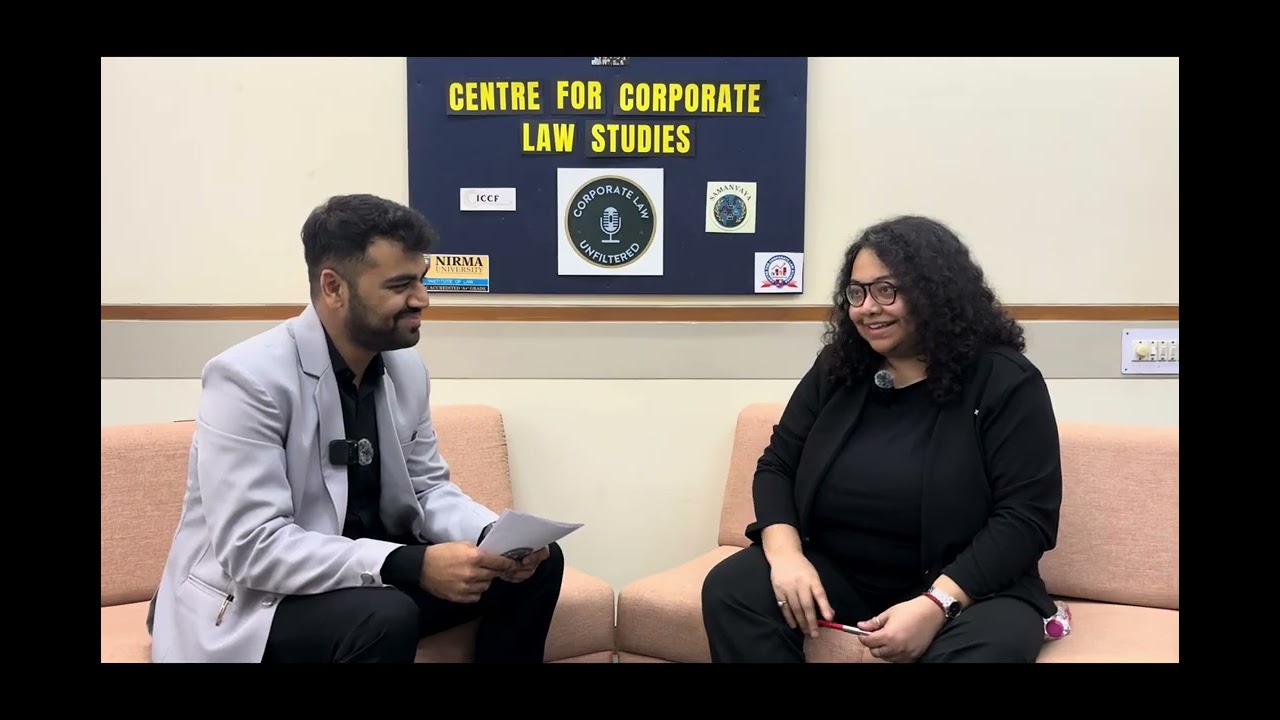
Episode 1: Corporate Law Unfiltered with Ms. Shivani Sinha, Partner at Phoenix Legal
Keywords
Summary
146 words
Critical Evaluation
Value of the Information & Strength of the Argument
The video provides valuable insights into the practical aspects of corporate law, particularly insolvency and restructuring. Ms. Sinha’s arguments are grounded in her extensive experience, making her perspectives credible and relevant. She effectively explains complex concepts like the cyclical nature of insolvency and the importance of commercial awareness, offering a realistic view of the profession. Her advice on specialization and hard work is practical and well-articulated, though it remains anecdotal and lacks empirical evidence. The discussion is coherent and logically structured, with clear reasoning behind her opinions.
Scientific Rigor, Source Quality, Title Accuracy
The video is an expert opinion piece with no formal citations or references. The information is based on the speaker’s professional experience, which adds practical value but limits its academic rigor. The title accurately reflects the content, as it is an unfiltered conversation about corporate law. The lack of sources is typical for a podcast format, but it means the content should not be used as a sole reference for legal matters. The discussion is internally consistent and aligns with common knowledge in the field.
187 words
Title / Content Match
The title accurately reflects the content: an unfiltered conversation with a corporate law expert, covering her career, practice areas, and advice for aspiring lawyers.
Quality & Reliability
7/10
The video features a practicing corporate lawyer with substantial experience in insolvency, banking, and M&A. The information is based on professional expertise and practical insights, but it is anecdotal and not backed by formal citations or data. The content is reliable for understanding professional perspectives but not for academic or legal reference.
Key Moments
Markers derived by PSI from the transcript: the creator did not define chapters.
- Introduction and first question about career choice in restructuring and insolvency.
- Discussion on the cyclical nature of insolvency practice and the evolution of IBC.
- Explanation of legal risks and client sensitivity in high-stakes transactions.
- Predictions for the future of insolvency practice and potential IBC reforms.
- Discussion on intellectually satisfying transactions, including ECB and ODI deals.
- Comparison of court-approved amalgamations and out-of-court financial restructuring.
- Advice on qualities for interns and associates, emphasizing hard work.
- Discussion on specialization vs. generalist approach and the path to partnership.
- Final advice on diversifying after expertise and concluding remarks.
Contribution & Novelties
The video offers a practitioner’s perspective on corporate law, particularly insolvency, which is valuable for students and young lawyers. It provides insights into the practical challenges and rewards of the profession, emphasizing the importance of commercial awareness and specialization. The discussion on the cyclical nature of insolvency and potential IBC reforms adds a forward-looking dimension.
Pour aller plus loin :
- Insolvency and Bankruptcy Code, 2016 (India) — Provides background on the IBC, which is central to the discussion.
- External Commercial Borrowings (ECB) - RBI — Official RBI page on ECB regulations, relevant to the discussion on funding structures.
- Mergers and Acquisitions — General overview of M&A, a key practice area mentioned.
111 words
Radar Profile
The radar profile shows moderate to high scores across all dimensions, with the highest in fiabilite_globale and qualite_information, reflecting the speaker's expertise and the practical value of the content. The lower score in quantite_information suggests the video is more focused on qualitative insights than comprehensive coverage. The niveau_technique is moderate, indicating accessibility to a general audience while still offering professional depth.
💬 No comments were provided for analysis.