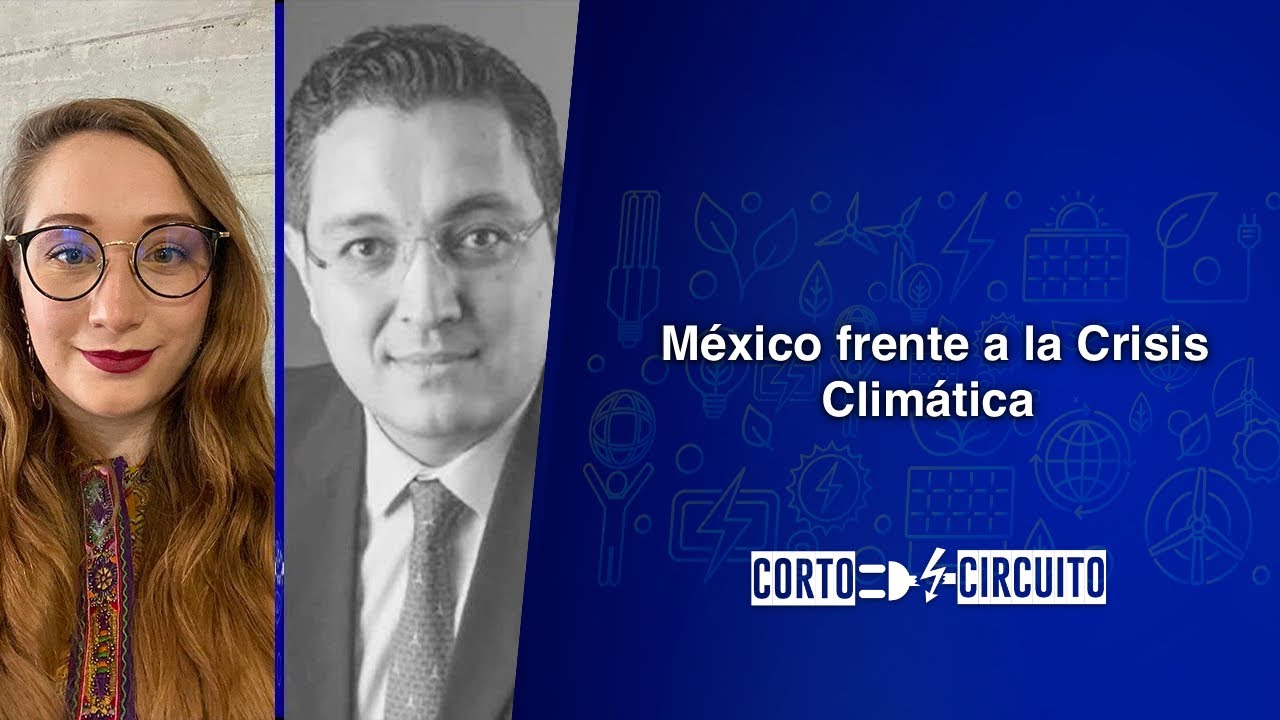
México frente a la Crisis Climática - Segunda Temporada - Episodio 14
Keywords
Summary
145 words
Critical Evaluation
Value of the Information & Strength of the Argument
The value of the information is high, as it provides a nuanced analysis of Mexico’s climate policy from the perspective of two experts directly involved in the field. The argumentation is solid, grounded in legal and policy frameworks, and supported by references to international agreements and national laws. The guests effectively argue that the current administration’s policies are inconsistent with Mexico’s commitments, and they highlight the role of NGOs in challenging these policies through legal means. The discussion is well-structured, with each guest contributing complementary insights, and it offers a comprehensive overview of the challenges and opportunities in Mexico’s climate action.
Scientific Rigor, Source Quality, Title Accuracy
The scientific rigor is moderate: the discussion is based on expert opinion and references to official documents, but lacks direct citations to specific studies or data. The quality of sources is good, as the guests reference the Paris Agreement, IPCC reports, and Mexican laws, but they do not provide detailed citations. The title accurately reflects the content, which is a debate on Mexico’s climate crisis from an NGO perspective. The discussion is well-informed and provides a credible analysis, though it would benefit from more concrete data and references.
204 words
Title / Content Match
The title accurately reflects the content, which focuses on Mexico's stance on the climate crisis from the perspective of NGOs.
Quality & Reliability
7/10
The discussion features two experts with strong credentials in energy law and climate finance, providing a well-informed perspective. However, the format is a debate with opinions and interpretations, not a peer-reviewed study, and some claims lack direct citations.
Key Moments
Markers derived by PSI from the transcript: the creator did not define chapters.
- Introduction of guests and topic: Mexico's climate crisis and the role of NGOs.
- Liliana Estrada explains Mexico's NDCs and the lack of ambition in its climate commitments.
- Guillermo Zúñiga discusses the legal framework for environmental protection and the role of NGOs in legal challenges.
- Discussion on the energy transition and the need to decarbonize the energy sector.
- Analysis of the current administration's policies and their contradiction with climate goals.
- Examples of legal actions taken by NGOs to halt harmful energy projects.
- Discussion on the role of international cooperation and climate finance.
- Conclusion and call for greater civil society involvement in climate policy.
Cited Sources
- Paris Agreement — Referenced as the international framework for climate action.
- IPCC Special Report on Global Warming of 1.5°C — Cited to highlight the urgency of limiting warming to 1.5°C.
- Ley General de Cambio Climático (Mexico) — Mentioned as the national law establishing climate commitments.
- Ley de Transición Energética (Mexico) — Referenced in the context of energy transition goals.
Concurring Sources
- IPCC Sixth Assessment Report — Supports the urgency of climate action mentioned in the discussion.
- Mexico's NDC update (2020) — Confirms the lack of ambition in Mexico's climate targets.
Dissenting Sources
- Government of Mexico's climate policies — The current administration's policies are criticized as insufficient and contradictory to climate goals.
Contribution & Novelties
The video provides a unique perspective by focusing on the role of NGOs in Mexico’s climate policy, highlighting legal mechanisms and the gap between government rhetoric and action. It offers a critical analysis of Mexico’s NDCs and the potential for civil society to drive change through legal challenges.
Pour aller plus loin :
- Escazú Agreement — Regional treaty on environmental rights, mentioned as a recent ratification.
- Amparo (legal remedy) — Legal mechanism used by NGOs to challenge policies.
- Energy transition in Mexico — Overview of Mexico’s energy sector and transition challenges.
91 words
Radar Profile
The radar profile shows high scores in quantity of information and technical level, reflecting the depth of the discussion. Quality and reliability are moderate, as the content is based on expert opinion rather than peer-reviewed research. The overall balance indicates a well-informed but not fully rigorous source.
💬 No comments were provided for analysis.