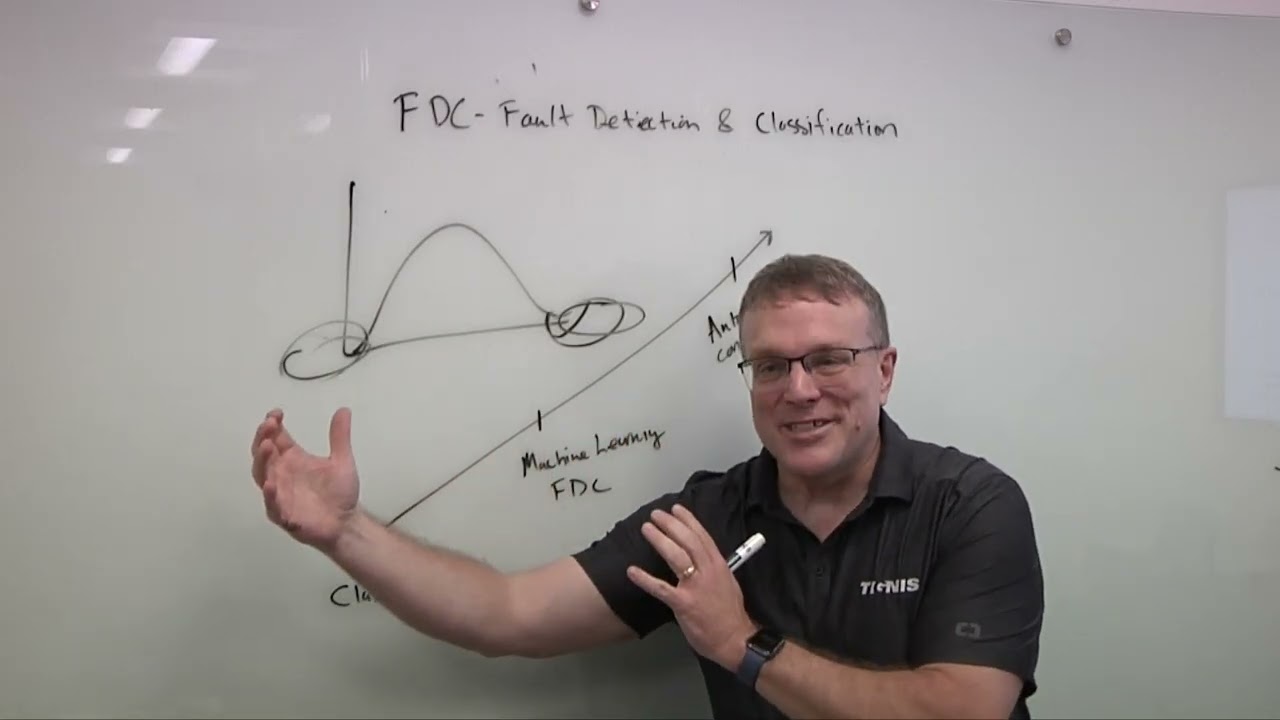
Using AI For Fault Detection And Classification In Semiconductor Manufacturing
Keywords
Summary
141 words
Critical Evaluation
Value of the Information & Strength of the Argument
The video provides valuable insights into the practical application of machine learning for FDC, highlighting the shift from reactive to predictive maintenance. The argumentation is solid, grounded in the speaker’s industry experience, and clearly explains the differences between supervised and unsupervised learning in this context. The discussion on data preparation and model deployment addresses real-world challenges, making the content highly relevant for professionals in semiconductor manufacturing.
Scientific Rigor, Source Quality, Title Accuracy
The video is an expert interview without formal citations, but the speaker’s position as CEO of Tignis lends credibility. The content aligns with known industry trends and practices. The title accurately reflects the content, and the discussion is technically rigorous, though it could benefit from more concrete examples or data. No comments were provided for analysis.
137 words
Title / Content Match
The title accurately reflects the content, which focuses on using AI for fault detection and classification in semiconductor manufacturing.
Quality & Reliability
8/10
The video features an expert interview with the CEO of Tignis, providing credible insights into the application of machine learning for FDC in semiconductor manufacturing. The discussion is technically sound and aligns with industry practices, though it lacks detailed data or citations.
Key Moments
Markers derived by PSI from the transcript: the creator did not define chapters.
Contribution & Novelties
The video offers a clear explanation of how unsupervised learning can address the limitations of classic FDC, particularly for detecting novel faults. It also highlights the importance of data preparation and model deployment, which are often overlooked. The discussion on automated correlational analysis provides a practical approach to sensor selection.
Pour aller plus loin :
- Anomaly detection — Overview of anomaly detection techniques.
- Machine learning in semiconductor manufacturing — Related article on AI applications.
- Explainable AI — Concept of explainability in AI.
82 words
Radar Profile
The radar profile shows high scores in quality and reliability, with moderate scores in quantity and technical level, indicating a focused and credible discussion suitable for professionals.