Virtual Twins: Layers Of Challenges
Keywords
Summary
205 words
Critical Evaluation
Value of the Information & Strength of the Argument
The video provides valuable insights into the practical challenges of implementing virtual twins in semiconductor manufacturing. It offers a clear conceptual framework for understanding multi-layered virtual twins and their integration. The argumentation is solid, based on the speaker’s extensive industry experience, and uses relatable analogies to explain complex concepts. However, it lacks concrete data or case studies to support claims about productivity gains or the effectiveness of virtual twins.
Scientific Rigor, Source Quality, Title Accuracy
The video is an expert opinion piece, not a scientific study. It does not cite specific sources or references, but the speaker’s position at Lam Research lends credibility. The title accurately reflects the content, focusing on the challenges of connecting different abstraction layers. The discussion is technically rigorous, though it remains at a high level without delving into specific technical details.
145 words
Title / Content Match
The title accurately reflects the content, which focuses on the challenges of integrating multiple layers of virtual twins.
Quality & Reliability
8/10
The video features an expert from Lam Research discussing virtual twins in semiconductor manufacturing. The content is technically accurate and grounded in industry experience, but it is an opinion piece without peer-reviewed sources or data.
Key Moments
Markers derived by PSI from the transcript: the creator did not define chapters.
- Introduction to virtual twins and their traction in the industry.
- Definition of virtual twins vs digital twins, emphasizing governing functions.
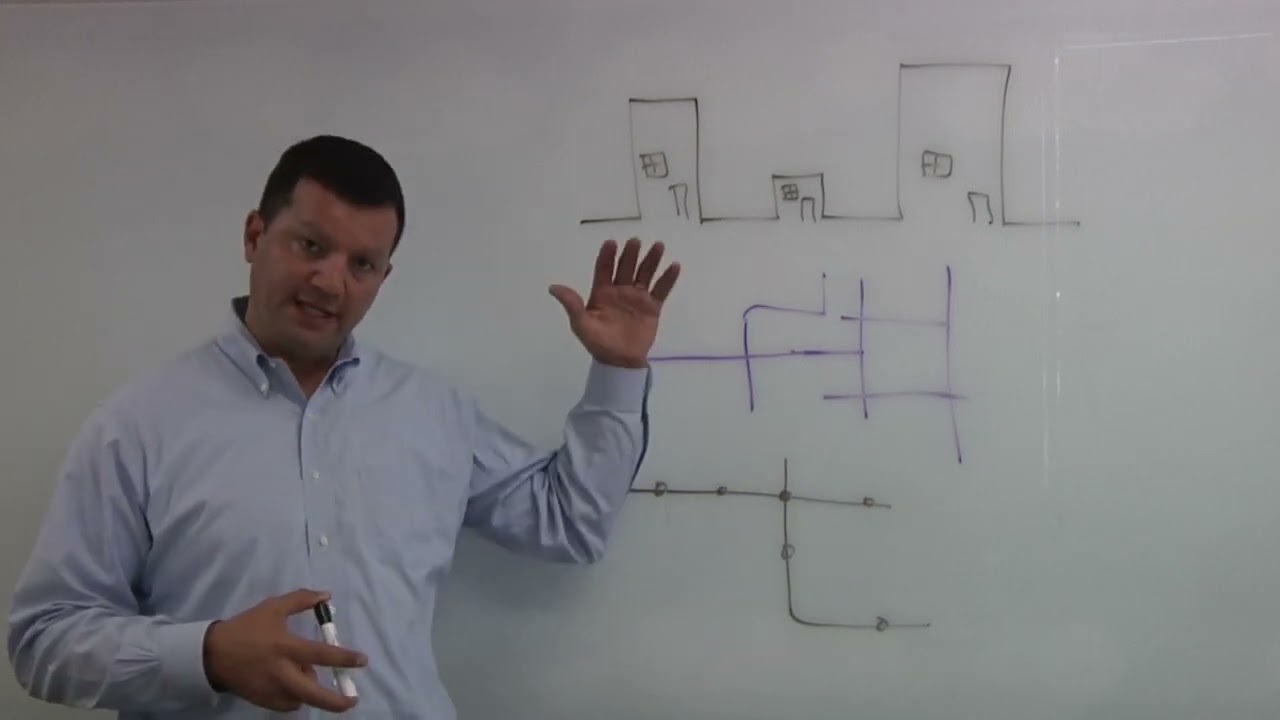
- Analogy of a city: multiple layers (buildings, roads, subways) for different applications.
- Translation to semiconductor equipment: mechanical, process, and sustainability twins.
- Challenge of connecting independently developed layers and the need for standards.
- Examples from other industries (aerospace, banking) and federated learning.
- Variation in complexity and data streams across layers; sustainability twin as a new layer.
- Enabling trade-offs across disciplines and accelerating engineering productivity.
- Path to autonomous fabs and continuous evolution of virtual twins.
Contribution & Novelties
The video provides a clear framework for understanding virtual twins in semiconductor manufacturing, emphasizing the multi-layered nature and the challenges of integration. It highlights the need for standards and cross-industry learning, which is a valuable perspective for practitioners.
Pour aller plus loin :
- Digital twin — Provides a general overview of digital twins and their applications.
- Model-based systems engineering — Related to the integration of models across disciplines.
- Federated learning — Discusses the concept of collaborative model training without sharing raw data, relevant to the video’s mention.
87 words
Radar Profile
The radar profile shows high scores in quality of information and technical level, indicating a technically sound and informative video. The lower score in quantity of information reflects the concise duration and lack of detailed data. Overall, the video is a valuable expert perspective.