Classical Mechanics with a Bang! (2017 Fall) - Lecture #23
Keywords
Summary
130 words
Critical Evaluation
Value of the Information & Strength of the Argument
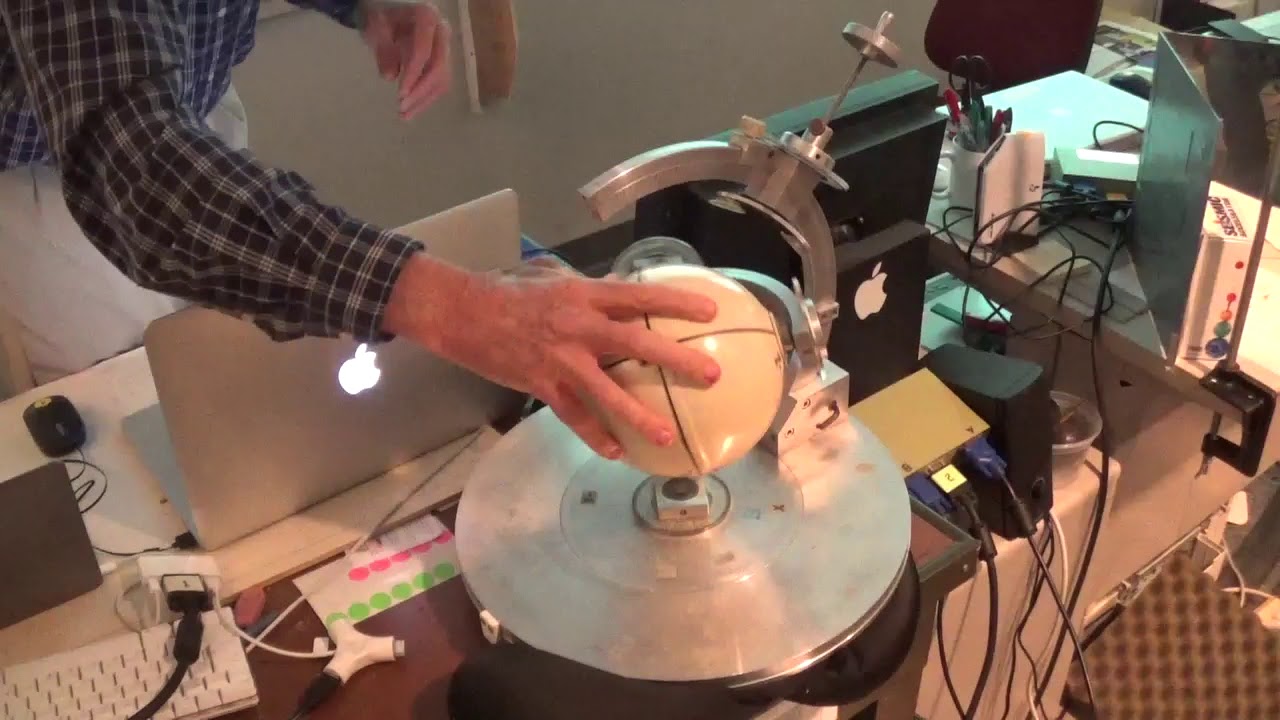
The lecture provides a deep and original perspective on classical mechanics by emphasizing the geometric and group-theoretic aspects. The argumentation is rigorous, with step-by-step derivations and checks. The value lies in the clear connection between abstract mathematical concepts (Euler angles, Darboux vector) and physical applications (spin, polarization). The professor’s enthusiasm and expertise are evident, and the use of physical models (the Euler angle machine) enhances understanding.
Scientific Rigor, Source Quality, Title Accuracy
The lecture is part of a university course, and the professor is a recognized expert in the field. The content is based on his textbook ‘Classical Mechanics with a Bang!’. The sources cited are the course website and the lecture slides, which are provided in the description. The title accurately reflects the content, as it is a lecture on classical mechanics with a geometric approach. The presentation is clear and well-structured, with a logical flow from theory to examples.
160 words
Title / Content Match
The title accurately reflects the content: a lecture on classical mechanics with a geometric approach, part of a series.
Quality & Reliability
8/10
Lecture by a university professor, part of a graduate course, with a geometric approach to classical mechanics. The content is advanced and mathematically rigorous, but it is a lecture, not peer-reviewed. The presentation is clear and the mathematical derivations are detailed.
Key Moments
Markers derived by PSI from the transcript: the creator did not define chapters.
- Introduction: overview of the lecture topics, including Euler angles, Darboux vector, and their relationship.
- Review of Euler angles and their role as coordinates of a spin vector.
- Discussion of the four-dimensional phase space and the representation of two-state systems.
- Introduction of the Darboux vector and its relation to the Euler angles.
- Derivation of the transformation equations between Euler angles and polar angles of the angular velocity.
- Example: Euler angles 50, 60, 70 and the resulting Darboux angles.
- Demonstration of the Euler angle machine and its operation.
- Discussion of the properties of frequencies and Dirac points.
- Introduction to ellipsometry and its connection to the geometric approach.
Cited Sources
- Course Web site — Course website for 'Classical Mechanics with a Bang!'
- Lecture #23 slides (PDF) — Slides used in this lecture
Concurring Sources
- Classical Mechanics with a Bang! (textbook) — The textbook by William Harter, which this lecture is based on.
Contribution & Novelties
This lecture offers a unique geometric perspective on classical mechanics, emphasizing the use of Euler angles and the Darboux vector to unify the description of rigid body motion and quantum spin. The explicit derivation of the transformation between these angle sets is a valuable contribution for students and researchers. The lecture also hints at applications in ellipsometry and Dirac points, providing a bridge to modern physics.
Pour aller plus loin :
- Euler angles — Standard reference for Euler angles and their conventions.
- Darboux vector — Wikipedia article on the Darboux vector, a key concept in differential geometry.
- Dirac point — Wikipedia article on Dirac points, relevant to the discussion of avoided crossings.
112 words
Radar Profile
The radar profile shows high scores in technical level and information quality, indicating a mathematically rigorous and informative lecture. The lower score in information quantity relative to the others suggests that the lecture is dense and focused rather than broad. Overall, the lecture is highly specialized and suitable for advanced students.