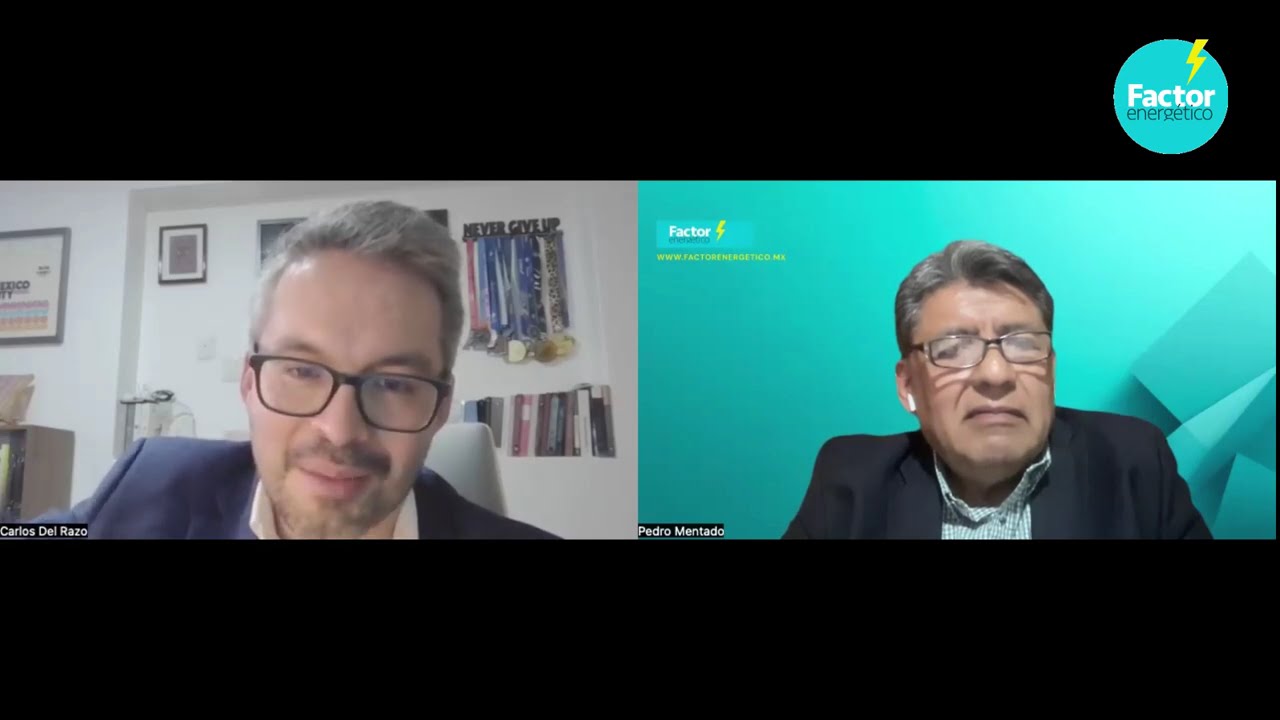
Los cambios en materia hídrica, derechos indigenas y medio ambiente que cambian el rostro de México
Keywords
Summary
166 words
Critical Evaluation
Value of the Information & Strength of the Argument
The video provides valuable insights into the practical implications of recent Mexican environmental and water reforms, based on the expert’s direct experience. The argumentation is coherent and well-structured, with the interviewee offering specific examples (e.g., waste-to-energy projects, the Tren Maya) to illustrate his points. He also acknowledges counterarguments, such as the potential benefits of the reforms, while highlighting implementation challenges. The discussion is balanced and grounded in legal expertise, though it is primarily opinion-based rather than data-driven.
Scientific Rigor, Source Quality, Title Accuracy
The scientific rigor is moderate: the interviewee references specific laws and regulations (e.g., LGEEPA, Ley de Economía Circular, Convenio 169 de la OIT) and mentions jurisprudence from the Inter-American Court, but no formal citations or links are provided. The title accurately reflects the content, covering the main topics discussed. The video is an expert interview, so the quality of sources relies on the interviewee’s credibility, which is not independently verified. No comments were provided for analysis.
168 words
Title / Content Match
The title accurately reflects the content, which covers water, indigenous rights, and environmental reforms in Mexico.
Quality & Reliability
7/10
The video features a legal expert discussing recent Mexican environmental and water reforms, providing detailed analysis and references to specific laws and regulations. However, it is an interview with personal opinions and lacks formal citations or peer-reviewed sources, and the channel has low viewership, limiting external validation.
Key Moments
Markers derived by PSI from the transcript: the creator did not define chapters.
- Introduction of the guest and topic: legal reforms in environmental, water, and indigenous rights.
- Discussion on the new Circular Economy Law and the need for regulations on implementation agreements and certifications.
- Challenges in waste management and waste-to-energy conversion, including legal certainty for investors.
- Analysis of the reform to LGEEPA and the incorporation of strategic environmental assessment.
- Critique of equating strategic environmental assessment with project-level impact assessment.
- Discussion on the new law for consultation with indigenous peoples and the potential veto right.
- Legal uncertainty for projects due to lack of consultation law and the need for clear standards.
- Reforms to the National Water Law and the need for new regulations on water volume reallocation.
- Emphasis on the gap between law and implementation, requiring investment and institutional capacity.
Cited Sources
- Ley General de Economía Circular — Discussed as a new law issued in January, requiring regulations for implementation.
- Ley General del Equilibrio Ecológico y la Protección al Ambiente (LGEEPA) — Reform proposal analyzed, including the incorporation of strategic environmental assessment.
- Ley de Consulta para Pueblos y Comunidades Indígenas — New law discussed regarding consultation rights and potential veto.
- Ley de Aguas Nacionales — Reforms and secondary regulation discussed.
- Convenio 169 de la OIT — Mentioned as the international instrument to be regulated by the consultation law.
Concurring Sources
- Ley General de Economía Circular — The video's discussion aligns with the law's objectives of promoting circularity.
- Convenio 169 de la OIT — The video's emphasis on consultation standards aligns with the convention's requirements.
Dissenting Sources
- Proposed LGEEPA reform — The interviewee criticizes the proposal for equating strategic environmental assessment with project-level impact assessment, which may conflict with the intended purpose.
Contribution & Novelties
The video offers an expert’s perspective on the practical implications of recent Mexican legal reforms, highlighting specific concerns such as the need for regulatory clarity and the risk of legal uncertainty for investors. It provides a nuanced analysis of the proposed strategic environmental assessment, arguing that it should be a prior step rather than equivalent to project-level impact assessment. The discussion on indigenous consultation rights and the potential veto is particularly insightful, drawing on international standards.
Pour aller plus loin :
- Strategic Environmental Assessment — Provides background on the concept discussed in the video.
- Indigenous and Tribal Peoples Convention, 1989 (No. 169) — The ILO convention referenced in the video.
- Circular economy — General concept underlying the new law.
119 words
Radar Profile
The radar profile shows high scores in quantity of information and technical level, indicating a detailed and specialized discussion. The lower scores in quality and reliability reflect the opinion-based nature and lack of formal citations, while the overall balance suggests a valuable but not fully rigorous source.