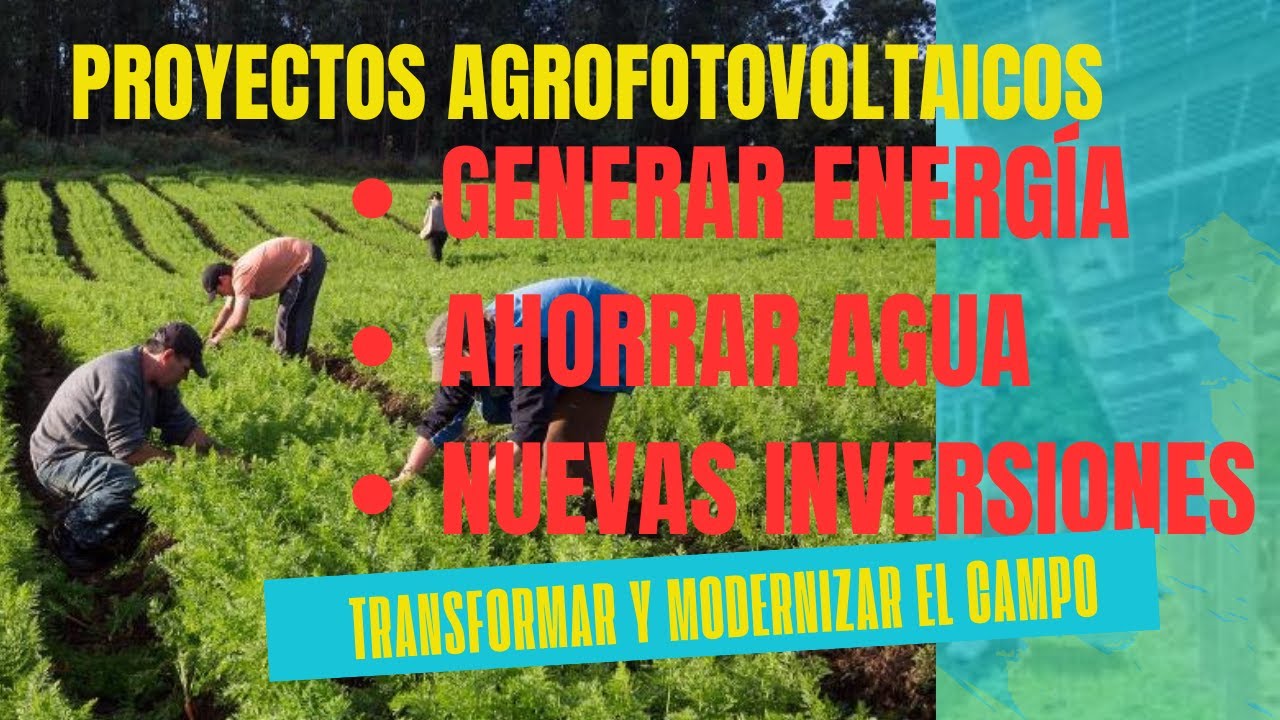
Generar energía en el campo para detonar nuevos negocios
Keywords
Summary
188 words
Critical Evaluation
Value of the Information & Strength of the Argument
The interview provides valuable insights into the emerging field of agrovoltaics, with concrete examples and data. The expert’s argumentation is coherent, emphasizing the dual benefits of energy generation and agricultural productivity. She effectively argues for the potential of agrovoltaics to address water scarcity, energy poverty, and rural economic development. However, some claims, such as the 36 GW global capacity and the 4-7% energy loss due to dust, are mentioned without direct sources, which slightly weakens the argumentation.
Scientific Rigor, Source Quality, Title Accuracy
The scientific rigor is moderate. The expert references international experiences and a study by the International Energy Agency, but specific citations are not provided in the video. The title accurately reflects the content, focusing on generating energy in rural areas to foster new business opportunities. The discussion is based on expert opinion and practical experience, but lacks detailed references to peer-reviewed studies.
154 words
Title / Content Match
The title accurately reflects the content, focusing on generating energy in rural areas to foster new business opportunities.
Quality & Reliability
7/10
The interview features a recognized expert in the field, providing specific data and references to international projects. However, some claims lack direct citations and the discussion is largely qualitative.
Key Moments
Markers derived by PSI from the transcript: the creator did not define chapters.
- Introduction to agrovoltaics and global capacity (36 GW).
- Explanation of different agrovoltaic applications: crops, livestock, soil restoration.
- Examples of projects in Mexico (Morelos and Puebla).
- Discussion on the new energy law and intermediate generator category.
- Regulatory considerations and social impact assessments.
- Launch of the Latin American Agrovoltaic Alliance.
- Benefits of agrovoltaics: reduced panel degradation, water savings, and microclimate.
- Challenges in the agricultural sector: falling exports and energy poverty.
- Call for private sector investment and public policies to promote agrovoltaics.
- Conclusion and thanks.
Cited Sources
- International Energy Agency (IEA) — Referenced for the study on energy loss due to dust on solar panels.
Concurring Sources
- Agrivoltaics: Opportunities for Agriculture and the Energy Transition — NREL report on agrivoltaics, supporting the benefits mentioned in the interview.
Contribution & Novelties
The interview provides a comprehensive overview of agrovoltaics in Mexico and Latin America, highlighting recent developments such as the Latin American Agrovoltaic Alliance. It offers practical insights into regulatory frameworks and business opportunities, making it a valuable resource for stakeholders. The discussion on the ‘intermediate generator’ category is particularly novel in the Mexican context.
Pour aller plus loin :
- Agrivoltaics - Wikipedia — Provides a general overview of the concept and global examples.
- International Energy Agency - Agrivoltaics — Discusses the potential and challenges of agrivoltaics.
- National Renewable Energy Laboratory (NREL) - Agrivoltaics — Research and resources on agrivoltaics.
- Red Agrovoltaica Mexicana — Official website of the Mexican Agrovoltaic Network (if exists, but not verified).
115 words
Radar Profile
The radar profile shows a balanced performance across all dimensions, with slightly higher scores in information quantity and quality, reflecting the expert's detailed explanations. The technical level is moderate, suitable for a general audience interested in renewable energy.