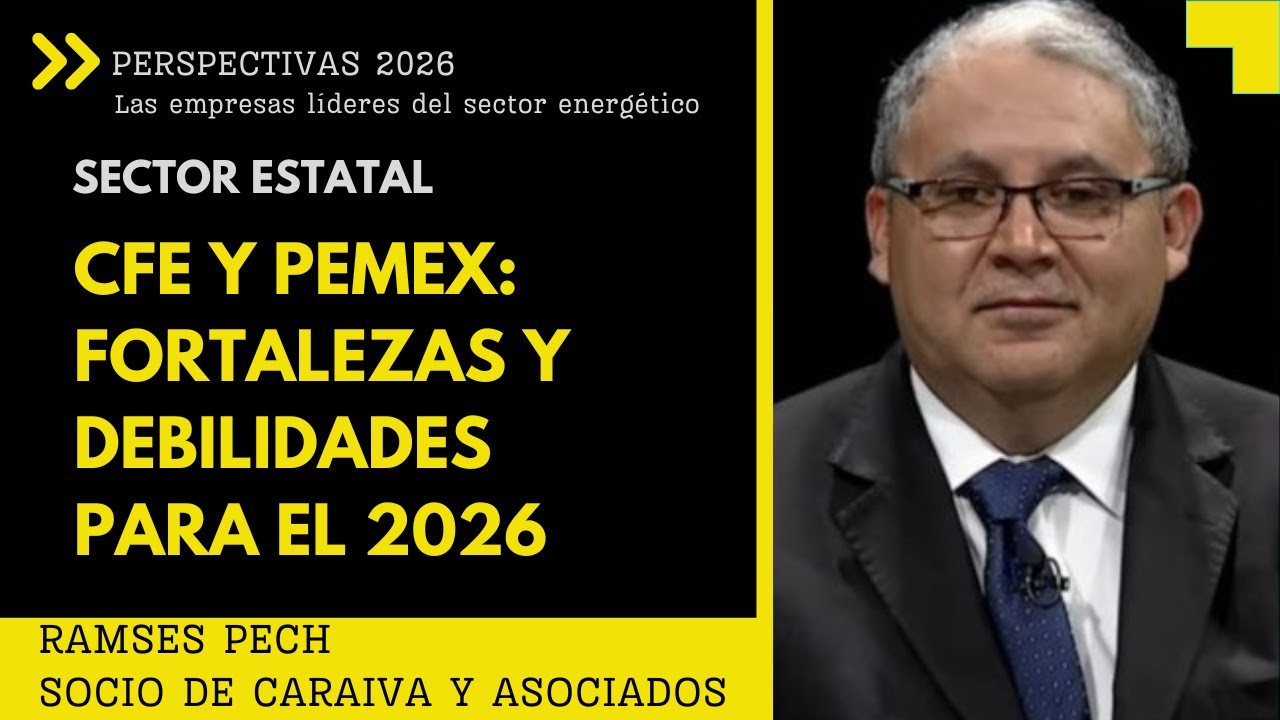
CFE y Pemex. Fortalezas y debilidades de cara al 2026
Keywords
Summary
186 words
Critical Evaluation
Value of the Information & Strength of the Argument
The video provides valuable insights into the current state and future prospects of Mexico’s energy sector, particularly the financial and operational challenges faced by Pemex and CFE. The argumentation is based on the speaker’s expertise and specific data points, such as debt figures and production targets, which lend credibility. However, the analysis is largely qualitative and lacks rigorous evidence or comparative data. The speaker’s perspective is clear and well-structured, but it is an opinion piece rather than a systematic study.
Scientific Rigor, Source Quality, Title Accuracy
The scientific rigor is moderate; the speaker cites specific figures and references to government programs, but no direct sources are provided in the video or description. The title accurately reflects the content, which is a focused discussion on the strengths and weaknesses of CFE and Pemex for 2026. The adequacy is high, but the lack of verifiable sources reduces the overall reliability.
157 words
Title / Content Match
The title accurately reflects the content, which focuses on the strengths and weaknesses of CFE and Pemex for 2026.
Quality & Reliability
6/10
The video presents an expert opinion with specific data points (e.g., debt figures, production targets) but lacks citations to primary sources. The analysis is coherent but relies on the speaker's authority and interpretation.
Key Moments
Markers derived by PSI from the transcript: the creator did not define chapters.
- Introduction of guest Ramses Pech and topic.
- Explanation of the legal change from productive state enterprises to public companies.
- Discussion on Mexico being left out of global energy geopolitics.
- Analysis of Venezuela's role and US energy strategy.
- Pemex strengths: potential revenue increase from legal fuel sales and mixed contracts.
- Pemex weaknesses: high debt and financial concerns.
- CFE challenges: dependence on US natural gas and need for transmission investment.
- Discussion on risks for private companies doing business with Pemex.
- Impact on end consumers: fuel prices and electricity tariffs.
- Critique of the lack of long-term energy transition strategy.
Cited Sources
- Programa Sectorial de Energía 2025-2030 — Mentioned as published in the official gazette on the day of the interview.
Concurring Sources
- Pemex financial reports — The speaker references Pemex's debt and production figures, which are typically reported in official financial statements.
Dissenting Sources
- IEA Mexico energy policy review — International reports may offer different perspectives on Mexico's energy transition and investment needs.
Contribution & Novelties
The video offers a current expert perspective on the implications of Mexico’s energy policy changes for 2026, particularly the shift to public companies and its impact on debt and operations. It provides a clear list of strengths and weaknesses for Pemex and CFE, which is useful for stakeholders. However, the content is largely based on the speaker’s opinion and lacks novel data or analysis.
Pour aller plus loin :
- Pemex — Overview of Mexico’s state-owned petroleum company.
- CFE — Overview of Mexico’s state-owned electric utility.
- Energy transition in Mexico — Context on Mexico’s energy mix and policies.
97 words
Radar Profile
The radar profile shows moderate scores across all dimensions, indicating a balanced but not exceptional video. The quantity of information is relatively high, but the quality and reliability are limited by the lack of citations and the opinion-based nature of the content.
💬 No comments were provided for analysis.