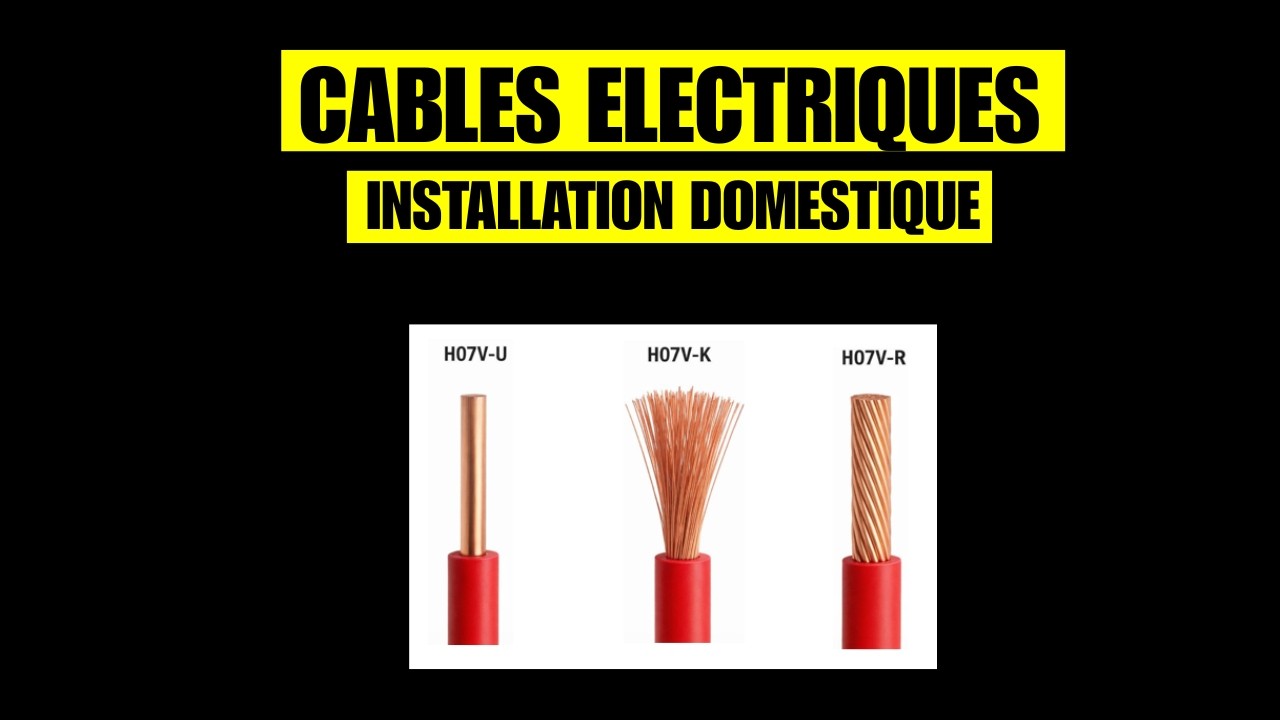
Câbles électriques H07V-U, H07V-R, H07V-K, bâtiment domestique ou de logement
Keywords
Summary
167 words
Critical Evaluation
Value of the Information & Strength of the Argument
The video provides a clear and structured explanation of cable designations, which is valuable for beginners. The argumentation is logical, starting with the meaning of each letter and then applying it to real-world examples. However, the depth is limited; it does not delve into detailed technical specifications, safety standards, or calculation methods for selecting cable sections. The presenter relies on manufacturer websites for confirmation, which adds credibility but is not thoroughly analyzed. The advice on choosing between cable types is practical but could be more nuanced, considering factors like installation environment and regulatory requirements.
Scientific Rigor, Source Quality, Title Accuracy
The scientific rigor is moderate. The presenter correctly explains the designation system and provides accurate information about the cables’ applications. However, he does not cite specific standards (e.g., IEC 60227) or provide detailed technical data beyond what is shown on manufacturer pages. The sources used are manufacturer websites (Nexans), which are reliable but not primary standards. The title accurately reflects the content, and the video stays on topic. No comments were provided for analysis.
183 words
Title / Content Match
The title accurately reflects the content, which focuses on the designation and use of H07V-U, H07V-R, and H07V-K cables in domestic installations.
Quality & Reliability
6/10
The video provides a clear explanation of cable designations and their applications, but lacks depth on technical standards and safety considerations. The information is generally accurate but presented in a simplified manner.
Key Moments
Markers derived by PSI from the transcript: the creator did not define chapters.
- Introduction to the video's purpose: understanding cable designations and selecting the right section.
- Explanation of the designation H07V-U, H07V-R, H07V-K: H for harmonized, 07 for voltage, V for PVC, and U/R/K for conductor type.
- Demonstration of searching for H07V-R on Google and visiting Nexans' product page.
- Discussion of the applications of H07V-R and H07V-U cables, primarily for wiring distribution boards.
- Comparison of available cross-sections for each cable type: U (1.5-4 mm²), R (6-300 mm²), K (0.75-95 mm²).
- Advice on choosing between cable types based on flexibility and power requirements, and conclusion.
Cited Sources
- Contact form — Mentioned in the video description as a way to contact the creator.
Concurring Sources
- Nexans product page for H07V-R — The presenter uses this source to confirm the cable's application and specifications.
Contribution & Novelties
The video offers a clear, beginner-friendly explanation of cable designations, which is useful for those new to electrical installations. It bridges the gap between theoretical knowledge and practical application by showing how to find product information online. However, it does not introduce new technical concepts or advanced insights.
Pour aller plus loin :
- IEC 60227 — Relevant standard for PVC-insulated cables.
- Electrical wiring — Overview of wiring practices and cable types.
- Nexans — Manufacturer website with detailed product data.
79 words
Radar Profile
The radar profile shows moderate scores across all dimensions, indicating a balanced but not exceptional video. The information is useful for beginners but lacks depth and advanced technical details.