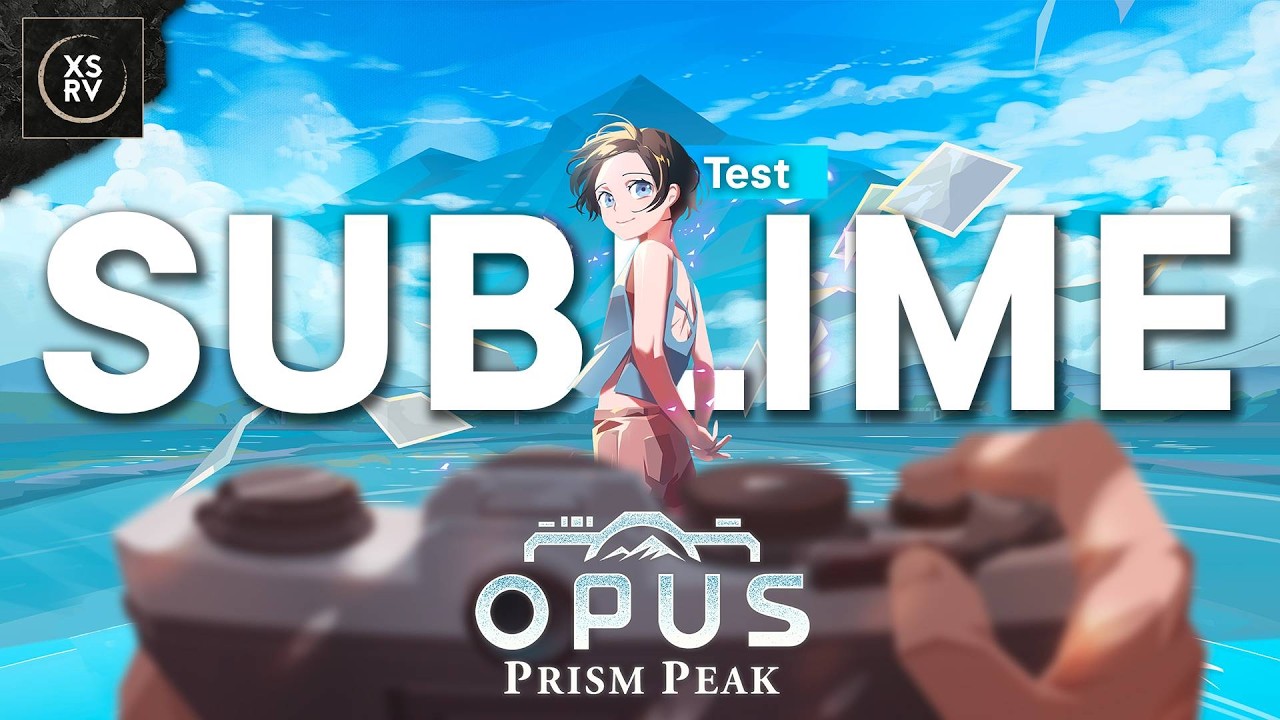
Test : Opus Prism Peak, une sublime aventure humaine à découvrir !
Keywords
Summary
164 words
Critical Evaluation
The review provides a thorough and passionate analysis of Opus Prism Peak, focusing on its narrative and emotional impact. The reviewer clearly appreciates the game’s cohesive design, where gameplay mechanics (photography, observation) directly support the themes of empathy and memory. The argumentation is solid, as the reviewer connects specific gameplay elements (e.g., the notebook, the brazier, the analog camera) to the game’s deeper messages. The review is subjective, but it is transparent about that, and it offers concrete examples to support its claims. The quality of information is high for a personal review, but it lacks external references or data to verify statements about the game’s development or reception. The reviewer mentions a positive interaction with the developers (quick patch after feedback), which adds credibility. The adéquation between title and content is excellent, as the title promises a human adventure and the review delivers exactly that. The review does not address potential weaknesses of the game, such as pacing or technical issues, which could be a limitation. Overall, the review is well-structured, engaging, and provides valuable insights for potential players, but it remains a personal opinion rather than an objective analysis.
191 words
Title / Content Match
The title accurately reflects the content: a review of the game Opus Prism Peak, emphasizing its emotional and human qualities.
Quality & Reliability
7/10
The review is subjective and personal, but it provides detailed insights into the game's mechanics, narrative, and emotional impact. The creator demonstrates familiarity with the game and the studio, and mentions a specific interaction with the developers (patch after feedback). However, no external sources or data are cited to support claims, and the review is based solely on personal experience.
Key Moments
Markers derived by PSI from the transcript: the creator did not define chapters.
- Introduction and personal connection to the game
- Overview of the game's premise and protagonist
- Explanation of the photography gameplay and notebook mechanics
- Discussion of the game's themes and emotional depth
- Comparison to Studio Ghibli and discussion of visual style
- Mention of the analog camera mechanics and manual mode
- Praise for voice acting and localization, and note on post-game content
- Final thoughts and recommendation
Cited Sources
- Aude Javel's portfolio — Illustrations for the video
- ExServ's Discord server — Community discussion
- Gamesplanet (partner) — Partner store for purchasing games
- ExServ's books — Books by the reviewer
- All tests by ExServ — Playlist of other reviews
Concurring Sources
- Opus: Echo of Starsong — Previous game by Sigono, similar narrative-driven approach
Contribution & Novelties
The review offers a personal and emotional perspective on Opus Prism Peak, highlighting its unique blend of photography gameplay and narrative depth. It emphasizes the game’s ability to address themes of regret and empathy through its mechanics, which is a fresh angle in game reviews. The reviewer also notes the game’s post-game content and the developers’ direct communication, which adds value.
Pour aller plus loin :
- Opus: Echo of Starsong — The previous game by Sigono, providing context on the studio’s style.
- Photography in video games — Overview of games that use photography as a core mechanic.
- Studio Ghibli — The animation studio whose style the game is compared to.
110 words
Radar Profile
The radar profile shows a balanced review with strong scores in information quantity and quality, moderate technical depth, and slightly lower reliability due to the subjective nature. The overall impression is a well-rounded personal review that provides substantial content for viewers.