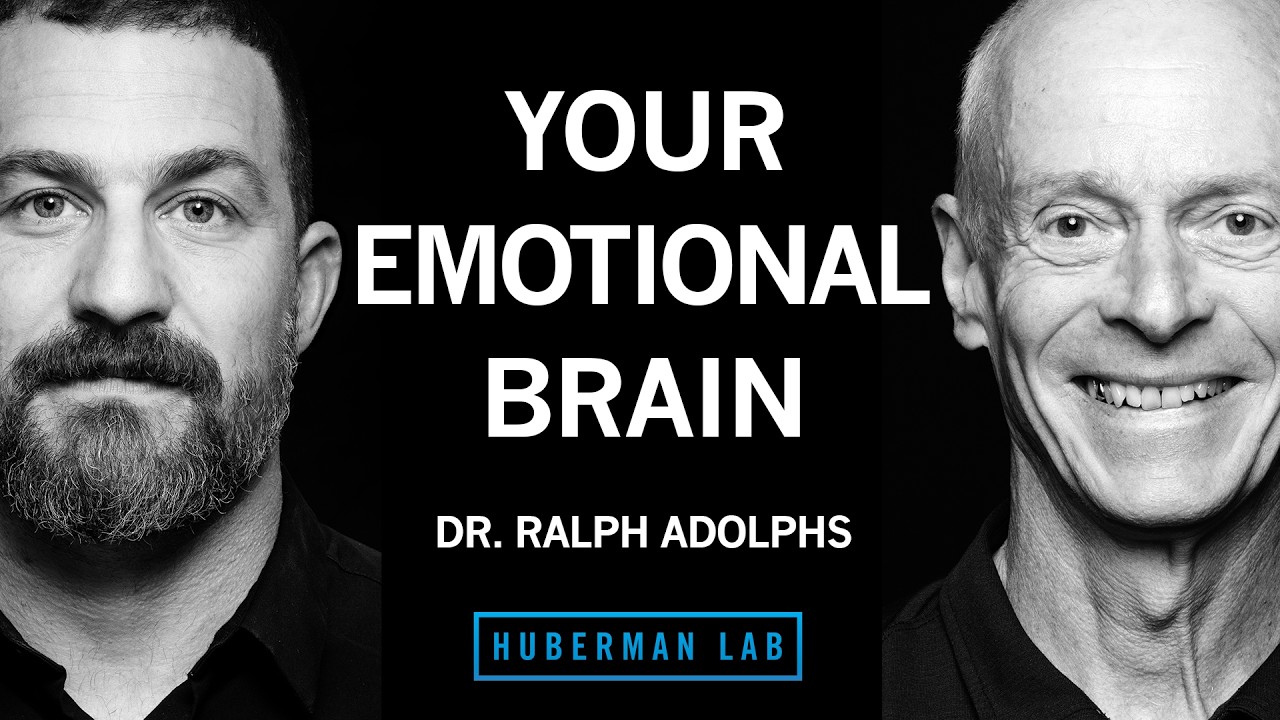
Episode 294 Ralph Adolphs
Keywords
Summary
110 words
Critical Evaluation
Value of the Information & Strength of the Argument
The episode provides substantial value by offering a comprehensive, scientifically grounded perspective on emotions, distinguishing them from reflexes and higher-order cognition. Adolphs argues convincingly for a functional definition of emotions, which allows for cross-species comparisons and avoids the hard problem of consciousness. The discussion is well-argued, with clear examples and references to specific studies, such as the amnesia patient study demonstrating temporal persistence. The argumentation is solid, though it is primarily an expert opinion rather than a systematic review, and some claims, like the effects of ice baths on emotion regulation, are anecdotal.
Scientific Rigor, Source Quality, Title Accuracy
The scientific rigor is high, with Adolphs citing his own work and that of others, including David Anderson and Antonio Damasio. The sources are credible, and the discussion is nuanced, acknowledging complexities and uncertainties. The title accurately reflects the content, as the episode is a focused conversation on emotions. The description provides relevant links to Adolphs’ academic profile and publications, which are useful for further reading. However, the episode includes sponsor segments that are clearly marked and do not detract from the scientific content.
192 words
Title / Content Match
The title accurately reflects the content, as the episode is a deep-dive conversation with Ralph Adolphs on the neuroscience of emotions.
Quality & Reliability
8/10
The episode features a leading expert in affective neuroscience, Ralph Adolphs, who provides a nuanced, evidence-based overview of emotions. The discussion is grounded in established research and includes references to specific studies, though it is primarily an expert opinion format rather than a systematic review.
Chapters
- Ralph Adolphs
- Emotions; Qualities of Emotions: Priority, Valence
- Qualities of Emotions: Scalability, Persistence
- Sponsors: Helix Sleep & Rorra
- Do Animals Have Emotions?, Conscious Experience
- Monitoring & Regulating Emotions; Emotional Granularity
- Emotional Regulation, Tools: Situational Avoidance, Ice Baths
- Ultramarathons, Perseverance, Adversity; Awe
- Sponsor: AG1
- Perception of Emotions, Amygdala & Fear, Facial Expressions
- Interpreting Others' Emotions, Prediction
- Emotions as Adaptations to the Environment, Types of Fear
- Feeling Emotions in the Body, Pain, Insula
- Brain & Body Connection; Marketing & Emotion
- Sponsor: Function
- Art, Music & Emotion
- Interpreting Facial Expressions, Developing Emotions, Flexibility vs Reflexes
- Emotional Intelligence, Context-Dependent Social Intelligence; Autism
- Sponsor: LMNT
- Autism & Social Dynamics, Eye Contact
- Change Your Personality?, Body Movement & Thought, Social Interaction
- Emotion Regulation, Tool: Training Mental Stillness
- Task Switching, Tool: Meditation, Breathing Techniques
- Illness, Diagnosis & Emotions, Gratitude & Awe
- Zero-Cost Support, YouTube, Spotify & Apple Follow, Reviews & Feedback, Sponsors, Protocols Book, Social Media, Neural Network Newsletter
Cited Sources
- Ralph Adolphs Academic Profile — Provides background on the guest's credentials and research.
- Emotion Lab at Caltech — Lab website with information on ongoing research.
- Publications and Books — List of Adolphs' publications and books.
- Google Scholar Profile — Comprehensive list of academic publications.
Concurring Sources
- The Expression of the Emotions in Man and Animals — Darwin's work on emotional expression, referenced in the discussion.
External References
Contribution & Novelties
The episode offers a fresh synthesis of emotion research, emphasizing a functional approach that bridges animal and human studies. It clarifies common misconceptions, such as the idea that emotions are ‘stored’ in the body, and provides practical tools for emotion regulation. The discussion on emotional granularity and its link to well-being is particularly insightful.
Pour aller plus loin :
- The Neuroscience of Emotion (book) — Foundational text by Adolphs and Anderson.
- Emotional granularity — Concept discussed in relation to emotion regulation.
- Amygdala and fear — Neural basis of fear processing.
- Cognitive reappraisal — A key emotion regulation strategy mentioned.
99 words
Radar Profile
The radar profile shows high scores across all dimensions, indicating a well-rounded and reliable episode. The lowest score is in 'niveau_technique' at 7, suggesting it is accessible to a broad audience while still providing depth.
💬 Sur les 0 commentaires analysés, aucune tendance n'est disponible.