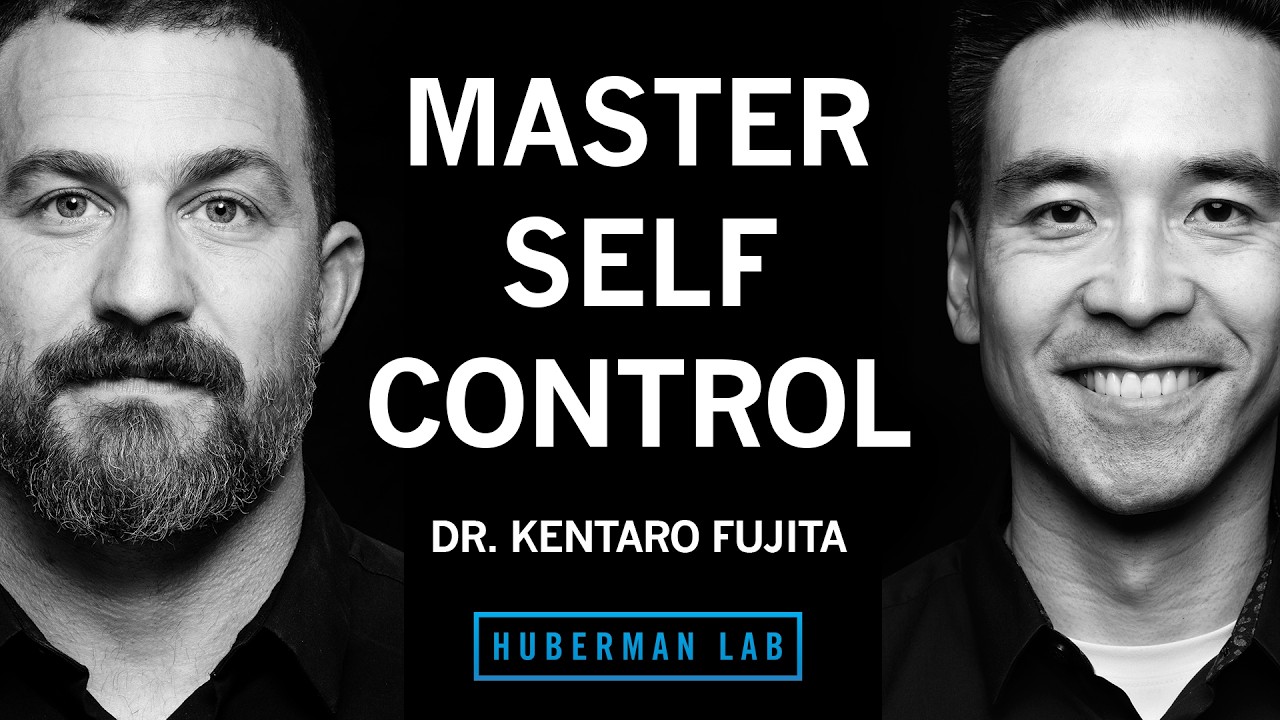
Master Self Control & Overcome Procrastination | Dr. Kentaro Fujita
Keywords
Summary
143 words
Critical Evaluation
The episode provides a comprehensive and nuanced overview of self-control research, effectively balancing scientific rigor with practical applicability. Dr. Fujita’s expertise is evident as he clarifies common misconceptions, such as the oversimplified interpretation of the marshmallow test, and presents a more sophisticated understanding of self-control as a dynamic process influenced by context and cognitive strategies. The discussion is well-structured, moving from foundational concepts to actionable tools, which enhances its value for listeners seeking to improve their self-regulation. The scientific quality is high, with references to specific studies and a critical examination of methodological issues, such as the role of socioeconomic status in the marshmallow test. However, the episode is primarily an expert opinion format, and while it cites research, it does not provide detailed citations for all claims, which limits its verifiability. The inclusion of sponsor segments is clearly marked and does not detract from the content. The title accurately reflects the content, and the episode delivers on its promise to offer science-based tools for overcoming procrastination. The main strength lies in its practical takeaways, such as the ‘why vs. how’ technique and the importance of intrinsic motivation, which are grounded in research. The episode could be improved by providing more explicit references to the studies discussed, but overall, it is a valuable resource for anyone interested in the psychology of self-control.
222 words
Title / Content Match
The title accurately reflects the content, focusing on self-control and overcoming procrastination through scientific insights and practical tools.
Quality & Reliability
8/10
The episode features a renowned psychology professor discussing peer-reviewed research, with references to specific studies and balanced treatment of controversies. However, as a podcast, it includes anecdotal elements and sponsor segments, and some claims lack direct citations in the description.
Chapters
- Kentaro Fujita
- Marshmallow Tests, Self-Control; Adult Modeling
- Criticism of Marshmallow Tests, Learning Self-Control
- Sponsors: David & Lingo
- Movement & Motivation
- Doing Hard Things; Exhaustion & Depletion Effect
- Willpower vs Self-Control, Improving Self-Control
- Aspiration or Fear for Motivation, Long- vs Short-Term Outcomes
- Self-Control Toolkit, Tool: Failure & Exploration
- Sponsor: AG1
- Motivation Warm-Up?, Tools: Mindset; Motivation Orientation
- Imperfect Conditions, Self-Control Conflicts, Tool: Why vs How
- Tool: "Whys" & Motivation Goals
- Competition, Tool: Motivation Types
- Sponsor: LMNT
- Abstinence vs Moderation, Consistency vs Rigidity
- Burnout; "Invisible" Goals, Single Goal & Trade-Offs
- Intrinsic Motivation for Sustained Goals
- Sponsor: Function
- Meaning in Simple Tasks, Ikigai
- Self-Control Failure, Tools: Distancing, 3rd Person & Heros
- Words as Motivation, Visualization, Social Validation
- Music, Anchors, Nostalgia
- Intrinsic vs Extrinsic Motivation, Job & Salary
- Mindfulness & Taking Breaks, Wabi-Sabi & Imperfection, Ikigai
- Future Directions
- Zero-Cost Support, YouTube, Spotify & Apple Follow, Reviews & Feedback, Sponsors, Protocols Book, Social Media, Neural Network Newsletter
Cited Sources
- Dr. Kentaro Fujita's Academic Profile — Official academic profile of the guest, providing credentials and research background.
- Dr. Kentaro Fujita's Google Scholar — List of publications and citations for the guest, supporting the scientific basis of the discussion.
- Dr. Kentaro Fujita's Website — Personal website with additional resources and information about his research.
- Huberman Lab Podcast Show Notes — Official show notes for the episode, containing additional resources and references.
Concurring Sources
- Huberman Lab Podcast — The host's official website, which includes disclaimers and additional resources.
Dissenting Sources
- Reanalysis of marshmallow test — Some studies have questioned the predictive power of the marshmallow test, but Dr. Fujita addresses these criticisms and provides a balanced view.
External References
Contribution & Novelties
This episode offers a fresh perspective on self-control by integrating recent research and debunking myths, such as the oversimplified marshmallow test narrative. It provides actionable tools like focusing on ‘why’ vs. ‘how’ and emphasizes the importance of intrinsic motivation. The discussion with Dr. Fujita brings academic rigor to practical advice, making it a valuable resource for personal development.
Pour aller plus loin :
- Walter Mischel’s Marshmallow Test — Provides background on the original experiment and its criticisms.
- Self-Control Theory — Overview of self-control concepts and research.
- Intrinsic Motivation — Explains the concept of intrinsic motivation and its role in behavior.
100 words
Radar Profile
The radar profile shows high scores in quantity and quality of information, with a strong technical level and good reliability. This indicates a well-rounded, informative episode that is both scientifically sound and accessible.
💬 Très positif. Sur les 30 commentaires analysés, les auditeurs expriment une forte appréciation, partageant des anecdotes personnelles et des remerciements, avec un ton humoristique sur la procrastination.