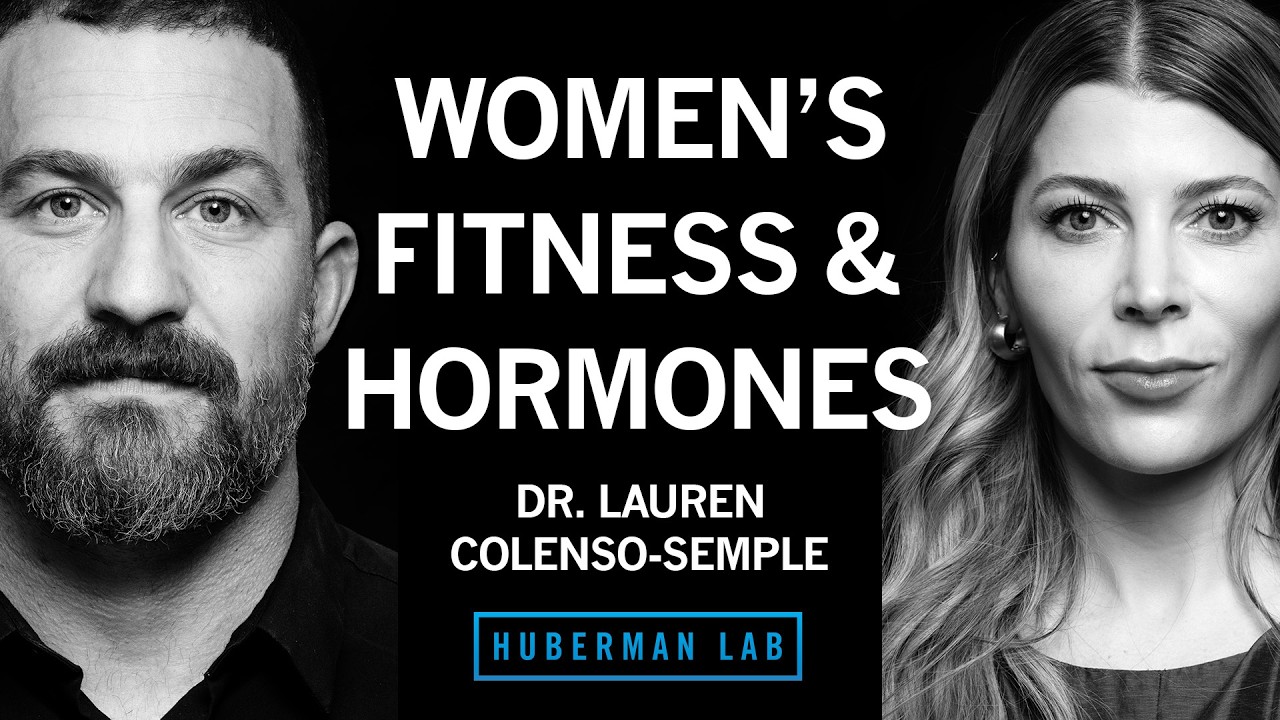
The Most Effective Weight Training, Cardio & Nutrition for Women | Dr. Lauren Colenso-Semple
Keywords
Summary
132 words
Critical Evaluation
The episode offers a comprehensive and scientifically grounded discussion on women’s fitness, with Dr. Colenso-Semple providing nuanced explanations based on current research. The strength of the content lies in its emphasis on evidence over popular narratives, such as the claim that women need drastically different training programs. The guest’s expertise is evident, and she effectively communicates complex concepts like muscle protein synthesis and hormonal influences. However, the discussion occasionally lacks specific citations for certain claims, relying on general scientific consensus. The format as an interview allows for in-depth exploration but may lack the rigor of a structured review. The inclusion of practical tools and protocols adds value, making the information actionable. The adéquation between title and content is strong, as the episode directly addresses the most effective training and nutrition strategies for women. The public comments reflect appreciation for the evidence-based approach, though some express confusion due to conflicting information from other experts. Overall, the episode is a valuable resource for those seeking science-supported fitness guidance, though viewers should be aware of the need to consult primary literature for deeper verification.
181 words
Title / Content Match
The title accurately reflects the content, which covers weight training, cardio, and nutrition for women.
Quality & Reliability
8/10
The discussion is grounded in scientific evidence, with the guest holding a PhD in integrative physiology and citing research. However, some claims are presented without specific citations, and the format is an interview rather than a peer-reviewed source.
Chapters
- Lauren Colenso-Semple
- Muscle in Men vs Women; Testosterone; Individual Variation
- Sponsors: Joovv & Eight Sleep
- Testosterone & Women; Resistance Training; Young Girls
- Tool: Beginner Resistance Training for Women; Frequency & Goals
- Tools: Weekly Full-Body Workouts, Work Sets, Rest Intervals; Time Efficiency
- Forced Reps, Drop Sets; Rate of Movement; Partial Reps
- Tool: Repetition Ranges; Technique; Vary Rep Ranges?
- Sponsor: AG1
- High Reps & Injury, Technique & Warm-Ups
- Cardiovascular Exercise, Interference Effect?; Walking, High Intensity
- Menstrual Cycle, Hormones & Training; Overcoming Internal Resistance
- Training & Body Composition; Tool: Slow Progression; Menstrual Cycle
- Sponsor: Rorra
- Hormone Contraception & Adaptations; Perimenopause, Menopause
- Age-Related Muscle Loss, Nervous System, Tool: Machines & Group Fitness
- Menstrual Cycle & Physical Activity; Nutrition
- Pilates, Genes, Tool: Resistance Training to Offset Age-Related Muscle Loss
- Ectomorph, Mesomorph or Endomorph?
- Sponsor: Function
- Train Fasted?, Caffeine, Preworkout & Postworkout Nutrition
- Protein, Resistance Training & Timing
- Creatine Supplements, Gummies, Dose, Brain Health Benefits?
- Individual Experience; Skepticism & Science, Menopause & Body Composition
- Cortisol & Women, Stress & Diet, Cushing Syndrome
- Overtraining?, Sleep Disruptions, Energy & Training Time
- Menopause Symptoms & Hormone Therapy, Testosterone
- Women Differences in Diet & Training?; Exercise Science Studies
- Lauren's Training Schedule, Mobility Work
- Hormone Therapy & Long-Term Outcomes; Deliberate Cold Exposure
- Zone 2 Cardio; Weighted Vest; Balance Training; Ab Exercises; Recovery
- Zero-Cost Support, YouTube, Spotify & Apple Follow, Reviews & Feedback, Sponsors, Protocols Book, Social Media, Neural Network Newsletter
Cited Sources
- Dr. Lauren Colenso-Semple's website — Official website of the guest, providing her credentials and additional resources.
- Dr. Lauren Colenso-Semple's Substack — Newsletter where she shares evidence-based fitness and nutrition information.
- Fact Check Fridays — A resource for fact-checking fitness and nutrition claims.
- Front Page Fitness — Podcast hosted by Dr. Colenso-Semple on fitness topics.
- Mass Research Review — A publication summarizing recent exercise science research.
- Huberman Lab show notes — Detailed show notes for the episode, including references and resources.
Concurring Sources
- American College of Sports Medicine position stand on resistance training — General guidelines that align with the episode's recommendations.
Dissenting Sources
External References
Contribution & Novelties
This episode provides a valuable contribution by consolidating current scientific evidence on women’s fitness and debunking common myths. It emphasizes that men and women respond similarly to training, challenging the notion of sex-specific protocols. The discussion offers practical tools for program design and addresses the impact of hormonal changes across the lifespan. The guest’s expertise adds credibility, and the episode serves as a reliable resource for both women and men.
Pour aller plus loin :
- Resistance training for women: A review — A review of resistance training adaptations in women.
- Menstrual cycle and exercise performance — Research on the effects of the menstrual cycle on exercise.
- Creatine supplementation in women — Study on creatine’s benefits for women.
- Hormone replacement therapy and muscle mass — Research on HRT and muscle health in postmenopausal women.
133 words
Radar Profile
The radar profile shows high scores in quantity and quality of information, with a moderate level of technical depth. The reliability is strong, reflecting the evidence-based approach. The overall balance indicates a comprehensive and trustworthy resource.
💬 Positif. Sur les 30 commentaires analysés, la majorité exprime une appréciation pour le contenu scientifique et la clarté des explications, bien que certains soulèvent des interrogations sur les divergences avec d'autres experts.