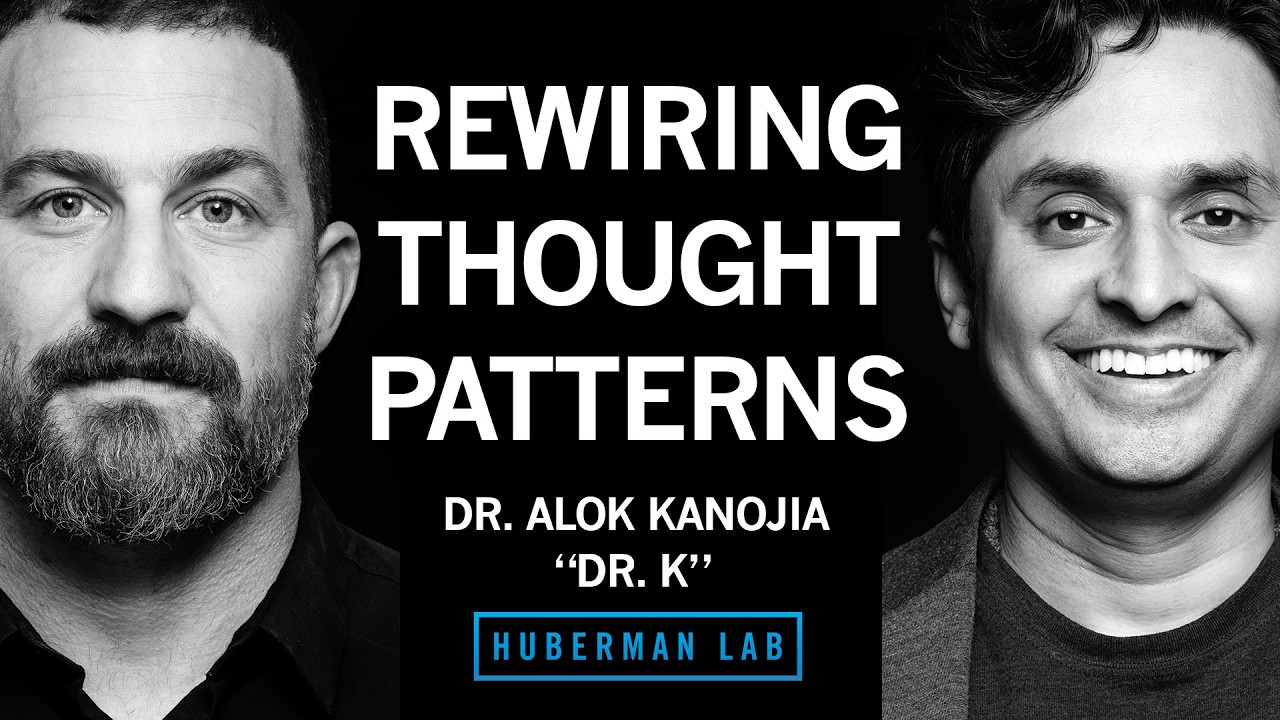
Unlearn Negative Thoughts & Behaviors Patterns | Dr. Alok Kanojia (Healthy Gamer)
Keywords
Summary
148 words
Critical Evaluation
This episode stands out for its depth and integration of diverse perspectives, blending clinical psychiatry, neuroscience, and Eastern contemplative traditions. Dr. K’s insights are grounded in his extensive clinical experience and personal practice, lending authenticity and practical relevance. The discussion is well-structured, moving from personal narrative to theoretical frameworks and then to actionable tools. However, the scientific rigor is variable: while some concepts like distress tolerance and transdiagnostic factors are well-established, others, such as the mechanisms of meditation and ego dissolution, are presented more anecdotally. The lack of explicit citations during the conversation is a limitation, though the show notes provide some resources. The dialogue is respectful and exploratory, avoiding dogmatic claims, which enhances its credibility. The adéquation between title and content is strong, as the core theme of unlearning negative patterns permeates the entire episode. The inclusion of sponsors is clearly delineated and does not detract from the content. Overall, this is a valuable resource for those seeking a holistic understanding of mental health and practical strategies for personal growth, though it should be complemented with more evidence-based sources for rigorous scientific validation.
184 words
Title / Content Match
The title accurately reflects the core theme of unlearning negative patterns, though the episode covers a broader range of topics including motivation, relationships, and social media.
Quality & Reliability
8/10
High credibility due to the expertise of both speakers (Stanford professor and Harvard-trained psychiatrist), but the content is largely based on clinical experience and Eastern philosophy rather than peer-reviewed research. The discussion is nuanced and evidence-informed, but lacks systematic citations.
Chapters
- Alok Kanojia (Dr. K)
- Internet, Computer Games; Academic Pressure
- Millennials & Self-Awareness, Hijacking Mental Health Language
- Sponsors: Lingo & Joovv
- Personality & Individual Road Maps, Misdiagnosis
- Ambiguity, Flirting, Social Skills Decline, Uncertainty Tolerance
- Dating in the Internet Age, Cognitive Bias
- Healthy Distress Tolerance, Tool: How to Feel Your Feelings
- Sponsor: AG1
- Expectations vs Internal Desire Roadmap, Western vs Eastern Theory of Mind, Ego
- Sense Organs, Comparison & Proving Oneself, Internal Drive
- Internet, Ego, "Teflon Buddha", Tool: Dealing with Criticism
- Observing One's Mind, Meditation, Psychedelics
- Sponsor: Function
- Tool: Shunya "Void" Meditation & Resilience
- External Reminders, Environment; Men & Emotional Regulation
- Samskara, Yoga Nidra, Trauma & Learning, Shunya & Personal Compass
- Yoga Nidra, Channeling Divinity, Genius
- Sponsor: Eight Sleep
- Breathwork Practices; Meditation Science, Self-Esteem & Belief Change
- Liminal States, Meditation Types & Benefits; Western & Eastern Balance
- Understanding Ego & Perception; AI & Narcissism, Psychosis
- Tool: Healthy Social Media Use, When To Not Use, Normal Standards
- Social Media & Looks Obsession, Purpose, Charisma
- Young Men Falling Behind?, Male Support, Suicide; Men in Relationships
- "Stuck" Young Men, Failure to Launch, Tool: Motivation & Understanding Oneself
- Pornography, Erectile Dysfunction, Emotions, Addiction; Relationships
- Men & Love, Looksmaxxing, Rejection, Partner Characteristics, Tool: Walk Before Dates
- Exploring Practices, Meditation, Breathwork
- Spirituality, Personal Exploration; Acknowledgements
- Zero-Cost Support, YouTube, Spotify & Apple Follow, Reviews & Feedback, Sponsors, Protocols Book, Social Media, Neural Network Newsletter
Cited Sources
- Huberman Lab Show Notes — Detailed show notes for the episode, including references and resources.
- Dr. K's Website — Official website of Dr. Alok Kanojia, offering mental health resources and coaching.
- Dr. K's Book — Book by Dr. K, likely 'How to Raise a Healthy Gamer'.
- Dr. K's Podcast — Spotify podcast feed for Healthy Gamer.
- Dr. K's YouTube Channel — YouTube channel for Healthy Gamer content.
- Huberman Lab Website — Official website for Andrew Huberman's podcast and resources.
Concurring Sources
- Huberman Lab Podcast — Andrew Huberman's podcast often discusses neuroscience and mental health, aligning with themes of neuroplasticity and behavior change.
- Healthy Gamer — Dr. K's platform provides mental health resources and coaching, consistent with the episode's focus on practical tools.
Dissenting Sources
- No direct discordant sources found — The episode does not explicitly contradict established scientific literature, but some claims about meditation and ego are not rigorously supported by peer-reviewed studies.
External References
Contribution & Novelties
The episode provides a unique synthesis of Eastern and Western psychological frameworks, offering a novel perspective on unlearning maladaptive patterns. Dr. K’s emphasis on changing the underlying tendency rather than relying on willpower is a refreshing departure from conventional self-help advice. The practical tools, such as Shunya meditation and techniques for feeling emotions, are presented in a clear and actionable manner. The discussion on the ego and its role in motivation and identity is particularly insightful, bridging clinical psychiatry with contemplative traditions.
Pour aller plus loin :
- Transdiagnostic factors in mental disorders — Overview of transdiagnostic factors like distress tolerance and rumination.
- Shunya meditation — Concept of void or emptiness in Eastern philosophy.
- Yoga Nidra — A deep relaxation practice discussed in the episode.
124 words
Radar Profile
The radar profile shows high scores in information quantity and quality, reflecting the depth and breadth of the discussion. The technical level is moderate, making it accessible to a general audience while still offering depth. Reliability is strong due to the expertise of the speakers, though the reliance on anecdotal evidence and Eastern philosophy slightly lowers the score.
💬 Très positif. Sur les 30 commentaires analysés, l'enthousiasme est unanime, saluant la collaboration tant attendue et la profondeur des échanges, avec de nombreux commentaires exprimant une gratitude et une admiration pour les deux intervenants.