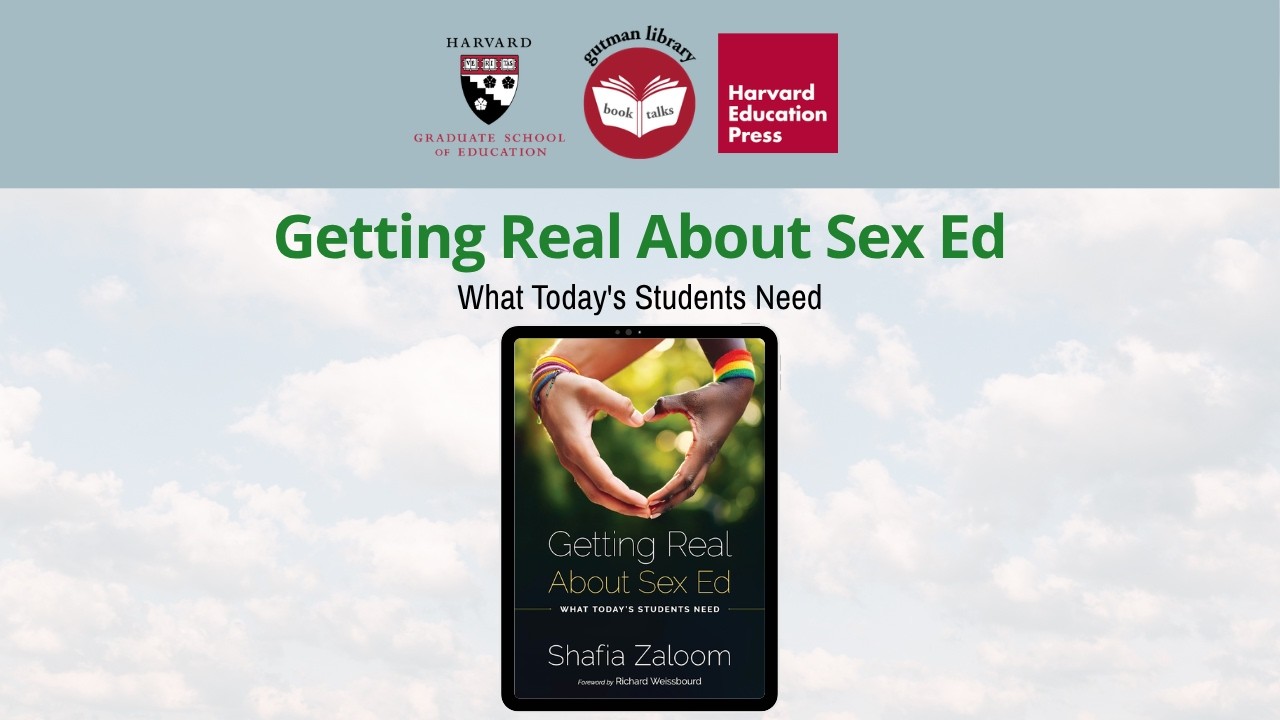
Getting Real About Sex Ed | Gutman Library Virtual Book Talk
Keywords
Summary
164 words
Critical Evaluation
Value of the Information & Strength of the Argument
The value of the information is high, as it provides practical insights and strategies for educators and parents navigating sex education. Zaloom’s arguments are well-founded, drawing on her extensive experience and referencing research, such as the Congressional Research on abstinence-only education and international comparisons like the Dutch model. She effectively argues that comprehensive sex education does not lead to increased sexual activity but rather promotes agency and responsible decision-making. The discussion is nuanced, addressing both individual and systemic challenges, and offers concrete methods for overcoming resistance.
Scientific Rigor, Source Quality, Title Accuracy
The scientific rigor is moderate; while Zaloom references research and her professional experience, she does not provide specific citations or data within the talk. The sources mentioned in the description are primarily institutional links to Harvard and the book’s page, which are credible but not directly cited in the discussion. The title accurately reflects the content, as it is a book talk focused on sex education. The discussion is well-structured and grounded in expertise, but lacks detailed empirical evidence.
180 words
Title / Content Match
The title accurately reflects the content, which is a book talk about comprehensive sex education.
Quality & Reliability
8/10
The discussion is led by an experienced health educator and author, with references to research and international comparisons, but lacks detailed citations and empirical data within the talk.
Key Moments
Markers derived by PSI from the transcript: the creator did not define chapters.
- Introduction by Shannon Davis, welcoming Shafia Zaloom and Richard Weissbourd.
- Shafia Zaloom shares her background and motivation for entering health education.
- Discussion on the positive sex education experience that influenced Zaloom.
- Zaloom explains the inspiration for the book, stemming from her classes at HGSE.
- Overview of the current state of sex ed in the US, including legislative challenges.
- Discussion on the Dutch model of comprehensive sex education and its outcomes.
- Strategies for addressing resistance, including non-judgmental language and strategic questions.
- Weissbourd shares a personal story about discussing pleasure with his daughter.
- Zaloom emphasizes the importance of self-reflection for adults before engaging with youth.
- Q&A session begins, addressing audience questions.
Cited Sources
- Harvard Graduate School of Education — Institutional website, mentioned in the description.
- Getting Real About Sex Ed (book page) — Book page on Harvard Education Press website, mentioned in the description.
- HGSE LinkedIn — LinkedIn page, mentioned in the description.
- HGSE Threads — Threads page, mentioned in the description.
Concurring Sources
- Harvard Graduate School of Education — Institutional affiliation of the moderator and author.
Contribution & Novelties
The book talk provides a comprehensive overview of the challenges and opportunities in sex education, emphasizing the need for a balanced approach that includes pleasure, ethics, and responsibility. It offers practical strategies for educators and parents to engage in productive conversations and address resistance. The discussion highlights the importance of comprehensive sexuality education for student well-being and academic success.
Pour aller plus loin :
- Comprehensive Sexuality Education — Overview of CSE and its components.
- Abstinence-only sex education — Research on the effectiveness of abstinence-only programs.
- Dutch approach to sex education — Details on the Dutch model and its outcomes.
99 words
Radar Profile
The radar profile shows high scores in quantity and quality of information, reflecting the depth of the discussion. The technical level is moderate, suitable for a general audience. The overall reliability is high due to the expertise of the speakers, though the lack of specific citations slightly lowers the score.
💬 No comments were provided for analysis.