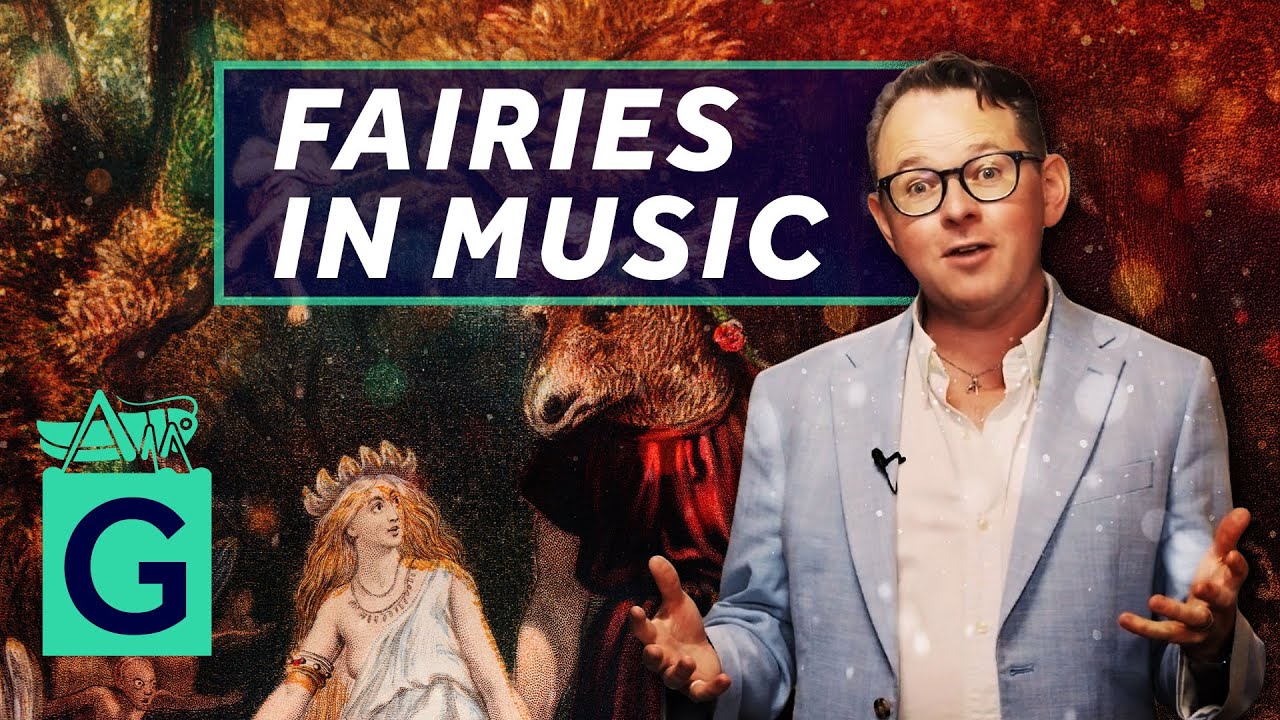
Shakespeare’s Musical Fairies
Keywords
Summary
157 words
Critical Evaluation
The lecture is a rich and engaging exploration of the intersection between Shakespeare’s text and its musical adaptations. Broomfield-McHugh demonstrates deep knowledge of both the play and the musical works it inspired, providing historical context and critical analysis. The inclusion of live performances by professional singers adds a valuable dimension, allowing the audience to hear the music discussed. The argument is well-structured, moving from general observations about fairy tales to specific analyses of musical settings. The speaker is careful to distinguish between the original text and later interpretations, and he highlights the ways in which composers have reimagined the fairies to suit their own artistic and cultural contexts. The sources cited, including the play itself, Purcell’s manuscript, and historical accounts, are appropriate and lend credibility to the discussion. However, the lecture is aimed at a general audience and does not delve into deep musicological analysis, which might be a limitation for specialists. Additionally, some claims, such as the influence of Jung’s collective unconscious, are presented without extensive evidence, though they are framed as interpretive rather than factual. Overall, the lecture is a valuable resource for understanding the musical afterlife of Shakespeare’s fairies, and it successfully balances scholarly rigor with accessibility.
200 words
Title / Content Match
The title accurately reflects the content, which explores the musical adaptations and representations of fairies in Shakespeare's A Midsummer Night's Dream.
Quality & Reliability
8/10
Lecture by a Gresham College professor, well-structured, with live musical performances and references to scholarly sources. The content is historically grounded and critically presented, though it is a public lecture rather than peer-reviewed research.
Chapters
- // Introduction: Music and Fairy Tales
- // Peter Pan and Tinkerbell’s Celesta Sound
- // Fairy Tales, Belief, and Jung’s Collective Unconscious
- // Sleeping Beauty: Music, Images, and Dark Reinterpretations
- // Into the Woods: Forests, Truth, and Transformation
- // Shakespeare’s Fairy Forest in A Midsummer Night’s Dream
- // The Lovers, Mechanicals, and the Fairy Realm
- // Sources of Shakespeare’s Fairy Characters
- // Titania, Oberon, and the Humanity of Fairies
- // Titania and Oberon’s Quarrel: The Changeling Boy
- // Peter Brook’s Landmark 1970 Production
- // Performing Shakespeare at the Globe
- // Singing Styles: Opera, Song, and Character
- // Musical Legacy of A Midsummer Night’s Dream
- // Titania’s Musical Demands and Fairy Songs
- // Gresham Music Library Treasures
- // Purcell’s Fairy Queen Manuscript
- // Semi-Opera and Restoration Adaptations
- // Purcell’s “One Charming Night” (Live Performance)
- // What is a Countertenor?
- // Smith & Garrick’s The Fairies Opera
- // Oberon’s Spell Aria (Live Performance)
- // Oberon Releases Titania: Shakespeare’s Text
- // Mendelssohn’s Overture and Incidental Music
- // Wagner, the Third Reich, and Banning Mendelssohn
- // Korngold, Hollywood, and Max Reinhardt’s Film
- // Britten’s A Midsummer Night’s Dream Opera
- // Oberon’s Countertenor Aria (Live Performance)
- // G.K. Chesterton: Are the Fairies More Real?
- // Conclusion: Music Between Reality and Fantasy
Cited Sources
- Gresham College — Official website of the institution hosting the lecture.
- Support Gresham College — Page for supporting the college's educational mission.
- Lecture page on Gresham College — Dedicated page for this lecture, including video and related resources.
- Q&A session — Follow-up question and answer session for this lecture.
Concurring Sources
- A Midsummer Night's Dream (Wikipedia) — Provides background on the play's characters and themes, consistent with the lecture's discussion.
- The Fairy Queen (Wikipedia) — Supports the lecture's account of Purcell's semi-opera and its adaptation of Shakespeare.
Contribution & Novelties
This lecture offers a comprehensive overview of the musical adaptations of Shakespeare’s A Midsummer Night’s Dream, tracing the evolution from Purcell to Britten and beyond. It highlights the role of music in shaping the perception of fairies and the interplay between text and music. The inclusion of live performances provides a unique auditory experience that enhances understanding.
Pour aller plus loin :
- A Midsummer Night’s Dream (Wikipedia) — Overview of the play’s plot, characters, and themes.
- The Fairy Queen (Wikipedia) — Information on Purcell’s semi-opera and its relation to Shakespeare’s play.
- A Midsummer Night’s Dream (Mendelssohn) (Wikipedia) — Details on Mendelssohn’s incidental music and its history.
- Benjamin Britten’s A Midsummer Night’s Dream (Wikipedia) — Information on Britten’s opera adaptation.
- Countertenor (Wikipedia) — Explanation of the vocal range and its use in opera.
132 words
Radar Profile
The radar profile shows high scores in information quantity and quality, reflecting the lecture's depth and scholarly value. The technical level is moderate, indicating accessibility to a general audience while still offering substantive content. Overall, the lecture is well-rounded and reliable.