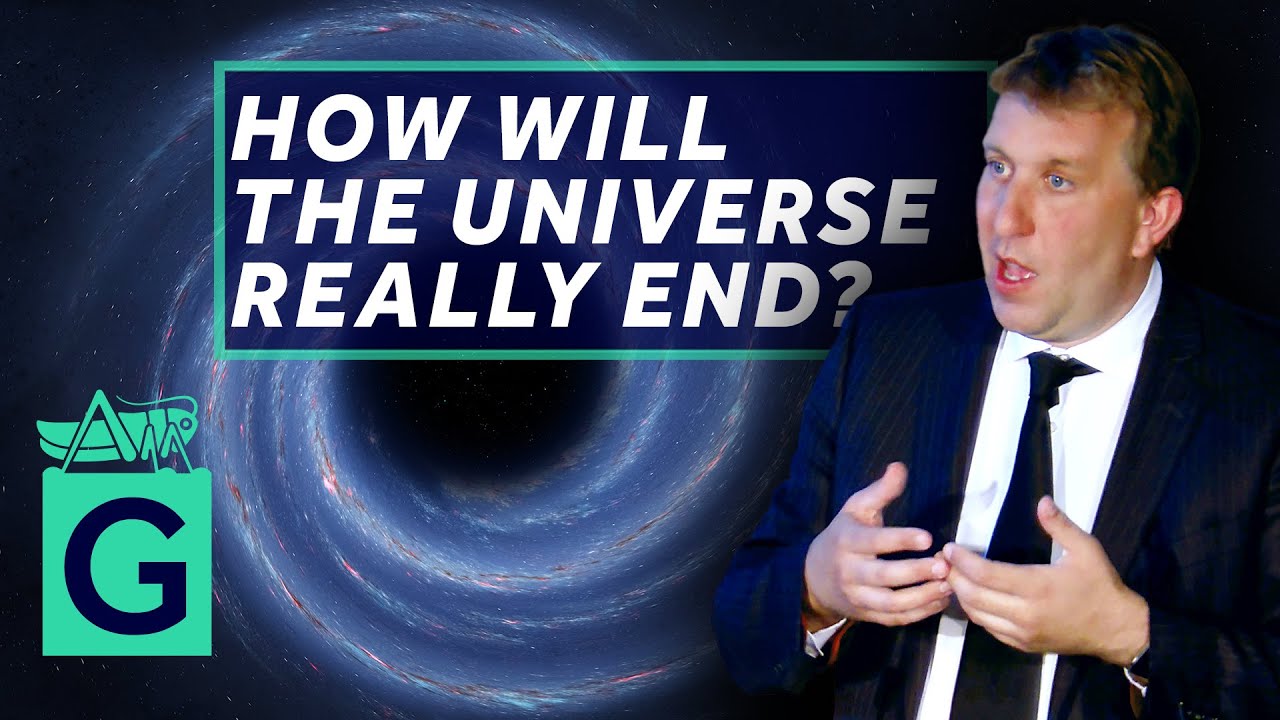
How It Ends: What We Know about the Fate of the Universe - Chris Lintott
Keywords
Summary
157 words
Critical Evaluation
The lecture provides a comprehensive and accessible overview of the current scientific understanding of the universe’s end. Lintott, a professor of astrophysics at Oxford, presents the material with authority and clarity, making complex concepts understandable without oversimplifying. He grounds his explanations in established physics, such as the laws of thermodynamics and general relativity, and cites key observational evidence, including the cosmic microwave background and supernova surveys that led to the discovery of dark energy. The argumentation is solid: he logically progresses from the Sun’s fate to the large-scale structure of the universe, addressing potential counterarguments like the possibility of a cyclic universe and explaining why entropy makes a rebound unlikely. He also discusses the limitations of current models, such as the unknown nature of dark energy, which introduces uncertainty into long-term predictions. The lecture is well-structured, with clear chapter markers, and includes historical context that enriches the narrative. The sources cited are primarily the speaker’s own expertise and general scientific consensus, with no direct references to specific papers, but the content aligns with current cosmological knowledge. The title accurately reflects the content, and the lecture fulfills its promise to explore the fate of the universe. Overall, it is a high-quality, reliable, and engaging presentation suitable for a general audience interested in cosmology.
212 words
Title / Content Match
The title accurately reflects the content, which focuses on the fate of the universe.
Quality & Reliability
9/10
Lecture by a professor of astrophysics at Oxford, based on established cosmological models and observations. The content is accurate and well-sourced, though it is a popular science lecture rather than a peer-reviewed study.
Chapters
- // Introduction: Facing the End of the Universe
- // The Life and Death of the Sun
- // Understanding the Universe’s Future
- // How We Discovered the Expanding Universe
- // Big Bang, Big Crunch, and Cosmic Models
- // Entropy and Why the Universe Can’t Rebound
- // Measuring the Fate of the Cosmos
- // Stars, Black Holes, and the Death of Light
- // Dark Energy and the Accelerating Universe
- // The Far Future: Big Rip or Eternal Expansion?
- // Could New Universes Be Born Again?
- // Music and Reflection on the End of Everything
Cited Sources
- Gresham College - How It Ends — Official page for the lecture, providing additional resources and information.
- Q&A Session — Follow-up Q&A session related to the lecture.
- Gresham College — Institution hosting the lecture.
Concurring Sources
- Planck Collaboration — Provides precise measurements of cosmological parameters supporting the standard model.
- Supernova Cosmology Project — One of the teams that discovered the accelerating expansion of the universe.
Dissenting Sources
- Cyclic universe models — Some theoretical models propose a cyclic universe, which would contradict the idea of a final heat death. However, these are speculative and not widely supported.
Contribution & Novelties
The lecture synthesizes current cosmological knowledge into a coherent narrative about the universe’s end, making it accessible to a broad audience. It highlights the paradox of dark matter and dark energy, and discusses how the future of the universe can test fundamental physics. The speaker’s expertise adds credibility, and the lecture encourages further exploration of topics like entropy, dark energy, and the multiverse.
Pour aller plus loin :
- Heat death of the universe — Relevant for understanding the ultimate fate based on entropy.
- Big Rip — Discusses a possible end scenario driven by dark energy.
- Dark energy — Key concept in the accelerating expansion of the universe.
107 words
Radar Profile
The radar profile shows high scores across all dimensions, indicating a well-balanced and reliable presentation. The lecture excels in information quality and reliability, with a strong technical level suitable for an interested audience.